



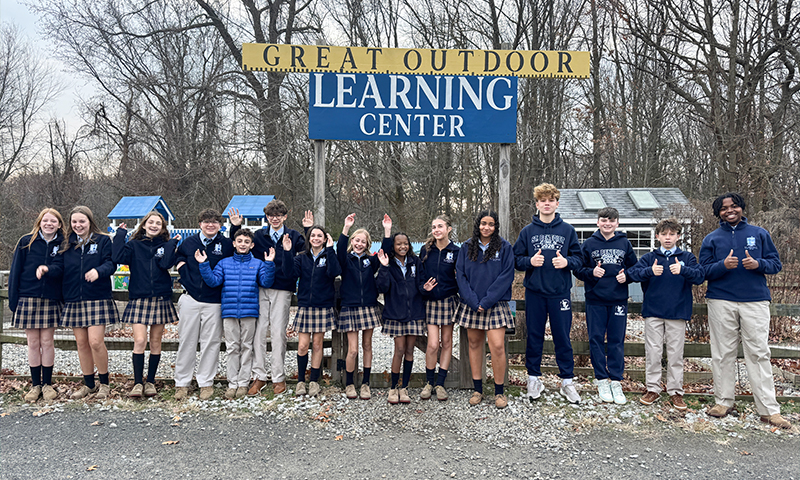
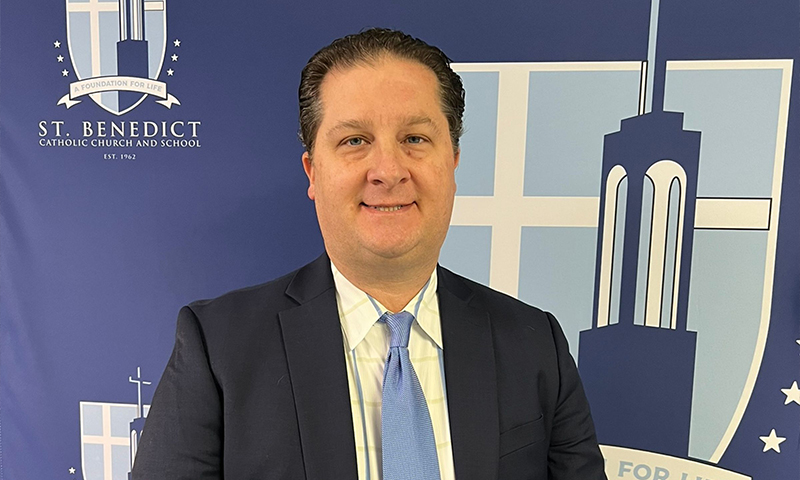
Faith guides daily life at St. Benedict School in ways that feel steady and familiar. It is present in classrooms, shared prayers, and simple moments of care between students and teachers. For the school community, Catholic education is about giving children a strong grounding that will carry them through life, both academically and personally. “Our Catholic faith is at the core of our education here at St. Benedict School. We provide our students with a Foundation for Life. This foundation is designed to equip students with the values, skills, and breadth of knowledge they need to be successful in their lives,” says Nicholas Cammarano, Principal of St. Benedict School.
That sense of purpose is reflected in the school’s mission, which calls the community to joyful worship, respect for life, generosity toward others, and gratitude for individual gifts. Learning is approached as something meaningful and lasting. “Our entire staff is committed to setting the tone for our school by going above and beyond for our students, staff, and families,” Cammarano adds, pointing to the importance of generosity, a positive outlook, and a warm, family atmosphere across the campus.
Over time, St. Benedict School has evolved along with its surroundings. As several Catholic schools in the area closed, families from across the region began to see St. Benedict as their school. The result is a community that is proudly diverse and shaped by a wide range of backgrounds. In 2022, the school celebrated its 60th anniversary, marking more than six decades of Catholic education rooted in continuity and care.
The school’s work begins early, with PreK programs that welcome its youngest learners. “Our PreK programs have become a tremendous feeder for the school. They allow us to reach students early and provide a strong academic and social foundation that supports long-term success,” shares Megan Gallagher, Vice Principal of St. Benedict School.
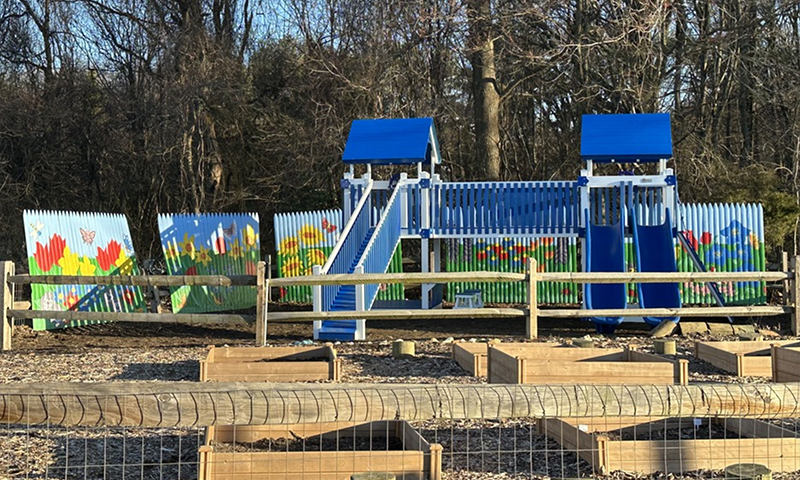
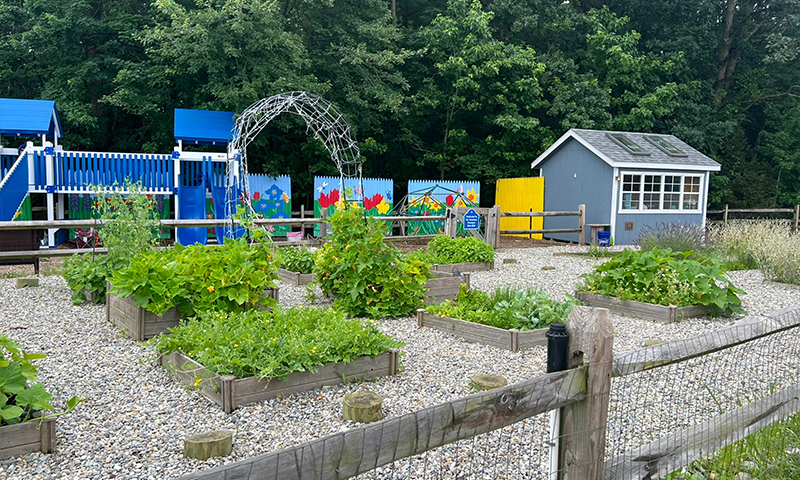
Learning at St. Benedict often extends beyond classroom walls. The Great Outdoor Learning Center, with its gardens, koi pond, and outdoor classroom, has become a meaningful part of daily life on campus. “This space has strengthened our commitment to environmental stewardship and hands-on discovery. It helps students understand not just the environment, but their responsibility to care for it,” Gallagher explains.
Inside the school, technology supports active learning. Students in grades two through eight use one-to-one devices, while the STEM Lab offers tools such as 3D printers, tower gardens, and modern science equipment. These resources help students explore ideas, test solutions, and build confidence in an increasingly digital world.
Service remains central to the school’s identity. Through community service clubs, an on-site St. Vincent de Paul food pantry, and outreach initiatives that support families in need, students learn the value of compassion through action. “Our emphasis on service has truly defined who we are as a school community,” Cammarano notes.
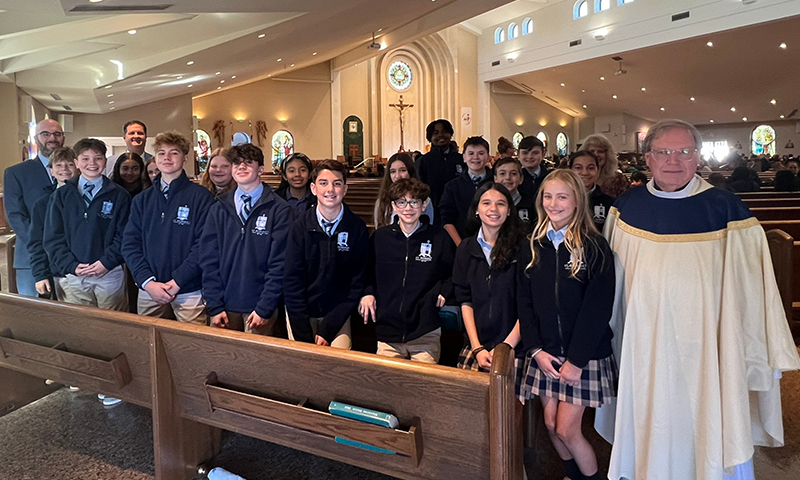
Spiritual guidance at St. Benedict School is led with clarity and care, shaping how faith is taught and lived each day. Father Garry Koch serves as the head of both the school and parish, providing steady guidance and setting the tone for educational standards and religious life. Faculty and families alike look to him as a trusted presence and a clear moral compass. Supporting that vision is Lori McCahill, Head of Religious Studies, who shapes the religion curriculum and leads sacramental preparation, helping students understand faith as something lived and practiced. The school’s middle school theology program is led by newly ordained Deacon Anthony Cullen, whose presence resonates deeply with students. By openly balancing service to the Church with family life and career, he shows students that faith is attainable and relevant. His classes blend thoughtful use of technology with real-world discussion, guiding students through modern questions with the grounding of Scripture and Catholic teaching.

A Community Where Learning Takes Root
St. Benedict School holds a distinct place within New Jersey’s Catholic education community, not because it tries to stand apart, but because it stays grounded in what matters most. The school places equal care on academic growth, faith formation, and the everyday development of each child. Classrooms are active and purposeful. Students move between science labs, art spaces, music rooms, outdoor classrooms, and the gym, learning that education engages both mind and body.
“Our goal has always been to support the whole child. That means strong academics, a solid faith foundation, and plenty of opportunities for hands-on learning,” says Cammarano. These experiences are not treated as extras. They are built into daily life, helping students gain confidence through doing, creating, and exploring.
Relationships play an important role in shaping that experience. St. Benedict maintains close ties with local Catholic high schools, including Saint John Vianney and Christian Brothers Academy. High school students often visit the campus to lead service projects, host clubs, or give presentations. Younger students watch closely. They ask questions. They imagine themselves in those same uniforms one day. Over time, those encounters turn into real aspirations and familiar pathways.
Service extends well beyond the classroom walls. Through a range of student-led service clubs, the school reaches families and individuals in need across the wider community. “Our students learn early that helping others is part of who we are. It becomes a habit, not a requirement,” Cammarano explains.
Success at St. Benedict is measured thoughtfully. Test scores matter, but they are not the only marker. Each year, graduates move on to a wide range of competitive high schools, including Catholic, magnet, parochial, and specialized programs. They leave prepared and self-assured. Growing enrollment tells a similar story. Families stay. New families arrive. Trust builds slowly and steadily.
That sense of belonging carries well beyond graduation. Alumni return often, sometimes as guest speakers, sometimes as teachers. This past year, a former student delivered the graduation address, standing at the same podium where they once sat in uniform. Several faculty members are alumni themselves, drawn back by a school that shaped them. Their presence, along with the long tenure of many staff members, gives St. Benedict a rare continuity. The faces may change, but the spirit remains familiar.
Learning by Doing
St. Benedict School continues to adjust thoughtfully to a changing world, guided by curiosity rather than urgency. New tools are welcomed, but never at the expense of real experiences. “We’re always looking for ways to introduce students to new ideas and technology while keeping learning grounded and hands-on,” says Gallagher.
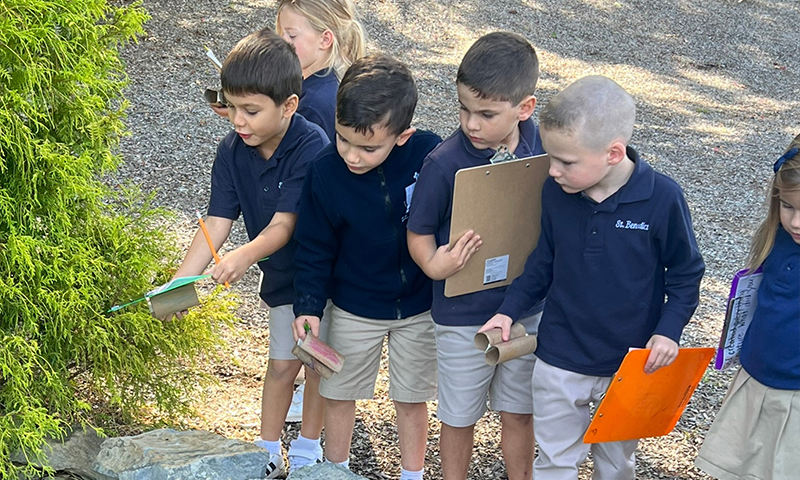
That balance is easy to see in the school’s STEM Lab and Great Outdoor Learning Center. On a typical day, students might move from indoor experiments to garden beds outside, notebooks in hand. In the outdoor space, learning unfolds slowly and deliberately. Under the guidance of STEM teacher Mrs. Campasano, students plant seeds, tend vegetables, and wait. They watch growth happen over time.
“They plant, grow, and harvest the vegetables themselves. It teaches patience, responsibility, and care,” Gallagher adds. The harvest does not end in the garden. Students sample what they grow during classroom taste tests. Teachers look forward to the “Greens and Gratitude” salad bar hosted during parent-teacher conferences. During Lent, the project takes on deeper meaning. Through the “Harvest and Donate” initiative, students collect fresh produce and deliver it to the St. Vincent de Paul Food Pantry on campus. In 2024 alone, 125 bags of vegetables were donated. By year’s end, fifth graders celebrate with a simple salad party, sharing food they nurtured together.
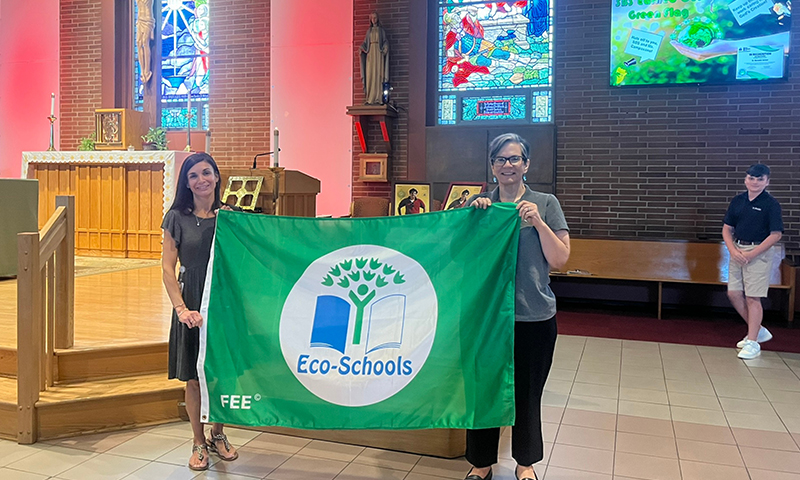
These experiences have earned St. Benedict national recognition. The school is EcoSchools U.S. Green Flag Certified, meeting rigorous standards for conservation, wildlife protection, and community involvement. It has also been featured by the Catholic Garden Network. For students, the recognition matters less than the message behind it. They see how faith, care for creation, and everyday choices connect.
“We want students to understand that caring for the environment is part of caring for others,” Gallagher says. The lessons are practical and visible. Dirt under fingernails. Vegetables in baskets. Food shared with those in need. As learning continues to evolve at St. Benedict School, one idea remains constant. Education is strongest when students are invited to participate fully, with their hands, their minds, and their sense of responsibility.
Preparing Students for What Comes Next
As students approach the end of eighth grade at St. Benedict School, the focus begins to widen. The question is no longer only how well they perform in class, but how ready they feel to step into a larger world. By the time they leave, the hope is that they carry both confidence and clarity. Confidence in their abilities. Clarity in their values. “When our students transition from eighth grade to high school, we want them to know who they are and what they stand for. We want them to step into that next chapter with a strong foundation in both faith and knowledge, knowing they have a community behind them,” says Cammarano.
Academically, expectations are clear and consistent. Students are challenged to meet and exceed grade-level standards, preparing them for the rigor of the competitive high schools many go on to attend. At the same time, character remains central. Teachers speak openly about integrity, responsibility, and service. Students are encouraged to lead by example, to make thoughtful choices, and to stay connected to their faith as they grow more independent.
Mornings at St. Benedict begin with prayer before giving way to a full academic day. Alongside core subjects, students rotate through a range of “specials” that add rhythm and balance to the schedule. Art, STEM, physical education, music, and Spanish each offer a different way to engage and express learning.
In the gym, Dr. Fitzpatrick leads physical education classes that focus on strength, teamwork, and the simple joy of movement. Laughter carries easily during games and drills. Down the hall, the art room tells its own story. Under the guidance of Mrs. Audra Erkman, the space fills with color and imagination. Student work lines the walls, changing with the seasons and giving students a place to explore creativity without pressure.
Music is another constant presence. Led by Mrs. Ellen Remick, the program helps students build both skill and confidence. Choir rehearsals, classroom lessons, and school productions bring voices together in shared effort. Several times a year, families gather for performances that reflect steady growth. Each show feels a little stronger than the last.
Middle school learning at St. Benedict is designed to be active and demanding. Lessons emphasize participation and critical thinking, with teachers adapting instruction to meet students where they are. Technology supports that work in practical ways. Students in grades two through eight use one-to-one devices that connect them to digital resources tied to their coursework, helping personalize learning without replacing human guidance.
The school day often extends well beyond dismissal. After-school clubs and activities give students space to explore new interests and deepen existing ones. From crochet club to Model United Nations, there is room for curiosity in many forms. The Model UN team recently earned Middle School Best Small Delegation honors, with several students recognized individually for their leadership and preparation.
The arts continue after hours as well. The drama program, supported by the Arts Association and led by Mrs. Remick, brings students together for large-scale productions. This year’s performance of Mary Poppins Jr. fills the stage with music, choreography, and carefully crafted sets, all built through collaboration.
Athletics are equally vibrant. Cross country, cheerleading, baseball, volleyball, and basketball draw strong participation, while both the boys’ and girls’ soccer teams celebrated undefeated championship seasons. Wins matter, but sportsmanship and commitment matter more. “Our goal is not just to prepare students for high school. It’s to help them carry faith, knowledge, and service into whatever comes next,” says Gallagher.
Service as a Part of Daily Life
Service at St. Benedict School is a part of the school’s rhythm, showing up in small, steady ways throughout the year. Students collect food for local drives, volunteer at the St. Vincent de Paul food pantry housed on campus, and organize toy collections during the Christmas season. They visit nursing homes. They support RAINE Foundation initiatives. Over time, these experiences teach students that care for others is an everyday responsibility. “Our students don’t see service as something extra. It’s simply part of who they are and how they show up for the community,” opines Cammarano.
Student leadership plays a visible role in this work. Lauren’s Light EXPLORERS, a club focused on empowering young female leaders, encourages students to speak up, take initiative, and lead with purpose. Athletic teams also carry service into their seasons. Through Catholic Athletes for Christ, the school became the first grammar school chapter in the country. The program emphasizes sportsmanship, integrity, and outreach, values that extend well beyond the field and court. For St. Benedict athletes, community involvement is expected, not optional.
One moment that captures the school’s spirit each year is the Veterans Day celebration. The day begins with a simple but powerful scene. Students line the walkways, waving small American flags as veterans arrive. Applause fills the air. The celebration continues with a prayer service and a reception honoring those connected to the school community. It is a quiet lesson in gratitude, patriotism, and respect, felt by students of every age.
The sense of community extends into family life as well. Through the PTA’s Foundation for Life series, St. Benedict hosts events that bring parents and children together around learning and shared experiences. Family STEM Night hums with activity. The Educational Art Museum invites conversation and curiosity. Guided reading sessions and middle school gatherings help families connect across grade levels. These moments build familiarity and trust, strengthening relationships beyond the classroom.
Schoolwide traditions give the year its milestones. The Science Fair fills hallways with experiments and excitement, recognizing creativity as much as achievement. Field Day brings friendly competition and laughter from PreK through eighth grade. Holiday pageants and the annual tree lighting gather the community in celebration, marking time together in ways that feel both joyful and grounding.
Behind much of this energy is a deeply committed parent community. Volunteerism is woven into the school’s structure through the PTA, Grace Association, Arts Association, and Athletics Association. Parents lead, organize, and support programs that enrich student life. “Our families are true partners in what we do. Their time, ideas, and generosity make a real difference every day,” says Gallagher. Local businesses also lend their support, helping fund events and initiatives that strengthen the school. It is a shared effort, built on trust and long-standing relationships.
Looking Ahead with Purpose
At St. Benedict School, growth is approached with care. Progress begins with the adults in the building, where learning never stops. Teachers take part in regular in-house professional development while also attending external workshops and training sessions. These experiences keep instruction current and responsive. Just as important are the moments when teachers sit together, share what is working, and refine lessons as a team. Collaborative planning time is treated as essential, giving educators the space to strengthen curriculum and better support every learner. “Our teachers learn alongside one another. That shared commitment helps us stay focused on what our students truly need,” says Cammarano.
Families play a meaningful role in that effort. The school’s PTA serves as both a partner and a steady support system. Funds raised through PTA initiatives are reinvested directly into classrooms, helping teachers access resources and meet everyday needs. The result is a school that can respond quickly and thoughtfully as programs evolve.
Technology is woven into daily learning with intention. Students begin using one-to-one devices in second grade, building comfort and confidence over time. Digital tools are used consistently across subjects, making transitions to computer-based testing feel familiar rather than stressful. Technology supports learning without overshadowing it.
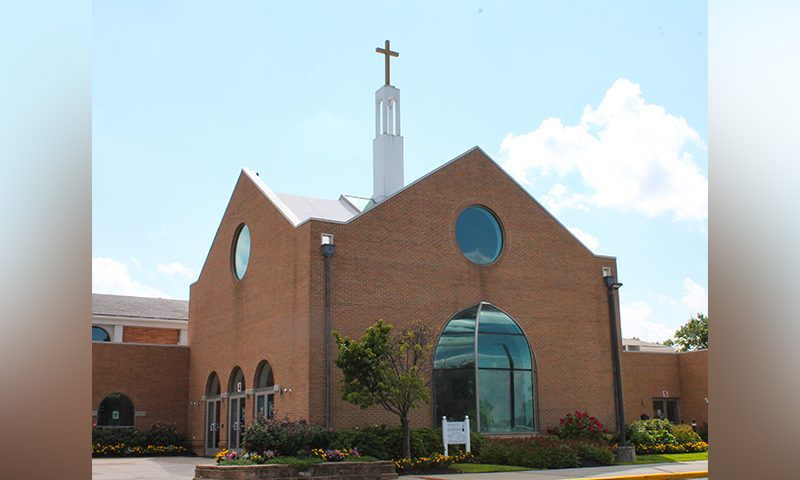
Steady enrollment growth has also allowed St. Benedict to invest in its physical space. Recent updates will include a new music room, additional classrooms, and plans for a future auditorium. Each addition reflects long-term thinking, designed to support both current students and the programs still taking shape.
Looking ahead, the school is beginning to explore age-appropriate AI learning opportunities. The goal is practical and grounded. “We want our students to build skills they’ll need for the future while keeping learning meaningful and human,” says Gallagher. At the same time, the school remains attentive to the broader needs of its community. Academic support, spiritual care, financial considerations, and social-emotional well-being are addressed together, so students feel supported in every sense.
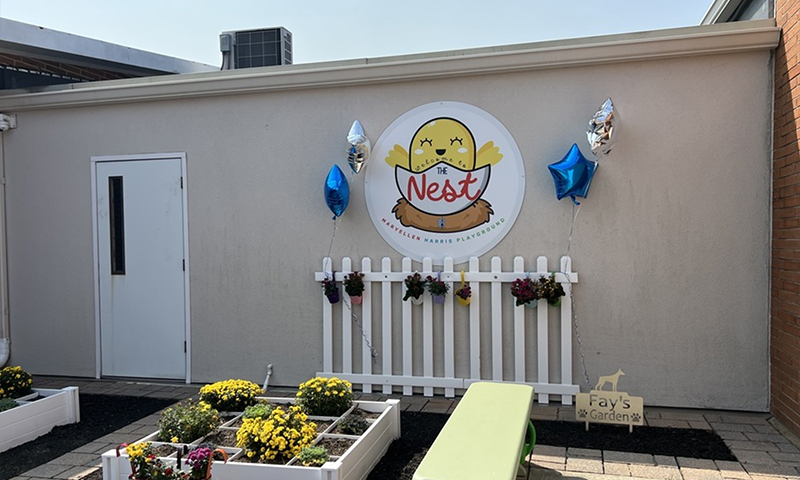
Recent years have brought notable growth, especially in early education. To expand the preschool program, the school added two modern mobile classrooms for three-year-old students. Welcoming new families has strengthened the school’s future while preserving the close-knit feel that defines daily life on campus. Today, St. Benedict is often viewed as a model within the Diocese of Trenton and across New Jersey, known for balancing growth with community.
Plans for campus expansion continue, guided by a clear priority. Growth will not come at the expense of connection. “Maintaining our sense of family is non-negotiable,” Cammarano notes. As the school looks toward the next decade, the vision remains focused. The hope is to graduate students who are prepared for academic challenge, comfortable with evolving technology, and grounded in lasting values. Graduates leave with confidence, curiosity, and a sense of responsibility to others.
“Our vision is that St. Benedict students continue to grow into leaders who serve with compassion and live their faith with integrity,” Gallagher says. It is a future shaped by careful choices, steady relationships, and a belief that education, when done well, leaves a lasting mark.
For More Info: https://school.stbenedictholmdel.org/