



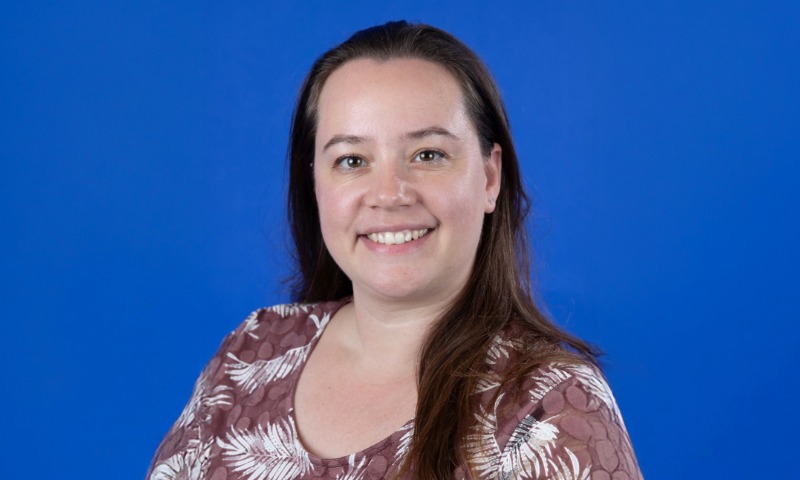
Abigail Furey is an accomplished international educator and serves as Deputy Director (Academic) at the International School of Monaco. Her work is guided by a clear educational philosophy that places students at the centre of decision-making, valuing individuality, lived experiences, and cultural identity while preparing learners to thrive as global citizens. She brings extensive leadership experience from independent schools in the UK, where she has held senior academic and pastoral roles including Head of Department, Head of Year, and Head of House. Through these roles, Abigail has developed strong expertise in innovative teaching and learning, international curriculum development, multilingual education, and inclusive practice.
Known for her collaborative leadership style, Abigail is deeply committed to mentoring staff and building strong partnerships with students and families. Abigail is passionate about research-informed, future-focused education and believes effective leadership is rooted in reflective practice, shared values, and a coherent academic vision. She holds a BA in French and Spanish from the University of Exeter, an MSc in Teaching and Learning from the University of Oxford, and is currently completing an EdD at the University of Bath.
In an exclusive conversation with K12 Digest, Abigail talks about the evolving realities of leading learning in a fast-changing international school environment. She reflects on her journey through academic and pastoral leadership roles and how those experiences have shaped a leadership philosophy grounded in collaboration trust and long-term vision. Abigai also shares insights on teacher wellbeing professional agency and why sustainable innovation begins with empowered educators rather than performative change. Below are the excerpts of the interview.
Looking back on your journey from teacher training at Oxford to your current role at ISM, what experiences have most shaped the leader you are today?
Reflecting on my journey from teacher training at Oxford to my current role as Deputy Director (Academic) at the International School of Monaco, I would say that a combination of experiences across different schools and leadership roles has shaped the leader I am today. Each role, from Head of Department to Head of Year and Head of House, has offered me unique opportunities to work collaboratively, mentor colleagues, and also be mentored myself. These experiences have given me a deep understanding of what meaningful support looks like in a school community and how to foster it at every level.
Professional development has been central to my growth. Completing an MSc in Teaching and Learning at Oxford while balancing full-time school responsibilities taught me invaluable organisational skills. These experiences also collectively helped me develop a more strategic vision as a leader, allowing me to look beyond day-to-day tasks and consider the long-term growth of both learners and educators.
Ultimately, I see leadership as a dynamic balance between vision and collaboration. It’s about creating structures and environments where students and staff feel supported, challenged, and inspired.
What are the biggest challenges you see schools facing now in balancing foundational skills with innovative practices like AI integration and inquiry-based learning?
One of the biggest challenges schools face today is managing the fast pace of change. Innovation, particularly in areas such as AI, VR and technology, is moving far more quickly than many school systems can realistically sustain. While it’s exciting, the speed of innovation often outpaces the time and capacity needed to train teachers effectively, embed
new practices thoughtfully, and evaluate their impact. Without careful planning, this can place significant pressure on staff and contribute to teacher fatigue or burnout, which ultimately undermines the quality of learning we are trying to enhance.
At the same time, schools must guard against innovation becoming performative rather than purposeful. With AI in particular, there is a growing concern especially in the parent body, that over-reliance on technology could diminish creativity, critical thinking, and deep learning if it is positioned as a replacement rather than a tool. I believe the role of schools is to frame AI as an enabler of creativity which supports inquiry, problem-solving, and original thinking, rather than something that shortcuts the learning process.
As you engage with the wider global education community, what trends or insights are currently guiding your academic vision and priorities at ISM?
I feel that teacher wellbeing and professional agency are central to any sustainable academic vision. Across international schools, there is a growing recognition that meaningful innovation only happens when teachers feel valued, supported, and empowered to lead their own learning. Rather than professional development being something that is done to teachers, the most impactful models position educators as active contributors to a shared learning culture, that is one where reflection, collaboration, and trust are embedded into daily practice.
At ISM, this insight is guiding our priorities in very practical ways. We are increasingly focused on creating structures that allow teachers to invest in their own professional growth, share expertise, and feel a strong sense of belonging within the learning community. When teachers are engaged and confident in their learning, that energy and purpose translates directly into richer classroom experiences for students.
This philosophy was strongly reflected in the Innovate-Share-Empower Conference recently hosted at the International School of Monaco. It embodied our belief that wellbeing, professional trust, and academic excellence are deeply interconnected.
How do you see emerging technologies, particularly artificial intelligence, enhancing both teaching practice and student learning outcomes in international schools?
Emerging technologies, and artificial intelligence in particular, have the potential to significantly enhance both teaching practice and student learning outcomes when they are implemented with purpose and ethical clarity. One of the most powerful opportunities AI offers international schools is in the area of access and inclusion. Used thoughtfully, it can support diverse learning needs, personalise learning pathways, and remove barriers to engagement, creating more equitable opportunities for all students to succeed.
AI also has an important role to play in increasing student engagement and motivation. When used creatively, it can help build positive, meaningful learning experiences that encourage curiosity, inquiry, and confidence. This is particularly important in international school contexts, where preparing students to be future-ready global citizens requires them to engage critically and ethically with the technologies shaping the world around them.
This approach was recognised through the International School of Monaco’s nomination for the TES Best Use of Technology Award for International Schools, reflecting our commitment to innovation that is inclusive, sustainable, and grounded in strong educational values.
In your view, what are the essential qualities of effective leadership in a diverse, multilingual, and globally connected educational environment?
Effective leadership in a diverse, multilingual, and globally connected educational environment begins with a deep commitment to inclusion. In international schools, no single leader can hold all the expertise. Distributed leadership is therefore essential: understanding the strengths of individuals and teams, creating opportunities for others to lead, and intentionally building capacity across the organisation. When leaders are open to new ideas and willing to be challenged, they foster a culture of trust, innovation, and collective responsibility.
For me, strong international school leadership is less about authority and more about influence. I see it as bringing people together around shared values and a common purpose, while ensuring that the school community is well equipped to meet both current challenges and future opportunities.
Outside your professional work and academic research, what personal values or interests guide you and how do they shape your approach to education?
Outside of my professional work and academic research, the values that guide me most strongly are balance, care, and respect; for myself and for others. In the fast-paced world of international education, it is easy to prioritise outcomes and innovation over people, but I firmly believe that sustainable excellence begins with wellbeing. Making time for others, listening carefully, and being present are not separate from effective leadership; they are foundational to it.
What advice would you offer to students and aspiring educators who want to make a meaningful impact in schools and communities in the decade ahead?
For students and aspiring educators looking to make a meaningful impact in schools and communities, my first piece of advice is to truly work with your community. Parents, colleagues, and local stakeholders are not just supportive voices, they are valuable partners in shaping learning experiences. Engaging them thoughtfully and collaboratively helps to build shared understanding and buy-in, and ensures that any vision or initiative is both relevant and sustainable. The more we bring people along with us, the stronger and more connected the school community becomes.
My second piece of advice is: Let go of your ego! No one has all the answers, and education is never one-size-fits-all. The most effective leaders and teachers draw on the resources, expertise, and perspectives around them, staying humble, curious, and adaptable. Recognising that we are all learners allows us to innovate responsibly and respond to challenges with creativity and resilience.