


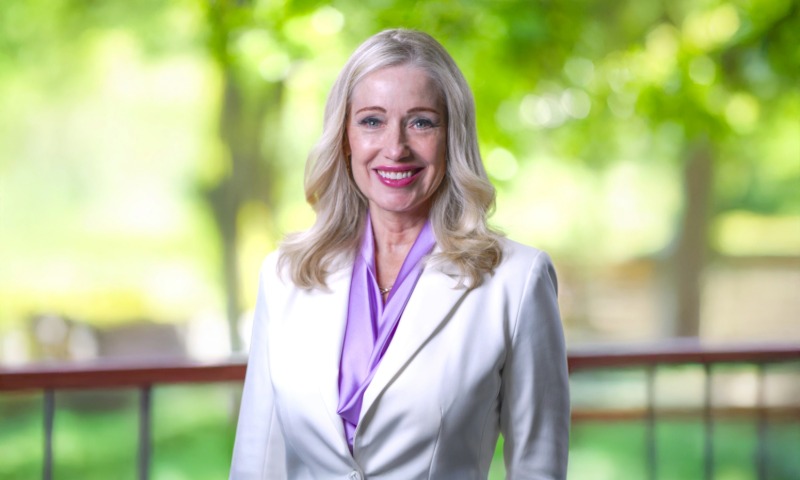
Camille Moody McCue, PhD, is an educator who serves as a school leader, STEM/CS teacher, and Dummies author, and is the Director of Innovation at The Meadows School in Las Vegas. She worked previously as High School Principal at The Adelson School where she built a K12 Startup Incubator and developed a schoolwide innovation program. Camille earned her BA in mathematics from the University of Texas at Austin, and her PhD in curriculum and instruction from the University of Nevada, Las Vegas. She loves encouraging all students to hone their innovation skills — in computer science, engineering, and business and entrepreneurship.
Recently, in an exclusive interview with K12 Digest, Camille shared insights into empowering students to become innovators and creators, emphasizing the importance of adapting to trends in education and leveraging technology to prepare students for real-world challenges. She also shared her personal hobbies and interests, future plans, words of wisdom, and much more. The following excerpts are taken from the interview.
Hi Camille. Can you tell us about your career journey and how you got to where you are today?
I started my career at IBM, working as part of a team selling PCs to computer value added resellers (one of whom was Mark Cuban), before becoming a teacher. I initially taught math in a potato farming community in rural Texas, then – in an “I can do that!” moment in the early 90s – I became a teacher-of-the-air, instructing physics via satellite to kids in remote communities. An astronaut I interviewed for a TV special connected me with NASA, where I next worked for several years as an anchor-producer, creating live educational shows featuring the agency’s research. There have many steps along the way since then but saying “I can do that!” to every opportunity has allowed me to grow professionally and work in a wide variety of roles communicating and cultivating innovation education – STEM, CS, and business – to kids and teachers. I’ve developed a college bound program, worked as a PBS Ready To Learn specialist in Title I schools throughout Las Vegas, served as school principal and built a startup incubator at the Adelson School, been the launching author of the Dummies for Kids series, taught university courses and kids coding camps, and more. For me, any initiative that entails helping tweens and teens think and work innovatively is my professional sweet spot. My personal joy is building people who build the world.

What do you love the most about your current role?
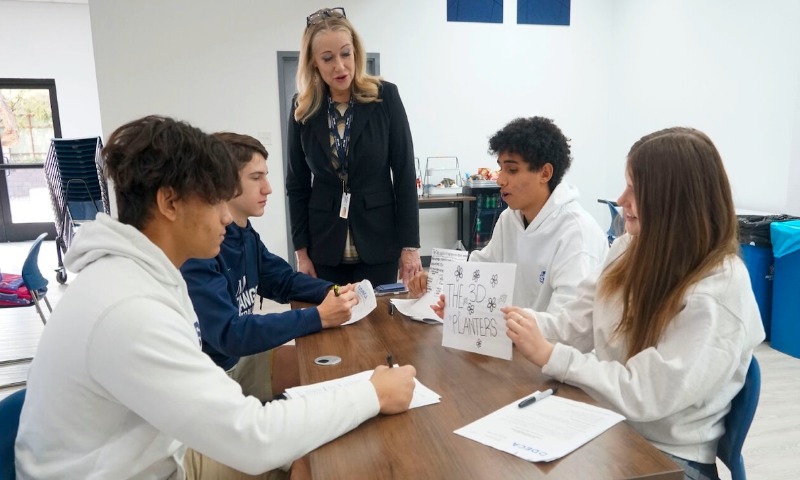
I love building opportunities that help students see themselves as creators, innovators, and entrepreneurs. My favorite moments are when students come bursting through the classroom door breathlessly asking, “What are we going to make today?!” Seeing them build something, pitch something, or solve something – taking ideas out of their heads and building them digitally and physically in the real world – is awesome! Crafting those experiences, and the programs that make them possible, keeps me energized.
What do you think are some of the most significant trends or changes in the world of education, and how do you think educators can adapt?
It’s necessary to align learning experiences with trends that match the evolution of technology in the workplace. We’re seeing rapid shifts driven by AI, interdisciplinary learning, and a stronger emphasis on real-world skills. Students need to be problem-solvers who can collaborate, design, and iterate. Educators can adapt by embracing project-based learning, integrating technology meaningfully, and giving students authentic challenges that mirror the world they’re entering.
What inspired you to write “Dummies for Kids”, and what do you hope young readers will take away from the book?
Media in online and print formats expand my instructional reach and allow me to connect with audiences worldwide. I began writing Dummies tech books in 1997 (starting with a PowerPoint Quick Reference) and, after a few years, I proposed to Wiley that we launch a tech line for kid readers. My first Dummies for Kids book was Coding for Kids; we’ve just published its third edition. I love hearing from my readers – many of them post comments on my Scratch projects featured in the book! It’s my hope that readers find the featured projects fun and foundational, and that they feel confident to level up in coding, to text-based languages such as Python and JavaScript.
What do you think are some of the most important qualities or skills for educators to have in order to be truly effective?
I subscribe to H.G. Wells’ philosophy of “adapt or perish.” Great educators stay curious about their craft and never stop learning. If you’re teaching the same thing in the exact same way you taught a decade ago, then you have room for improvement. Constantly refreshing your content knowledge and skills – through courses, conferences, and other mechanisms – keeps you professionally up to date. It also refreshes your memory of how it feels to be a student, building empathy for your own students and reminding you of intellectual and scheduling challenges they face in completing work you assign. I also think it’s important to seek out and participate in competitions that take your students beyond the walls of their school sites. While it’s comfortable to be “champion of your classroom,” educators and their students can expand their creative thinking by engaging with a larger population and greater diversity of people through participating in expositions and competitions. Lastly, you must like kids and enjoy their energy (including this year’s annoying “6-7” malarkey). Having patience, a sense of humor, and willingness to try new things go a long way!
How do you stay current with the latest trends and developments in STEM education, and what resources do you recommend for educators?
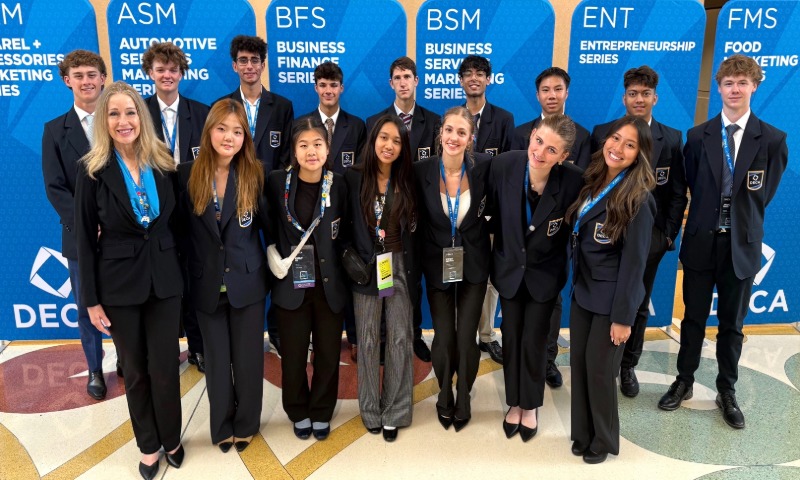
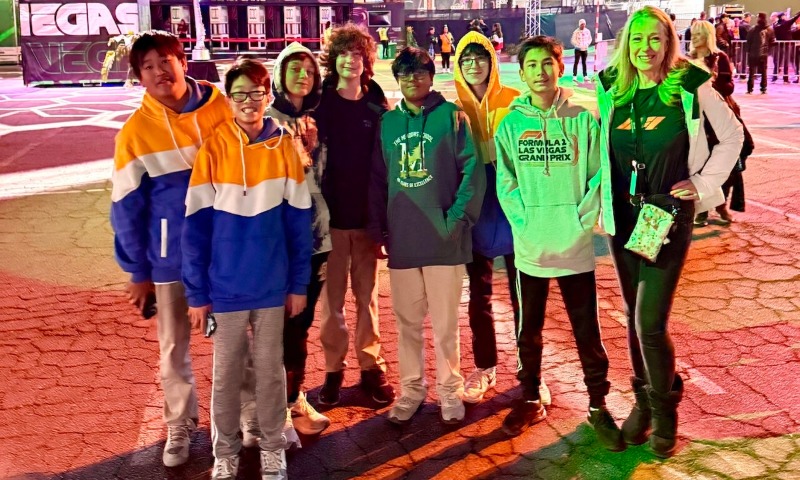
My students and I are in “constant learning mode.” Together, we pay attention to news, podcasts, and local events and find routes to connect our classroom to the world. Let me share some examples of how we tap into the resources of our local community. Living in Las Vegas, we are surrounded by casinos, and I worked with my sixth-grade students to design and code slot machines, including conducting the probability computations to determine payouts. The process sets the stage for them in the game design industry. And understanding the “house edge” helps students grasp how our city was built! In an engineering class, our F1 STEM Racing students visit the F1 Grand Prix on the Strip each year, drawing parallels between the real racecars and the 1/20 scale versions they design and mill, then race in competition. To support their work, a UNLV professor further elevates their understanding of streamlined car designs by collaborating with the students on building computation fluid dynamics (CFD) models. Lastly, in our DECA business courses, I connect our students with experts through Lunch & Learn events; host seasonal business sprints (and share videos of students in action on LinkedIn); and conduct mock role play events in which students pitch to parents who possess expertise in everything from hospitality to entrepreneurship. For every educator, it’s important to know that there are many people in your local community who want to support your students; they will give their time and expertise – just reach out and ask for help.
Have you had any mentors or role models who have influenced your career path?
Absolutely. I’ve been fortunate to have many mentors who exhibited intellectual curiosity and “cleared the road” for me to be bold in designing new programs. There are too many to list, but I fondly recall the incredible support of Dr. Samuel Massenberg and Dr. Malcom Phelps, my managers at NASA, who made it possible for me in my early career to divert from the traditional way of doing things. And day-to-day, my family members are my role models: each of them engages curiosity and innovation, learns voraciously, persists in the face of challenges, works hard, and leads with optimism. Their energy is infectious, and their practical guidance helps me feel supported in pursuing new initiatives.
Can you share a favorite hobby or interest outside of work that helps you recharge?
Hanging out with my Corgis, rewatching Big Bang Theory, exercising at F45, vegetarian cooking, listening to Audible books, meeting and chatting with experts of all stripes, enjoying a night out in Las Vegas, and conversations with my family all help me recharge. Those moments away from school help me reset and spark fresh ideas.
Where do you see yourself in the next 5 years?
I see myself continuing to lead innovative STEM/CS and business programs, writing more books, and expanding opportunities for students. My north star is helping young people design inspired futures, and I want to keep scaling that impact.
What advice would you give to educators who are looking to incorporate more STEM and coding into their teaching practices?
Start small, be playful, and let students explore. You don’t need to be an expert — you just need to start learning, create space in your classroom for curiosity, and convey to students a disposition of collaborative problem-solving, stick-to-it-ness, and optimism. There are many superb, free and inexpensive tools, organizations, and competitions you can dive into to get kids excited and learning. Scratch is perfect as an entry point to coding, and Code.org (including its cool App Lab) is excellent for teaching foundational computer science at all levels; Microsoft’s MakeCode for micro:bit provides a fun pathway for exploring small electronics; the FAA Airport Design Challenge provides an easy way, using Minecraft, to try design engineering; TinkerCad is fabulous for teaching 3D design and the FlashForge printer is a reliable, reasonably-priced workhorse of a 3D printer for the classroom; and DECA provides a full platform of resources and competitions (including Stock Market Challenge) to spark enthusiasm for business and entrepreneurship. And of course, taking any of the offerings on Coursera will help you grow content and skills that will expand your practice in pretty much any subject you can think of. Most importantly, don’t let perfect be the enemy of good – just get started!