



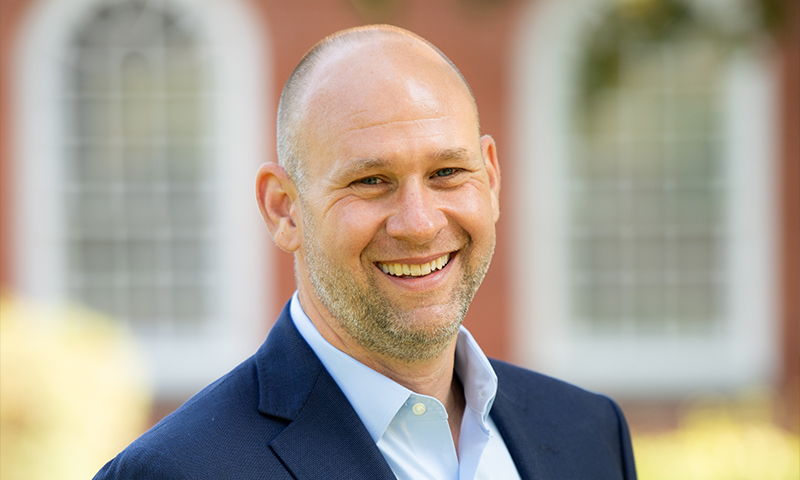
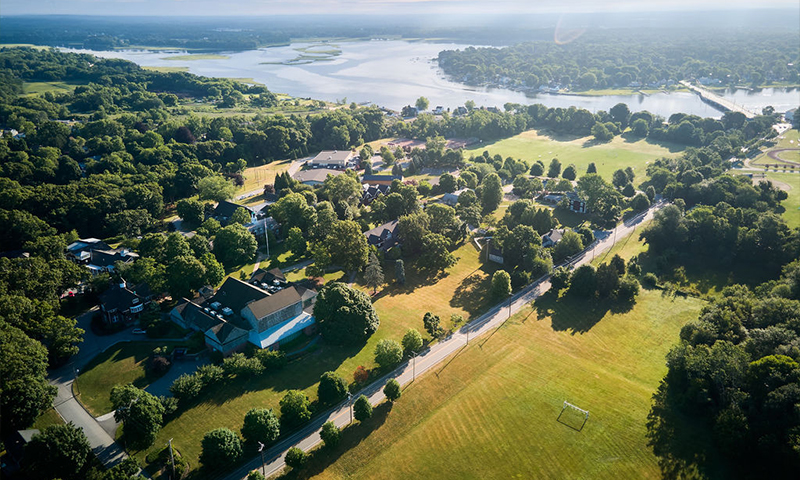
When David J. Tinagero arrived at St. Andrew’s School in 2015, he stepped into a campus with more than a century of history and a mission that continues to evolve with every generation. He has always believed that a school’s greatest purpose is to show each student how much they matter and how far they can go, and that belief has guided every chapter of his leadership. In his hands, St. Andrew’s School feels less like an institution and more like a community built on possibility, where belonging creates the confidence students need to take on real intellectual challenge.
The school’s past is not something he treats as nostalgia. It is living context. “St. Andrew’s School was founded in 1893 as a school for orphan boys, and for more than seven decades it operated as a residential school dedicated to supporting boys facing hardship before evolving into a college preparatory school. That evolution has always been driven by a simple idea: St. Andrew’s School exists to meet the needs of its time,” Tinagero shares.
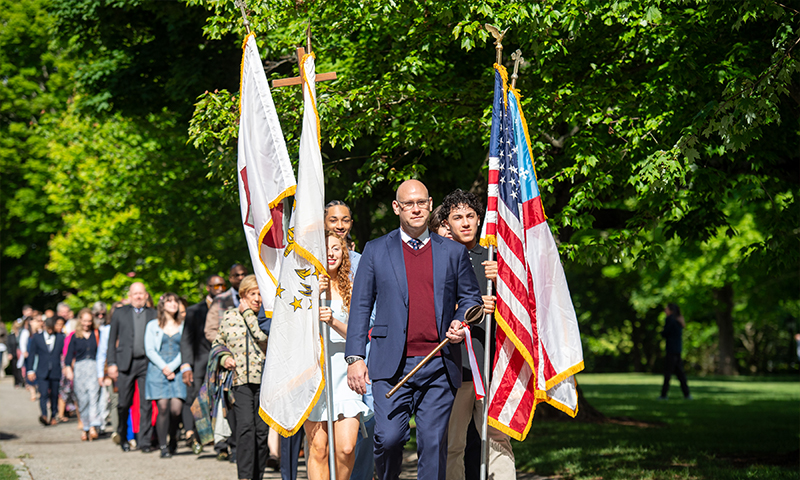
When Tinagero explored the campus for the first time, he found that spirit unmistakable. “What struck me when I first encountered the school was how deeply that origin story still lives in the people who represent it. The ideals of Reverend Merrick Chapin — service, action, and inclusion — remain visible in the daily life of the community. I was drawn to a school with a long tradition of widening access and redefining what it means to educate young people well, and I felt immediately that St. Andrew’s School embodied both a powerful mission and a willingness to keep growing in service of that mission,” he explains.
Tinagero’s path to this role has never followed the predictable route. Before coming to St. Andrew’s, he helped launch new schools in New York City, from co-designing the Mott Hall Charter School to becoming the founding principal of the Mott Hall Bronx High School. He later served as Associate Vice Chancellor of Student Affairs and Dean of Students at New York University Abu Dhabi, where he worked at the intersection of global education and student development. Earlier in his career, he mentored teachers as a Regional Instructional Supervisor and started out exactly where he believes real leadership begins, in the classroom, teaching students across varied school environments.
His influence extends far beyond his own campus. He serves on the Board of Trustees at the Pingree School in Massachusetts and previously served as Vice President of the Association of Independent Schools of Rhode Island. Schools across New England often call on him to lead NEASC accreditation visits, a role that draws on both his strategic lens and his instinct for seeing what makes a school thrive.
A Community Shaped by Belonging and Challenge
At St. Andrew’s School, the mission is not an abstract aspiration but a lived commitment to show every student how valuable they are. Tinagero often points out that the school’s traditions are expressions of Reverend Chapin’s founding purpose. “Honoring Reverend Chapin’s founding spirit means sustaining traditions that reinforce belonging and perseverance, whether we are climbing mountains together or lining up at the start of an all-school race,” he says. These shared experiences bind the community and connect current students with generations of alumni who grew through the same moments of challenge and camaraderie.
That sense of belonging is intentionally cultivated. Faculty and school leaders speak openly about inclusion and diversity, not as programmatic goals but as essential conditions for learning. Tinagero explains, “Our faculty, administrators, and trustees are united around the idea that nurture and challenge are not opposing forces, they are mutually reinforcing.” The varied backgrounds, learning profiles, languages, and lived experiences of students are seen as intellectual strengths. A community that thinks differently together builds a deeper and more resilient foundation for every learner in it.
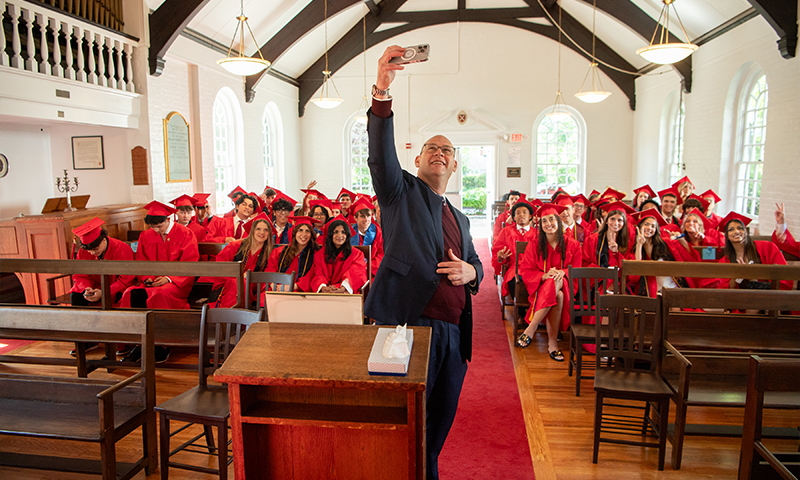
Holiday Vespers embodies this philosophy. Each December, the entire community gathers for an evening that celebrates the cultures and traditions that make the school feel both global and deeply personal. Students share family stories in their home languages and fill the room with music, dance, and reflections that reveal where they come from. Tinagero adds, “What makes it special is the feeling in the room, a sense of belonging, pride, and love that transcends difference. It is a reminder that community is not something we talk about here, it is something we practice.”
A Curriculum That Honors Ambition and Identity
St. Andrew’s School’s choice to pursue International Baccalaureate (IB) authorization was rooted in a clear understanding of who the school serves. “We understood that if we wanted to serve our students fully, especially those with diverse learning profiles and those joining us from around the world, our academic program needed to be recognized broadly as both rigorous and transferable,” shares Tinagero. The move challenged a common misconception that schools supporting varied learners must compromise academic depth. The school’s 18-month investigation confirmed that the IB offered both rigor and the flexibility their students needed.
The transition brought curiosity, energy, and the natural questions that accompany any major academic shift. Over time, the IB became part of daily life at St. Andrew’s School. It shapes classroom lessons, but it also extends to athletic fields, dorms, mealtimes, and performance stages because, as Tinagero often reminds his team, everything on campus is curriculum. The program now feels less like an addition and more like another expression of the school’s experience.
Five years into implementation, students are pursuing ambitious goals within a structure that values reflection, choice, and growth. Faculty members share a unified professional vocabulary, which has strengthened collaboration and expanded the support they offer students. The school’s long-standing philosophy remains unchanged. Post-secondary planning is a match to be made, not a race to be won. The IB reinforces that mindset, while opening wider recognition for the depth and authenticity of students’ work.
Every potential initiative is tested against a core question. Does it honor who St. Andrew’s School is? Tinagero pinpoints, “Before adopting any new program, we examine its alignment with who we are at our core.” If something fails to place students at the center, welcome diverse learners, or expand global perspective, it does not move forward. For him, true growth requires clarity of identity. Evolution means expanding opportunity without losing the values that make the school what it is.
A School Growing Toward Its Future
St. Andrew’s School operates with a simple truth in mind. The world students are stepping into changes quickly, so the school must be willing to grow with it. Tinagero says, “The world changes quickly, and so do the needs of young people.” For him, embracing growth is an act of stewardship, not disruption. It guides decisions across academic design, residential life, and extracurricular programming. The school’s student-centered approach ties academic strength, emotional wellbeing, and ethical grounding together as one connected experience. Nothing operates in isolation.
This mindset extends to the adults as well. Faculty engage in ongoing professional learning, and the leadership team takes part in annual training and institutional self-reflection. These practices ensure that the school’s systems and policies stay aligned with its mission and remain responsive to the world students will inherit. Tinagero explains, “Preparing students for complexity means modeling adaptability, curiosity, and care.”
The school’s strategic plan has brought that purpose into sharper focus. The community now shares clear priorities, from broadening access to strengthening student pathways. The goal is steady and intentional growth that expands opportunities without losing the personal, relational experience families value. Investments in teaching and learning give faculty the support they need to push students forward. Investments in people and campus ensure the institution remains strong as it expands its reach. “Most importantly, we are determined to protect the spirit of our mission and remain a community where students feel known, supported, and prepared for what comes next,” states Tinagero.

Leading With Curiosity, Trust, and Purpose
Tinagero’s philosophy of leadership mirrors the way St. Andrew’s School approaches its students. “I believe leadership is an act of empowering others,” he says. Teachers are the heartbeat of the school, and he sees his role as ensuring they have the freedom, clarity, and encouragement to do their best work. Over the years, his leadership has grown more curious and more anchored in possibility. The question that often guides him is simple: what if? It is a way of thinking that helps the school balance preservation with growth, rooting progress in the values that have shaped the institution for more than a century.
He takes particular pride in leading the community through the development of its multi-year strategic plan. The process deepened relationships across faculty, staff, and families, and it laid out a vision that expands programs, broadens the school’s reach, and strengthens its sense of community. For Tinagero, working alongside others to shape the school’s next chapter has become one of the great honors of his career.
Tinagero’s understanding of legacy comes from a grounded place. “I am humbled to be only the eighth Head of School in 133 years,” he says, a reflection shaped by the leaders who came before him and the responsibility of guiding a historic institution into its next era. He is not focused on accolades or accomplishments. “I hope my legacy is not a set of accomplishments, but rather my usefulness to the next Head of School,” he adds, pointing to the mentors who advised, encouraged, and listened throughout his own journey. That same spirit shapes how he thinks about the future. “If I can leave the school stronger than I found it, positioned for its next chapter, and remain a source of support for the person who follows me, I will consider that a legacy worth having,” concludes Tinagero.
For More Info: https://www.standrews-ri.org/