



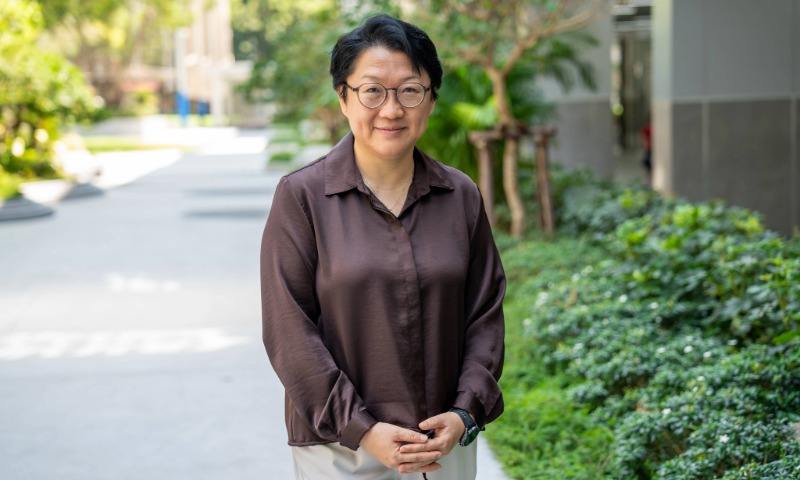
Fang Wang is a dedicated Chinese Language Teacher in the World Languages Department at NIST International School, Thailand. She brings over twenty-six years of experience as an IB educator across the PYP, MYP, and DP programmes. Her career has taken her to IB World Schools in Beijing, Hong Kong, Jakarta, and Bangkok, shaping a rich perspective on international education and culturally responsive teaching.
Beyond the classroom, Fang is an experienced IB workshop leader who facilitates both foundational training and specialised workshops for the IB programmes and for IB programmes and the wider education community. She also contributes actively to the IB community as a School Visit Team Leader, consultant, and IB field representative. Fang believes that collaborative learning and ongoing professional growth are essential for inspiring creativity, purposeful curriculum planning, and meaningful teaching and learning.
In an exclusive conversation with K12 Digest, Fang talks about her journey into international education and the experiences that shaped her philosophy as a Mandarin educator. Drawing from more than two decades of teaching across IB schools in different countries, she reflects on how language learning has evolved from traditional classroom practices to technology influenced environments. She shares her perspective on helping students overcome the fear of learning Mandarin by building cultural connections and encouraging inquiry-based learning.
You have spent over two decades teaching Chinese across different IB programs and international schools. What first inspired you to pursue a career in language education, and how has your journey evolved over the years?
This question takes me back to the year of 1999. Becoming a language teacher was not my childhood dream. When I was young, I imagined myself becoming a writer because I loved reading and writing.
During my final year of graduate school, my professor suggested that I visit Beijing No. 55 Middle School, the first school in China to implement the IB Middle Years Programme. I followed her advice and met the principal, Ms Wang Hong, who played a pioneering role in introducing IB education to China.
We had a conversation in a small storage room that Ms Wang Hong used as a quiet and temporary workspace away from distractions. The meeting felt both formal and relaxed. She asked whether I had heard about the IB before. I have always been curious by nature, so her question immediately captured my attention. I listened as she spoke passionately about the IB philosophy, and by the end of our conversation, I had signed the contract to begin my journey as an IB educator.
My academic background also shaped this path. I majored in literature as an undergraduate and later focused on bilingual education in graduate school. My thesis was based on field research in a rural town in Xinjiang, where I spent a month living with a Kazakh family and visiting local bilingual schools while interviewing their principals. Those experiences strengthened my belief that language education can build meaningful bridges between Mandarin and its rich cultural heritage.
Looking back, three conceptual lenses have consistently guided my growth as an educator: cultural intelligence, international-mindedness, and the courage to unlearn. I grew up in Yunnan Province until the age of seventeen and then moved to Beijing for university, where I lived for eighteen years. These two places shaped my identity in profound ways. I am also half Miao on my father’s side, which may explain why curiosity about different cultures, openness to new perspectives, and a willingness to explore have always been part of who I am.
The opening lines of Daniel Caesar’s song Streetcar often stay with me:
“Let me know, do I still get time to grow?”
To me, growth should never stop with age. It should be like a tree, always reaching for sunlight, welcoming the rain, and embracing the changes, challenges, and blessings that life brings.
Having worked in international schools across several countries, what key differences have you observed in how students approach language learning today compared to earlier in your career?
Living and teaching in different cities has given me many unforgettable memories. Each place carries its own cultural rhythm, and these environments naturally become an extended language-learning platform for both my students and me. My journey as an educator has taken me through different communities and cultures, and those experiences continually reshape how I see language teaching and learning.
In the earlier years of my teaching career, classrooms looked very different from today. There were no smartphones or iPads, and students relied largely on handwriting and more traditional ways of learning. I still remember the beautiful moments when my students would read Chinese poems aloud in class and then share their personal thoughts and feelings about the verses. Those moments of quiet reflection, listening, and expression created a special learning atmosphere.
Today, the classroom landscape has changed dramatically. Many students are highly engaged with digital tools and language games, and they often show great excitement when learning through online platforms. The rapid development of technology—and now artificial intelligence—has reshaped how students interact with language. Attention spans can be shorter, learners are easily drawn to interactive experiences, and visual texts often replace long passages of deep reading.
These shifts are inevitable, and they constantly remind me of the importance of “unlearning” certain habits from my earlier teaching experiences while continuing to explore new ways to approach teaching and learning. Perhaps even more importantly, they encourage me to rethink how I communicate and connect with my students in a world that is constantly evolving.
At the same time, I try to maintain a sense of balance rather than simply chasing every new trend in education. In moments of reflection, I return to a fundamental question: What is my identity as an educator? I often ask myself whether I can clearly articulate my teaching philosophy, my Why, my How, and my What. These questions help me stay grounded while continuing to grow alongside my students in a rapidly changing world.
Mandarin is often considered one of the most challenging languages to learn. What strategies or classroom approaches have you found most effective in making the learning experience engaging and meaningful for students?
Why do we often believe that learning Mandarin is challenging? Have we ever paused to ask ourselves why we feel this way about the language?
I tend to approach questions like this by stepping outside my comfort zone and looking at them from a different perspective. For many students, Mandarin does not belong to their familiar linguistic or cultural world. Learning it can feel a little like trying sticky tofu for the first time. Unless you already have a memory or connection with the taste, it may seem strange or even intimidating at first. The same might be said for century eggs, delicious to those who know them well, but mysterious to others. Often, what makes something difficult is not the thing itself, but the unfamiliarity we feel toward it. When a language seems distant from our daily lives, it can be harder to approach with confidence.
One of my key strategies as a teacher is to help students shift their mindset. I encourage them to become inquirers by doing simple research about Mandarin, exploring its structure, its cultural roots, and the stories behind the language. At the same time, I guide them to make meaningful connections between Mandarin and their own languages, cultures, and learning experiences. When students begin to see these connections, the language becomes less distant and more approachable.
In my teaching, I also like to imagine an “invisible learning skills net” woven through every lesson. Behind each activity, I want to clearly see which skills students are developing. This approach helps me reflect honestly on my teaching and ensures that classroom time is purposeful rather than simply filling the schedule.
At the beginning of each lesson, I always share the structure of the class with my students. I explain why the lesson is designed in a particular way so that they can see the bigger picture of their learning. When students understand the purpose behind each activity, they are more aware of the skills they are developing and more motivated to practise and improve them.
Ultimately, my goal is not only to help students learn Mandarin, but also to help them become confident learners who are willing to explore new languages, cultures, and perspectives.
Artificial intelligence and digital tools are rapidly entering classrooms. How do you see AI and emerging technologies transforming language learning and the role of teachers in the coming years?
This question often leads me to a bold provocation: Do we still need language teachers in a world where advanced technologies and AI assistants are increasingly integrated into schools?
If language teachers do not reflect on this question, we may risk being unprepared for the changes that are already reshaping language teaching and learning. Like many educators, I am still in the learning phase when it comes to AI-integrated classrooms. At this stage, I approach the technology thoughtfully rather than rushing into it. I do not want human curiosity, initiative, and critical thinking to be replaced by the quick responses that AI can generate.
Currently, I use AI mainly as a supportive assistant in my professional practice. It helps me with planning lessons, brainstorming new ideas, designing reflection questions, and refining ways to communicate more effectively with my students. In this sense, AI becomes a helpful partner in the background, while the human connection between teacher and student remains at the center of learning.
At the same time, it is difficult to answer the future of AI in education with complete certainty. Language teaching is only one part of a much larger educational system. I am curious to see how the broader “engine” of education, policies, school systems, and teaching practices, will evolve to adapt to these changes. As an educator, my responsibility is to stay open to learning, follow emerging guidelines thoughtfully, and continue to practise and refine my teaching so that I can support my students in a rapidly changing world.
My own prediction is that the role of language teachers in an AI-integrated classroom may gradually extend beyond the traditional classroom space. Rather than focusing only on classroom instruction, language educators may increasingly guide students into real-life contexts where language is naturally lived and experienced.
This could mean designing language field trips, learning through city tours, or creating opportunities for travel and exchange programmes where students can use the target language in authentic situations. In these environments, language becomes more than a subject to study, and becomes a bridge to culture, communication, and human connection.
In this sense, a language teacher’s role may evolve from being primarily a classroom instructor to becoming a learning designer and cultural guide who helps students experience language in the real world.
You have contributed to IB workshops and curriculum initiatives as a consultant and workshop leader. What leadership lessons have you learned through these experiences, and how have they influenced your approach in the classroom?
This question often leads me to reflect on the true purpose of leadership. When I think back to my previous leadership responsibilities, I remember that the role sometimes brought a great deal of pressure. Those experiences gave me valuable time and space to reflect and to redefine my professional goals. At this stage of my career, becoming a principal is not on my list. Senior leadership positions can sometimes bring stress and a sense of loneliness, and I have come to realise that I prefer a more organic approach to leadership, one that allows me to experience the joy of facilitating, crafting, guiding, and learning alongside others.
In my work as an IB field representative, I collaborate with workshop leaders and invest significant time in planning our faculty meetings. My planning philosophy is to co-create psychological safety within the team and to design thoughtful inquiry questions that help workshop leaders discover their voice and strengthen their identity as educators and facilitators. I believe that what truly motivates professional growth is not settling for comfortable standards, but embracing a mindset that reminds us: there is no best, only better.
My leadership philosophy is rooted in service. I believe in leading with a growth mindset and modelling continuous learning. I also enjoy designing workshops that introduce new ideas and perspectives. Whenever I attend conferences or workshops myself, I try to understand the thinking behind the design, the why behind the experience. This curiosity has contributed greatly to my development as a workshop leader. My long-term goal is to become a master trainer, and I see this as an ongoing learning journey.
Ultimately, my understanding of leadership always connects back to the purpose of education and holistic learning. I often ask myself what my lessons are preparing my students for in the future. I do not want to teach simply to add another grade to their transcripts. Instead, I hope to help students discover the purpose of learning Mandarin and begin to imagine how they might use this language to contribute meaningfully to the world around them.
International schools bring together students from many cultural and linguistic backgrounds. How do you create an inclusive environment where students feel confident experimenting with a new language?
Cultural intelligence is not something that develops overnight, and it grows gradually through experience and reflection. I still remember feeling lonely and overwhelmed when attending international conferences as a young teacher, especially when English was the main working language and I was not strong in speaking English at that time. Those moments challenged me in many ways, but they also helped me better understand how some of my students might feel when they are learning and communicating in a new language.
These experiences encouraged me to develop greater empathy and to intentionally train myself to notice cultural cues that were unfamiliar to me. In the IB leadership training, one of the workshops focuses specifically on cultural intelligence. Through those discussions and reflections, I was able to explore both the opportunities and the challenges that come with navigating different cultural perspectives.
Learning about cultures sometimes feels like navigating a cultural map. As we explore new cultures and perspectives, I believe it is equally important to remain aware of where we come from and what we represent. It can be easy to follow the loudest voices in a conversation, but it is far more meaningful, and sometimes more challenging to engage in dialogue that builds shared understanding and mutual respect across cultures.
With this mindset, I encourage my students to share their ideas openly in the classroom. I also choose teaching materials that offer culturally responsive perspectives. Together, we co-create our classroom norms, and through these conversations students begin to see how values and expectations can be shaped by different cultural backgrounds. These moments often lead to thoughtful discussions and deeper understanding among the students themselves.
Outside the classroom, what interests or passions keep you inspired as an educator, and what advice would you give to students or young professionals who are interested in careers in education or language studies?
I enjoy connecting with thoughtful ideas in education and beyond. If we imagine that all the walls around us disappeared, we might naturally see the whole world as our learning space. In that sense, connecting with educators from different schools, regions, and cultures becomes both natural and inspiring. These exchanges often open new perspectives and remind me that education is a shared global journey.
In the past, I was quite active on social media. Over time, however, I began to reflect more carefully on how I used that space. I started asking myself what my posts were truly contributing. Were they meaningful, reflective, or inspiring? Gradually, I chose to post less frequently and focus more on sharing ideas that might provoke thought or encourage reflection rather than promoting myself.
Because I value my time and energy, I like to begin each new year by choosing three words that capture my focus for professional learning. These words guide my growth throughout the year. This year, the three words I have chosen are self-discipline, resilience, and curiosity. I try to align my learning, reading, and reflections with these themes as I continue developing both personally and professionally.
For students or young professionals who are considering careers in education or language studies, my first piece of advice is simple: choose this path because you truly love it, not because it seems like an easy way to earn a paycheck. Teaching should never be a last choice. It is a profession that requires passion, commitment, and mastering the art of teaching with a strong purpose to build a better world collectively.
At the same time, educators need to stay connected to the real world. We should remain aware of what is happening around us and approach change with an open mind. Education is filled with new trends and ideas, but it is important to maintain critical and independent thinking rather than following every new movement uncritically.
Finally, I believe that teachers must protect time for reading, thinking, and reflection. This can be difficult because teaching is often busy and demanding. Still, even setting aside thirty minutes a day to read research-based educational articles or thoughtful writing can provide inspiration and nourish our professional growth.
For teachers like me who have been in the classroom for more than twenty-six years, it is important to have the courage to unlearn. From time to time, we need to “clean our lockers,” letting go of both visible habits and invisible assumptions that no longer serve our students or our learning. Ultimately, what matters most is that we continue to enjoy teaching and remain fully present in the learning journey with our students, working with purpose, curiosity, and wholehearted participation.