



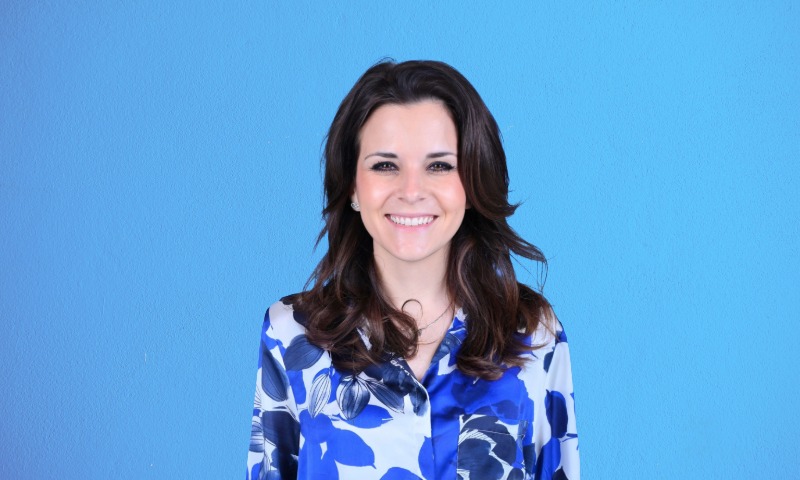
Vanja Lucic is an educational leader and published economist with over a decade of experience advancing teaching innovation, faculty development, and student achievement in international schools across Asia and Europe. She is currently the Head of Business and Economics at King’s College International School Bangkok.
She designs concept and inquiry-driven curricula that promote cognitive challenge, analytical depth, and meaningful engagement, while integrating digital tools to strengthen critical thinking, creativity, and analytical confidence. Vanja has led departments and whole-school professional development initiatives, fostering collaborative cultures built on shared inquiry and continuous improvement.
She believes education should inspire a genuine love of learning, creating intellectually vibrant classrooms where students think independently, take academic risks, and grow into reflective, capable, and globally aware individuals.
In an exclusive conversation with K12 Digest, Vanja talks about her journey from university-level economics educator to leading Business and Economics at an international school, and how that experience shaped her teaching and leadership philosophy. She discusses the importance of maintaining intellectual depth in an age of instant information, encouraging students to analyze real-world economic developments and think critically.
Can you share the key milestones in your journey from economics educator to Head of Business and Economics at King’s College International School Bangkok, and what lessons you’ve learned along the way?
My professional journey began in higher education, where I taught at university level and was actively engaged in academic research and scholarly discussion. What I valued most were the debates with students, challenging economic theories and guiding their independent inquiry. That experience sharpened my thinking and left me with a lasting conviction that economic models only matter when they are argued, challenged, and applied critically.
When I transitioned into international education, I faced a different challenge. I saw how easily Economics could feel abstract or exam-driven for younger students. I wanted them to experience the same intellectual curiosity I had valued and to develop a genuine love of learning the subject. Our classes often open with recent economic developments such as policy decisions, shifts in trade, or technological change examined through an international lens. Students connect ideas across topics, analyse real data, and debate policy responses. Over time, they begin to approach discussions like economists rather than simply preparing for assessments.
As I stepped into leadership roles, my focus widened beyond my own classroom to the culture we build together as educators. I have come to see leadership as modelling curiosity, encouraging thoughtful innovation, and creating environments where professional growth feels shared and purposeful. When teachers feel inspired to keep learning, students feel it too.
What are some of the most significant challenges schools face today in delivering robust Business and Economics programmes, and how are you addressing them?
One of the most significant challenges in delivering robust Business and Economics programmes today is maintaining intellectual depth in an age of speed. Students are surrounded by constant information, short-form media, and instant answers. There is a real risk that subjects like Economics become reduced to simplified explanations or exam technique rather than rigorous analytical thinking. For me, the answer lies in restoring purpose to the classroom.
This requires moving beyond superficial case studies and engaging instead with live developments, authentic data, competing viewpoints, and conversations that do not stop when the lesson ends. When students debate current business decisions or analyse economic shifts unfolding around them, the subject feels alive. We integrate digital and AI tools thoughtfully, not as novelty, but as a way to deepen inquiry and allow students to present ideas creatively.
The goal is not simply strong examination results. It is to develop curiosity, resilience, and the confidence to question. When students leave the classroom still discussing an economic issue, you know you are building something that goes beyond the syllabus.
How do you see artificial intelligence and emerging technologies reshaping how economics and business concepts are taught and learned at the school level?
Artificial intelligence is reshaping Economics and Business education in two very clear ways: it is changing what students learn and how they learn it.
On the content side, AI and emerging technologies are transforming the economy in real time. Labour markets, productivity, inequality, regulation, even ethical decision-making are being reconsidered because of technological change. That makes our subject incredibly relevant. Students are not discussing distant theories; they are analysing shifts that are unfolding right now. Economics is built on questioning assumptions and testing ideas against data, and AI simply makes that process more immediate and visible.
In terms of learning, technology allows us to raise expectations rather than lower them. Students can work with real data sets, explore simulations, receive more personalised feedback, and experiment with different outcomes. When used thoughtfully, and it does require thoughtful implementation, AI can deepen inquiry and open up more creative ways for students to question, present and defend their ideas.
For me, the key is balance. I believe in embracing the opportunities AI offers, but always with the intention that it strengthens thinking rather than replaces it. If students leave our classrooms more analytical, more questioning, and more confident in interpreting a changing world, then we are using technology in the right way.

King’s College International School Bangkok emphasises global readiness. How do you embed real-world economic thinking and global awareness into your curriculum?
Although King’s College International School Bangkok is rooted in a British educational tradition, we are ultimately preparing global citizens. Our students will study, work, and live across different countries and cultures, so global readiness is not an add-on to the curriculum; it is central to it.
In Economics and Business, students explore businesses, markets, and policy decisions from around the world. They examine how different governments respond to similar economic challenges and how cultural, political, and institutional contexts shape outcomes. They learn that in a globalised and highly interdependent world, events on one side of the globe can create ripple effects elsewhere, sometimes positive, sometimes disruptive.
An international school environment makes this even more meaningful. Our classrooms bring together students with diverse backgrounds and lived experiences, and that diversity strengthens discussion. When students see how the same economic policy may affect societies differently, they begin to understand that there is rarely one universal solution. Context matters.
Ultimately, embedding global awareness is about preparing students to think beyond national borders, engage respectfully with complexity, and understand their responsibility in an interconnected world.
What leadership principles guide your work with teachers and students, and how have these evolved over your career?
My leadership is guided by a belief in modelling what we expect from others. If we want students to be curious, reflective, and resilient, we must demonstrate those qualities ourselves. The same applies to teachers. Leadership in education begins with visible passion for learning and a willingness to keep growing.
Over time, I have come to understand that strong standards are sustained by strong culture. I value a culture of sharing, collaboration, and mutual support. When teachers feel trusted and safe to exchange ideas, experiment, and refine their practice, improvement becomes collective rather than individual. Emotional awareness plays an important role here. Understanding different perspectives and responding thoughtfully allows teams to grow with confidence rather than pressure.
I also believe leadership requires clarity and integrity. It means being consistent in expectations and empowering others to take ownership of their work. Strong leadership is not about control, but about building capacity in others. The leaders who influenced me most inspired through example. They encouraged curiosity, supported risk-taking, and made professional growth feel meaningful. That is the kind of environment I aim to build.
Outside of your professional work, what personal interests or values influence how you approach education and leadership?
Outside of my professional role, living and working in different countries has shaped me deeply. Experiencing different cultures, languages, and ways of thinking has strengthened my belief that perspective matters. It has made me more aware of how background influences interpretation and how much we gain when we listen carefully to views different from our own. That awareness influences how I lead and how I design learning environments.
On a more personal level, being a parent has also influenced my leadership. It reminds me that schools are not only academic institutions, but environments that shape confidence, resilience, and identity. That perspective encourages me to balance rigour with humanity and to lead with both high expectations and empathy.
I am also a strong believer in creativity. I have always been drawn to art and visual expression, and I try to bring that spirit into my teaching. Whether through thoughtfully designed materials or occasional unexpected tasks and formats, I enjoy creating moments that make learning feel dynamic and memorable.
What advice would you offer to students considering a future in economics, business studies, or related fields, especially in an increasingly interconnected world?
I would encourage students to choose Economics or Business if they are naturally curious and enjoy asking “why.” These subjects reward those who look beyond simple answers and are willing to explore complexity. Develop strong analytical and data skills, but also cultivate the confidence to question assumptions and examine ideas critically.
In an interconnected and rapidly changing global economy, the ability to think carefully and adapt thoughtfully matters more than memorising formulas. As John Maynard Keynes famously observed, “When the facts change, I change my mind.” That openness to evidence and intellectual flexibility will serve students far beyond the classroom.