



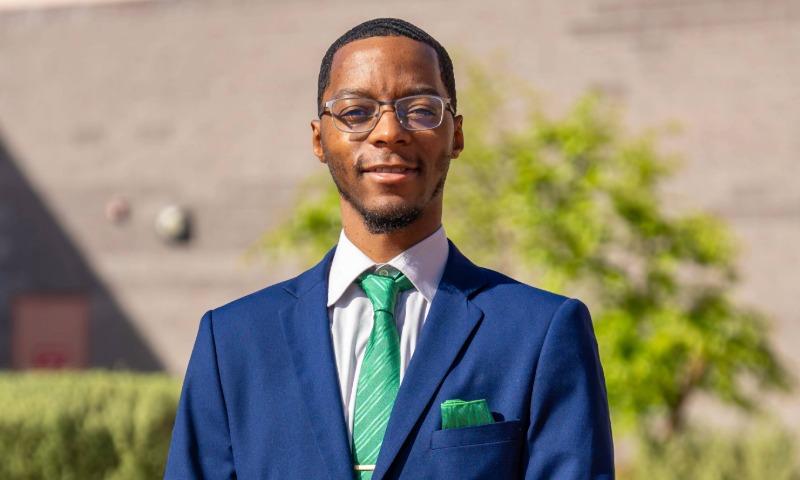
Jeff Haddock is an experienced educational leader focused on building resilient, student-centered learning environments that prepare students for academic success and life beyond school. With a background in counseling, student support, and leadership in independent schools, he brings a systems-level approach to strengthening culture, accountability, and student growth. Currently the Dean of Upper School Counseling at The Meadows School, he emphasizes embedding resilience, reflection, and ownership into daily school life. On July 1, 2026, he will become Assistant Head of Middle School at Davidson Day School, where he will lead faculty development, student programs, and strategic initiatives. His approach centers on clarity, consistency, and equipping students to both perform and persevere.
A fifth grader erases her math work three times because it “has to be perfect.” A seventh grader shuts down after one low quiz grade. A ninth grader receives a B and calls it a failure.
If you work in K-12 education, this is not surprising. It is familiar.
Students are capable, bright, and often deeply motivated. Yet increasing numbers struggle with something foundational: recovering when things do not go as planned.
Resilience, the ability to adapt, reflect, and move forward after difficulty, is not a fixed trait but a skill developed through repeated and supported practice. If we want confident graduates and future leaders, we cannot wait until college or the workforce to teach recovery. We must design classrooms now where productive struggle is expected, structured, and safe.
This is not a call for lowering standards. It is a return to what strong education has always included: challenge, reflection, and growth.
Maintain High Expectations with High Support
Resilience is not built by lowering standards. It is built by pairing a challenge with a structure.
High expectations without support create panic. Low expectations with heavy support create dependency. High expectations with structured support create growth.
I once met with a student who had missed multiple deadlines and was asking for yet another extension. The easy decision would have been to adjust the timeline again. Instead, I asked a different question: “What is your plan to fix this?” The student outlined a plan, followed through, and completed the work on time without the extension. It was not flawless, but it was earned, and weeks later that same student navigated another setback independently without asking to be rescued.
Decades of research on social-emotional skill development demonstrate that strengthening emotional competencies enhances rather than weakens academic performance. Students rise when we expect them to, especially when they are given tools to practice, reflect, and revise along the way.
Start Small
Building a resilient classroom culture does not require a schoolwide overhaul.
It may begin with adding reflection after the next assessment. It may mean building revision into one major project. It might involve rewriting syllabus language about mistakes or sharing a personal story of recovery. Small, intentional shifts compound and reshape classroom culture.
Create Classrooms Where Risk Feels Safe
Resilience cannot grow in fear.
Many students hesitate to participate because being wrong feels unsafe. When classrooms prioritize speed and correctness over exploration, students learn to stay quiet.
Intentional structures can reduce that fear. Using think-pair-share before whole-class discussions allows students to test ideas in a lower-stakes setting. Rotating discussion leaders distributes ownership. Offering written responses gives reflective learners space to process before speaking.
Inclusive classroom routines create psychological safety. When students feel safe taking intellectual risks, they are more willing to attempt, revise, and try again. That cycle builds durable confidence.
Normalize Mistakes Early and Often
Many students quietly believe strong learners never struggle. When they encounter difficulty, they interpret it as proof that they do not belong.
That belief can be interrupted from the first day of school. A simple statement such as, “In this classroom, mistakes are expected. They help us learn,” establishes psychological safety. Reinforcing that message matters. Reviewing incorrect answers as a class without embarrassment, praising effort and strategy instead of only accuracy, and sharing personal academic or professional setbacks models intellectual humility.
Students are calmer in rigorous programs when they understand that difficulty is part of the design. When adults normalize imperfection, students begin to internalize resilience.
Teach Reflection, Not Just Content
In fast-paced academic environments, reflection is often the first element removed. After a test or major assignment, it’s tempting to move immediately to the next unit.
However, pausing to ask students what strategies they used to prepare, what challenged them the most, and what they might try differently next time shifts the focus from “What grade did I get?” to “How did I approach this?”
Large-scale research on social-emotional learning has shown that structured reflection improves both academic performance and emotional regulation. More recent school-based resilience interventions have demonstrated measurable gains in persistence and problem-solving when reflection is embedded into instruction. Even brief written responses or short discussions can strengthen students’ ability to think about their thinking.
Metacognition is not automatic. Students need guided practice to develop it.
Coach Instead of Rescue
Educators often feel pressure to fix problems quickly. Extensions are granted, assignments are modified, and grades are negotiated. While support is sometimes necessary, constant rescue prevents growth.
Coaching invites ownership. Asking, “What is your plan?” or “What is one step you can take first?” shifts responsibility back to the learner. When students generate solutions, even imperfect ones, confidence increases.
Research on autonomy supportive parenting and schooling consistently shows that students who navigate manageable challenges develop stronger coping skills and lower anxiety over time. Schools can mirror that approach by pairing guidance with accountability rather than replacing effort with accommodation.
Design Assessments That Allow Recovery
When everything is graded as final, school feels like judgment rather than development. Students start protecting their image instead of strengthening their skills.
Building structured opportunities for revision changes that narrative. Turning a major assignment into a draft, feedback, and revision cycle reinforces the idea that learning is iterative. Allowing quiz corrections that require explanation rather than simple answer changes promotes metacognition. Breaking larger projects into checkpoints with feedback along the way shifts the emphasis from performance to progress.
Rigor does not disappear with revision. It becomes developmental. Students who experience guided recovery stop viewing mistakes as identity threats and begin seeing them as information.
Partner with Families on Productive Struggle
Families want their children to succeed. Many understandably equate success with smoothness and high grades. When schools intentionally design for productive struggle, communication becomes essential.
Hosting conversations about resilience, clearly explaining grading and revision policies, and sharing examples of how setbacks led to growth can build alignment. When families understand the purpose behind structured-challenge, they are more likely to reinforce it at home.
The message must be consistent: struggle is not a signal of failure. It is part of development.
Model Recovery as an Adult
Students constantly observe how adults respond to frustration. When technology fails, when a lesson does not land, or when plans shift unexpectedly, narrating your adjustment teaches adaptability in real time.
“That did not work the way I expected. Let me try another approach.”
Those moments communicate flexibility more powerfully than any formal lesson on resilience. Students absorb what they see modeled.
Beyond Grades
Recent employer surveys consistently report that problem-solving and collaboration rank among the most valued workplace competencies, often above technical proficiency. Those skills require resilience. They require individuals who can adapt, persist, and collaborate through uncertainty.
Resilience does not begin in the workplace. It begins in the classrooms and sport fields where students are allowed to struggle, reflect, and recover without shame.
We cannot eliminate difficulty from students’ lives, nor should we. We can design learning environments where setbacks become instruction rather than identity threats.
If we want graduates who can lead, innovate, and endure, we must stop rescuing them from every stumble. Failure is not fatal. When handled well, it’s formative.