


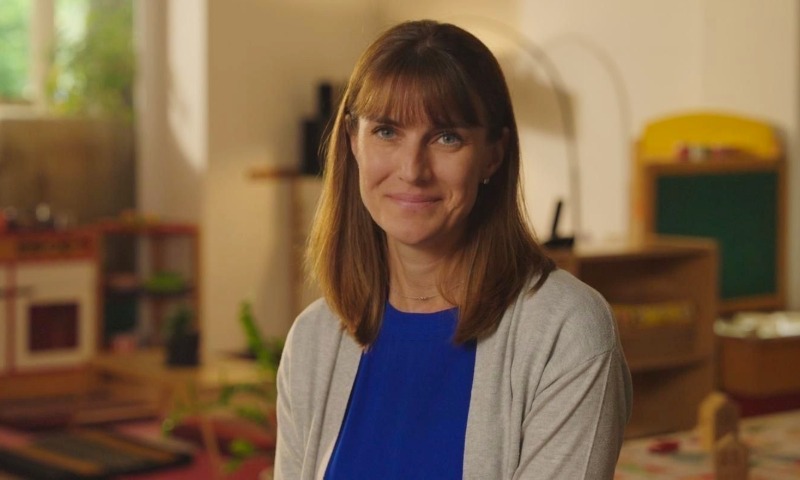
Dr. Carolyn Mason Parker is an experienced international school leader with a background spanning the UK, USA, Middle East, and Africa. She currently serves as Executive Head of School, leading strategic development across multiple campuses and supporting innovation in teaching, learning, and school design. Her work focuses on aligning curriculum, assessment, and professional learning to better prepare students for an increasingly complex and interconnected world. She has a particular interest in competency-based education, future-focused learning environments, and the role of leadership in building coherent and sustainable school systems. Carolyn has contributed to a range of international education initiatives and regularly engages in professional dialogue around educational transformation, inclusion, and the evolving relationship between schools, universities, and industry. She is committed to evidence-informed practice and to supporting schools in developing approaches that balance academic rigour with the broader skills and dispositions students need for life beyond school.
In recent years, there has been a noticeable shift across the K–12 education landscape. Schools are increasingly moving away from content-heavy models towards approaches that emphasise competencies such as critical thinking, collaboration, communication, and ethical decision-making. Classrooms are evolving, and with them, so too are the ways in which learning is designed, experienced, and assessed.
This shift is not happening in isolation. Across international education networks and professional conversations, there is growing agreement that academic success alone is no longer a sufficient measure of readiness for life beyond school. Instead, there is a broader recognition that students need to be equipped with the skills and dispositions required to navigate complexity, uncertainty, and change.
And yet, despite this progress, a gap remains.
While schools are rethinking what learning looks like, universities and employers are not always moving at the same pace. Admissions processes and hiring practices continue, in many cases, to prioritise traditional indicators such as grades, examination results, and subject specialisation. These measures still hold value, but they do not always capture the full range of capabilities that students are developing during their school years.
The result is a growing misalignment at a critical point in a young person’s journey.
This is not the result of any single system falling short. Rather, it reflects the complexity of change across interconnected sectors. Schools, universities, and industry each operate within their own structures, expectations, and timelines. However, if the shared goal is to prepare students for an increasingly dynamic world, then greater coherence between these sectors becomes essential.
In many schools, this evolution is already well underway. Students are engaging in interdisciplinary learning, applying knowledge in authentic contexts, and developing transferable skills through inquiry-based approaches. Assessment practices are also changing. Portfolios, project-based learning, and reflective processes are being used to provide a more holistic picture of student progress and achievement.
These developments are not theoretical. They are visible in everyday classroom practice and are shaping how students understand their own learning.
However, when students transition beyond school, they often encounter systems that continue to rely on more traditional forms of evidence. Universities may still focus heavily on examination outcomes, while employers frequently report that graduates lack certain workplace skills, even when those skills have been an explicit focus of their education. This suggests that while innovation is taking place, it is not yet fully connected across the system.
Addressing this disconnect requires a shift in how different sectors communicate and collaborate.
One important step is the development of shared language. When schools, universities, and employers use terms such as “critical thinking” or “collaboration,” they do not always mean the same thing. Establishing greater clarity around these concepts—what they look like in practice, how they develop over time, and how they can be demonstrated—can support more meaningful alignment.
Equally important is the way in which learning is evidenced. Schools are increasingly able to present rich, evidence-based profiles of student achievement that extend beyond grades alone. These may include portfolios of work, extended projects, and demonstrations of learning over time. Such approaches provide deeper insight into what students know and can do, but their value depends on wider recognition. For these forms of assessment to have impact, they need to be understood and trusted beyond the school context.
Partnerships offer another pathway forward. Where schools, universities, and industry engage in sustained collaboration, there is greater opportunity to build mutual understanding. Internship programmes, mentorship opportunities, and joint curriculum initiatives can help ensure that learning remains relevant and connected to real-world contexts. These partnerships are most effective when they are ongoing and reciprocal, rather than occasional or transactional.
Leadership plays a critical role in enabling this alignment. Those working across education and industry have the capacity to influence how systems evolve, both within their own organisations and through collaboration with others. By creating opportunities for dialogue, being open to new forms of evidence, and maintaining a focus on shared outcomes for young people, leaders can help bridge existing gaps.
It is important to recognise that this shift is not about reducing academic rigour. On the contrary, developing competencies such as critical thinking and problem-solving often requires deeper engagement with subject knowledge and more sophisticated application of learning. The challenge lies not in replacing traditional measures, but in broadening our understanding of what high-quality learning looks like and how it is recognised.
As education continues to evolve, the risk is not that schools are changing too quickly, but that other parts of the system are not yet fully aligned with that change. Without greater coherence, there is a danger that students will continue to navigate transitions between systems that do not fully recognise or build upon their learning.
Bridging this gap will take time and deliberate effort. It will require shared understanding, thoughtful collaboration, and a willingness to question established practices. However, the potential benefits are significant. Students will be better supported as they move from school to higher education and into the workplace. Their skills and capabilities will be more clearly understood and more effectively utilised. And the system as a whole will be better equipped to respond to the demands of a complex and rapidly changing world.
The work of alignment is already underway in many contexts. The next step is to ensure that these efforts connect, so that progress in one part of the system strengthens the whole.