



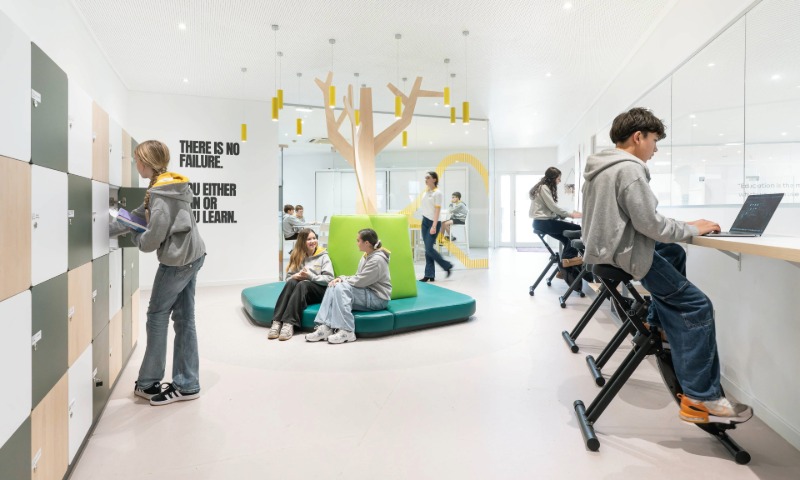
At Bright International School Algarve, learning begins with a feeling. There is a quiet sense of energy across the campus. Children move between thoughtfully designed spaces with confidence and curiosity. Conversations flow naturally. Ideas are explored openly. The school has built a culture where learning feels alive. That atmosphere is deeply intentional.
For Tom Caston, Head of School, the values of “joyful learning” and “natural excellence” are not aspirational phrases placed on a wall. They influence the everyday life of the school and guide the decisions behind it. “Within their learning, our children feel curious and excited to learn, not pressured or passive. We want learning to be meaningful and emotionally safe, so children associate being here with pleasure and possibility,” he explains.
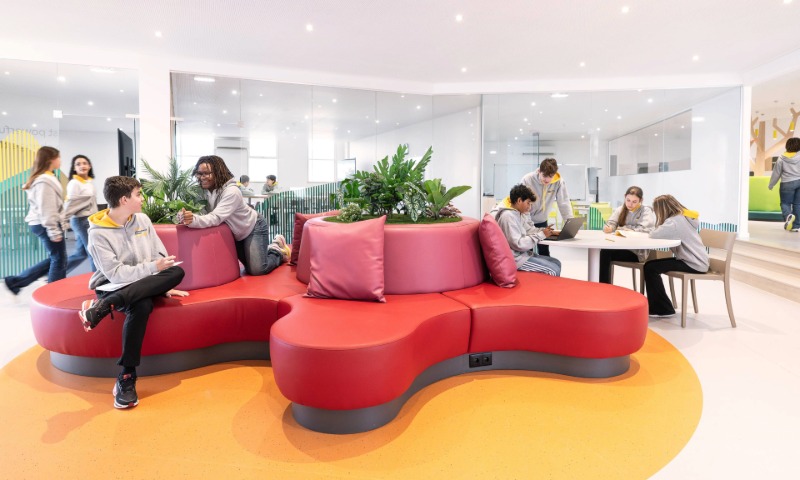
Those ideas can be felt in the rhythm of the classrooms. Students gather in small collaborative groups, discussing projects, solving problems, and sharing discoveries with ease. Teachers move alongside them as guides rather than lecturers. There is structure, but also freedom. The atmosphere remains calm and focused, even as creativity fills the room.
Bright International School’s philosophy is grounded in the belief that success should never be reduced to comparison. The school encourages children to grow into their own strengths, talents, and character at a pace that feels authentic and sustainable. Effort is recognised. Individuality is valued. Every learner is seen as more than a set of academic outcomes. “Excellence at Bright is not about pressure or comparison, but about growth, pride, and doing your best. Children are recognised for who they are, not who they compete against,” says Tom.
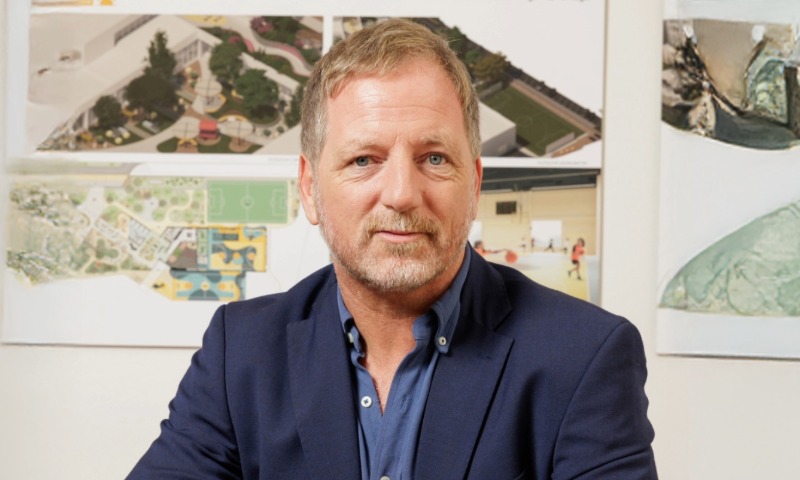
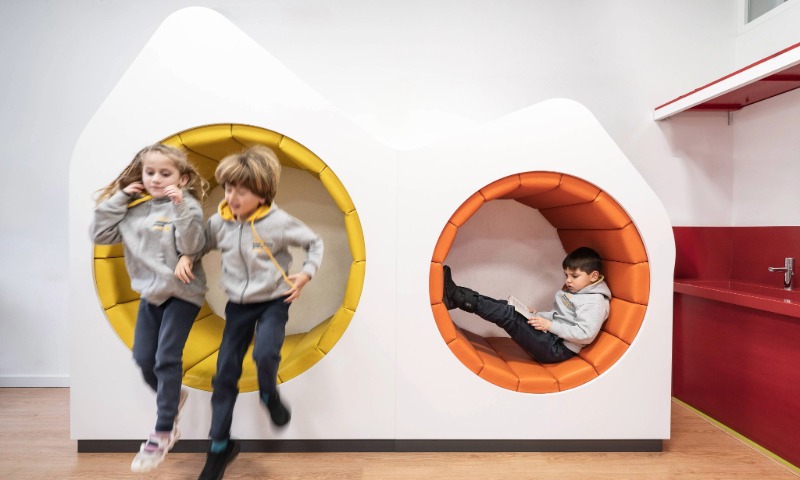
That same thinking influenced the design of the campus itself. The learning spaces were created by renowned Danish designer Rosan Bosch and her team at Rosan Bosch Studio, who have collaborated with other schools within the Sharing Education Group. Their approach is built on a simple but powerful idea: environments shape behaviour, creativity, and the way children learn.
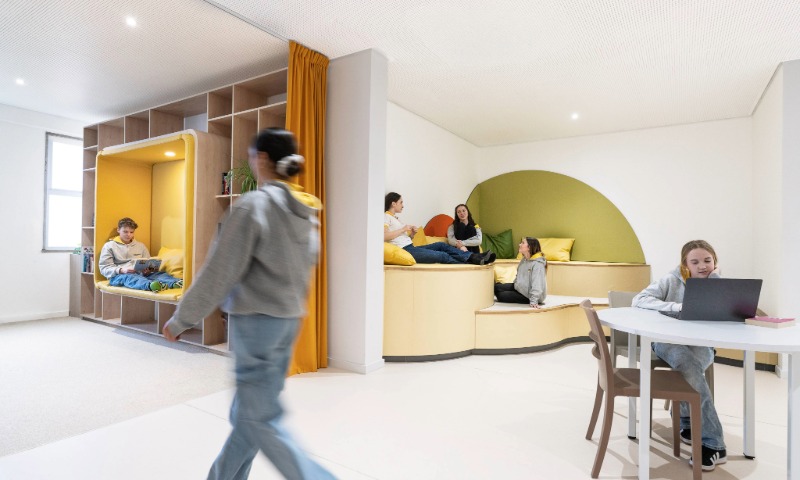
Traditional rows of desks are replaced with dynamic spaces that invite movement, communication, and exploration. Students read in quiet corners, brainstorm in open collaborative areas, and engage with lessons in ways that feel instinctive rather than forced. The result is a learning environment that encourages independence and critical thinking from an early age.
Having spent more than two decades teaching in conventional school settings, Tom sees the difference clearly. “The quality of the independent learning is far higher than I have experienced at any other time in my career. There is a calm but purposeful atmosphere throughout the school,” he says.
That sense of purpose continues to guide every part of Bright International School. It is visible not only in the architecture or the curriculum, but in the confidence of the students themselves. Here, education is designed to nurture capable learners and grounded young people who enjoy the process of becoming who they are meant to be.
Learning Through Doing
Inside the classrooms of Bright International School, learning rarely stays confined to a desk. Students move, build, question, test ideas, and collaborate with one another in ways that feel natural and purposeful. The school follows the Cambridge International curriculum, but its delivery is shaped by inquiry, creativity, and real-world engagement.
Lessons are designed to place students at the centre of the experience. Teachers encourage exploration rather than passive memorisation, creating opportunities for children to engage physically and intellectually with what they are learning. Whether through discussion, experimentation, design projects, or collaborative challenges, the emphasis remains on participation and discovery.
One of the clearest examples of this philosophy can be seen in the school’s partnership with Bufori and its EVIE initiative, short for Electric Vehicles in Education. Bright International School is one of only three schools in Portugal selected to participate in the project, alongside its sister school, International Sharing School. What began as an extracurricular opportunity has quickly become one of the school’s most exciting student-led experiences.
In one part of the campus, a team of students from Years 7 to 10 gathers around the framework of an electric vehicle, discussing engineering decisions and assembling components together. Nearby, another student team works on sponsorship proposals, branding ideas, and marketing campaigns to support the project. The atmosphere feels closer to a startup environment than a traditional school activity.
Tom has watched the journey unfold with admiration. “This is the most wonderful real-life experience for the pupils. It has been a joy for staff to watch this from afar. They have shared moments of joy, frustration, breakthroughs and disillusion,” he says.
The initiative naturally connects multiple disciplines across the Cambridge curriculum. Students apply concepts from Science, Computing, Design and Technology, Art, and Global Perspectives while also developing an understanding of entrepreneurship, investment planning, branding, and teamwork. More importantly, they learn how ideas evolve through trial, collaboration, and persistence.
That same spirit of active learning extends into everyday classroom experiences. In Mathematics lessons, geometry often becomes something students can physically see and feel. Angles are mapped out across classroom floors and tables using masking tape. Students build life-sized models, measure shapes through movement, and solve problems together in groups. Laughter and discussion fill the room as mathematical concepts become tangible rather than abstract.
The approach may look playful on the surface, but the intention behind it is deeply thoughtful. By making learning active and memorable, Bright International School helps students develop confidence alongside academic understanding. The process encourages them to think independently, communicate clearly, and remain curious long after the lesson ends.
Spaces That Spark Conversation
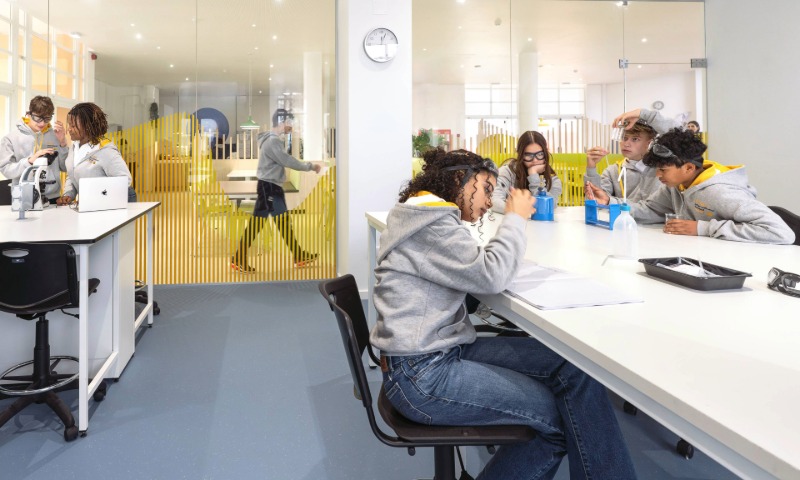
The physical environment at Bright International School was designed to bring people together. Open, flexible classrooms encourage students to communicate, collaborate, and learn from one another from the earliest years through to iGCSE. The layout itself reflects the school’s belief that meaningful learning grows through interaction and shared thinking.
For Tom, those moments of student conversation are among the most rewarding parts of teaching. Despite leading the school, he continues to teach iGCSE Geography himself and remains closely connected to classroom life. “As a Geography teacher myself, the Holy Grail for each lesson is to be able to take a step back and listen to the pupils talking between themselves about the subject,” he says.
That mindset influences academic planning across every age group. Teachers intentionally create opportunities for students to question, debate, analyse, and reflect together. The process is still evolving, but Tom believes each term brings a greater sense of confidence and natural collaboration for both teachers and pupils.
Inquiry-based learning sits at the centre of that journey. In Cambridge Science lessons, students investigate concepts through discussion, experimentation, and shared problem-solving. Questions often lead the lesson forward. Students are encouraged to challenge assumptions, test ideas, and explore different perspectives rather than simply search for the “right” answer.
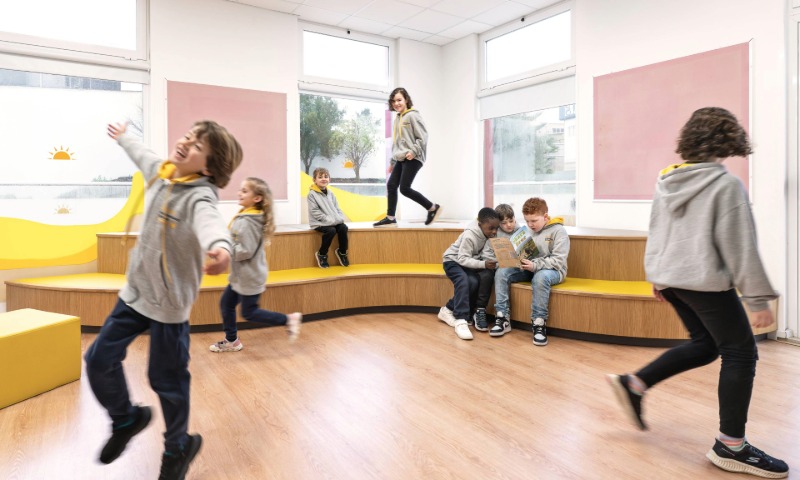
The same energy carries into Cambridge English classrooms, where communication and creativity take centre stage. On any given day, students might be recording podcasts, participating in debates, building collaborative stories, or moving between activity stations analysing texts and solving challenges together. The classrooms feel dynamic and alive, with learning unfolding through conversation and participation.
Underlying every lesson is a strong sense of emotional safety. Students are encouraged to express opinions openly, take intellectual risks, and learn through experimentation without fear of failure. That atmosphere allows confidence to grow steadily over time. “We’re always looking to weave enquiry-based learning into our teaching because we believe this will generate the skills in our young people that they need for the future. Questioning will always be open, and pupils will always be made to feel safe to express their opinions and take risks in their learning,” Tom explains.
Traditional classroom routines rarely define the learning experience at Bright. “It is very rare, if ever, that you will see a teacher at Bright standing in front of the class with each student looking the same direction copying from the board,” Tom says. Instead, lessons are designed to activate higher-order thinking skills such as evaluation, synthesis, judgment, and modelling. He believes these experiences help knowledge stay with students in a deeper and more lasting way.
The result is a school culture where learning feels shared rather than delivered. Students are not simply absorbing information. They are learning how to think, question, communicate, and contribute with confidence. And in a rapidly changing world, those qualities may prove to be the most valuable lessons of all.
Creating Confident Learners Beyond the Classroom
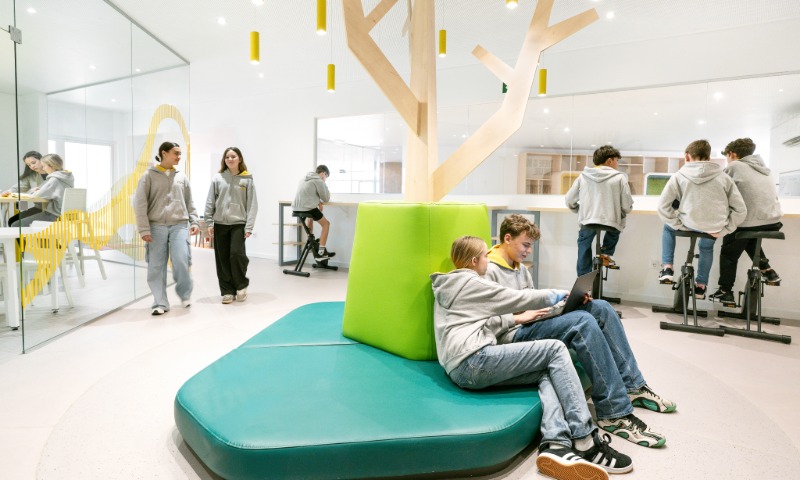
At Bright International School, learning is designed to feel flexible, dynamic, and connected to the real world. Students are encouraged to move through spaces with independence, collaborate naturally with classmates, and engage with lessons in ways that reflect how they learn best.
Classrooms rarely remain static for long. A group discussion may shift into hands-on experimentation. Independent research might evolve into collaborative problem-solving. Teachers create environments where students feel comfortable taking ownership of their learning, while still feeling guided and supported throughout the process.
Technology also plays a meaningful role across the curriculum. Rather than being taught as a separate skill, digital literacy is integrated naturally into everyday learning experiences. Students learn coding, multimedia design, online safety, and responsible digital communication through project-based activities that connect naturally with classroom subjects. Presentations, digital campaigns, video storytelling, and interactive research projects have become familiar parts of school life.
Creativity flows through the campus just as naturally. In Cambridge Art & Design, students experiment across sculpture, painting, mixed media, and design thinking while often linking their work to themes explored in Science or English. The projects encourage students to think across disciplines and see creativity as something that belongs everywhere, not only in the arts classroom.
Yet some of the school’s most important learning moments happen beyond academic lessons altogether. For Tom, extracurricular life is where many of the school’s core values truly come alive. “The extracurricular activities are a hugely important part of what we do. It is in these moments that all the skills we talk about so regularly, communication, collaboration, creativity and critical thinking, are brought to the fore,” he says.
The programme caters to the diversity of student interests and personalities. Sports, music, drama, science and technology initiatives, and imaginative fantasy-based activities all give students opportunities to explore who they are outside formal academic expectations. There is freedom to experiment, make mistakes, and grow in confidence without the pressure that can sometimes accompany classroom assessment.
“This part of the Bright education builds those skills in a slightly different environment where failure might not seem quite so catastrophic. It also develops passions, individual and team excellence and provides the boys and girls with a great deal of fun,” Tom explains. One memory, in particular, still stands out for him. Earlier in the term, the school hosted its first music recital. Families gathered together as students nervously stepped onto the stage, many performing publicly for the very first time. “It will remain one of my favourite memories of this school since joining,” Tom says.
Moments like these continue to shape the culture of Bright International School. They reveal a school community that values not only achievement, but joy, courage, and self-expression. As the school grows, its extracurricular programme is expected to expand alongside it, creating even more opportunities for students to discover what excites and inspires them.
A Community Built on Kindness and Belonging
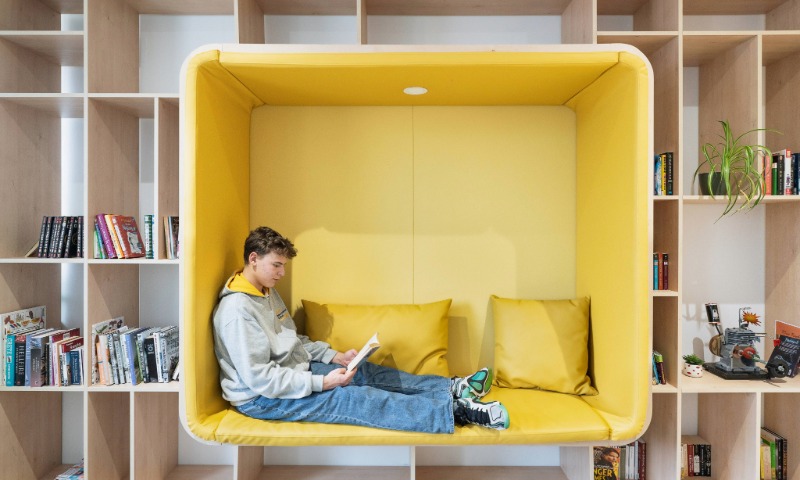
Walk through the corridors of Bright International School and one thing becomes immediately clear. Relationships matter here. Students greet teachers comfortably. Older pupils pause to help younger children. Families gather naturally after school events, continuing conversations long after activities have ended. The sense of community feels visible in the smallest interactions.
Wellbeing and student voice sit at the centre of the school’s educational philosophy. Academic success is important, but so is emotional confidence, resilience, and the ability to feel heard. Through collaborative challenges, reflective learning activities, and leadership opportunities, students are encouraged to develop self-awareness alongside intellectual growth.
Tom frequently speaks about the school’s third core value: “Community Connections.” For him, the phrase represents something far deeper than organised events or school traditions. “At Bright, this is about being part of a supportive, inclusive and engaged community where relationships matter just as much as academics. Everyone feels they belong to the Bright community, whilst differences are welcomed and valued,” he explains.
That philosophy is reinforced intentionally each day. Kindness, respect, and contribution are not treated as abstract ideals. They are modelled consistently by staff and older students alike. Tom believes culture is created through everyday behaviour, particularly by the students younger children naturally look up to. “We often talk to the older pupils about their importance in creating a lasting culture of kindness here at the school. We have a lovely group of Year 9 and 10 pupils who can, and do, set a beautiful tone for all those younger ones who look up to them,” he says.
Strong pastoral care supports that culture behind the scenes. Staff are trained to recognise and respond thoughtfully to the needs of each child, while support systems are designed to provide guidance at the right moment and in the right way. Just as important is the emotional atmosphere the school works hard to maintain: one where children feel safe, understood, and valued. “At Bright we always say that we are a family-owned school, for families,” Tom shares.
That connection extends well beyond the classroom walls. Throughout the year, the school hosts community events that bring students, staff, and parents together in relaxed and meaningful ways. The Bright Run, Bright Wine & Cheese Evening, and Bright Watersports Day have all become important moments in the school calendar. A highly active Parent and Teacher Association also helps strengthen those relationships, creating opportunities for families to contribute directly to school life.
Tom believes this close partnership with parents plays an important role even during challenging moments. Trust, he says, allows conversations to remain open and constructive. “In moments where things might not be so perfect, our close engagement with the parents makes those discussions easier and more open, underpinned by an established level of trust.”
Where Ambition Meets Balance
Bright International School is still evolving, but its direction feels clear. Across the campus, signs of growth are visible everywhere. New facilities are taking shape. Academic opportunities are expanding. Student ambitions are growing alongside the school itself.
A new sports field has just been completed. A world-class science laboratory now sits at the heart of the campus. Music continues to grow each term, while iGCSE Drama will soon join the curriculum. The student-built electric vehicle project is preparing for its next major milestone, and the school is set to introduce the The Duke of Edinburgh’s Award programme in the coming year.
For Tom, these developments are exciting, but growth has never been the goal on its own. Protecting the school’s sense of community remains just as important as expanding opportunities. “Our growth has been carefully managed. The most important thing is to not lose what makes the school so special, the sense of community,” he explains.
That balance between ambition and care seems to guide much of the school’s thinking. Bright International School continues to invest in new facilities and programmes while remaining deeply focused on the student experience. New staff joining the school are selected not only for their expertise, but for the values and energy they bring into the community.
Tom speaks enthusiastically about the team that will join the school in the coming academic year. “We have appointed some wonderful staff to add to our already brilliant group. I am incredibly excited to see the quality they will bring to our community,” he says.
Underlying every decision is a broader educational vision. The school often speaks about helping students “create their futures,” a phrase that reflects both independence and responsibility. Preparing young people for the future, however, does not mean abandoning balance or humanity in the process. “At Bright we are always seeking to find the right balance between the journey and the destination, between skills and knowledge, between technology and the written word and between rigour and wellbeing,” Tom says.
That search for balance may ultimately define what makes Bright International School distinctive. The school embraces innovation while protecting human connection. It encourages ambition while nurturing wellbeing. And as it continues to grow, it remains grounded in a simple but powerful belief: education works best when children feel inspired, supported, and genuinely excited about the future ahead.
For More Info: https://bright-is.com/