



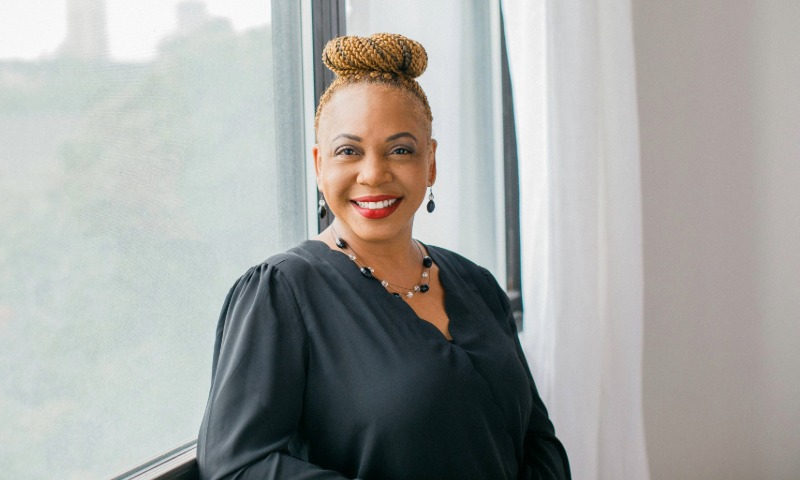
Dr. Kesha Carter is the Director of Culture, Belonging, and Engagement at Gates Chili Central School District in New York. With over 18 years of experience in organizational culture and leadership, she works at the intersection of student experience, staff engagement, and system-level change. Dr. Carter specializes in helping schools move beyond isolated initiatives to build aligned, sustainable practices that support belonging, access, and engagement for all students. She also serves as a facilitator with the New York State Department of Education (NYSED) Leaders Network and consults with organizations nationwide on culture and leadership strategy.
In K–12 education, we often talk about belonging as something we want students to feel. We plan assemblies, celebrate cultural heritage months, and implement new initiatives designed to build connection. These efforts matter. They can create moments of visibility and affirmation. However, at some point, many educators and leaders realize that belonging is rarely shaped by a single moment. It is built through the systems, patterns, and daily decisions that define a student’s experience over time. The question is not whether schools care about belonging. The question is whether belonging is embedded into how schools actually operate.
When Belonging Becomes a System
In my work with schools, I have seen a consistent pattern. Schools often approach belonging as an initiative rather than a condition. It lives in a program, a committee, a training during conference days, or a series of events. Meanwhile, the systems that shape students’ experience, like discipline practices, classroom interactions, access to opportunities, and adult responses to conflict, operate separately.
Students notice this disconnect immediately. A student can attend a school-wide celebration in the morning and feel completely unseen in the classroom that afternoon. They can hear messages about inclusion while also experiencing inconsistent responses to behavior or unclear expectations across classrooms.
Belonging does not live in what we say. It lives in what students experience repeatedly. When schools shift from thinking about belonging as a program to treating it as a system, the work changes. It becomes less about adding something new and more about examining what already exists.
The Power of Consistency
One of the strongest predictors of whether students feel a sense of belonging is consistency. Not perfection, but consistency.
Do students experience predictable expectations across classrooms?
Do adults respond to behavior in ways that are aligned and equitable?
Do students know that they will be heard, even when mistakes are made?
Inconsistent systems create uncertainty. And uncertainty erodes trust. This is where structures like a Multi-Tiered System of Supports (MTSS) become critical. When implemented effectively, MTSS is not just about intervention. It provides a framework for ensuring that academic, behavioral, and social-emotional supports are aligned across a student’s experience.
At the Tier 1 level, every student benefits from a strong, predictable environment where expectations are clear and relationships are prioritized. When Tier 1 is strong, belonging becomes part of the foundation rather than something reserved for students who are struggling.
Rethinking Discipline as a Relationship System
Discipline is one of the clearest reflections of a school’s culture. It is also one of the most common places where gaps in belonging appear. Traditional approaches to discipline often focus on compliance and consequences. While accountability is important, an over-reliance on punitive responses can unintentionally disconnect students from the very environment we want them to feel part of.
An alternative approach is to view discipline as a relationship-centered system. This does not mean removing accountability. It means expanding the goal. Instead of asking, “What rule was broken and what is the consequence?” we also ask, “What happened, who was impacted, and how do we repair the harm?”
Restorative practices offer one pathway for this shift. When students are given opportunities to reflect, take responsibility, and repair relationships, they are more likely to remain connected to the school community rather than pushed to the margins. Over time, this approach changes not just individual interactions, but the overall climate of the school.
Adult Behavior Shapes Student Experience
One of the most important and sometimes overlooked truths about school culture is that adult behavior is the system. Policies matter. Frameworks matter. But the daily decisions adults make in classrooms, hallways, and offices are what students experience most directly.
How do adults respond when a student uses harmful language?
How do they handle moments of conflict?
How do they engage students whose behavior challenges expectations?
Silence communicates permission. Inconsistency communicates unpredictability. Intentional, aligned responses communicate safety. Supporting adults in this work requires more than a single training session. It requires ongoing opportunities for reflection, practice, and feedback. When adults feel equipped and supported, they are more likely to respond in ways that reinforce belonging rather than unintentionally undermine it.
Moving from Initiative to Integration
For school leaders, the shift from initiative to integration is both a challenge and an opportunity.
It requires asking different questions: 1) Where are students experiencing inconsistency across our system? 2) Which processes unintentionally create barriers to connection? 3) How do our current practices align with the culture we say we want to build? This work is not about doing more. It is about doing things differently.
It also requires patience. Systems change takes time. But the impact is cumulative. Small, aligned shifts across multiple areas like discipline, instruction, communication, and support create a stronger and more cohesive student experience.
A Culture Students Can Feel
When belonging is embedded into systems, it becomes something students can feel without it being announced. They feel it when expectations are clear and consistent. They feel it when adults respond with both accountability and care. They feel it when their voice is heard and taken seriously. And importantly, they feel it not just on the best days, but on the hardest ones.
Belonging is not created through a single initiative or moment of recognition. It is built through the repeated, aligned actions of a school community committed to creating environments where every student can feel seen, supported, and connected. That kind of culture does not happen by accident. It is designed.