



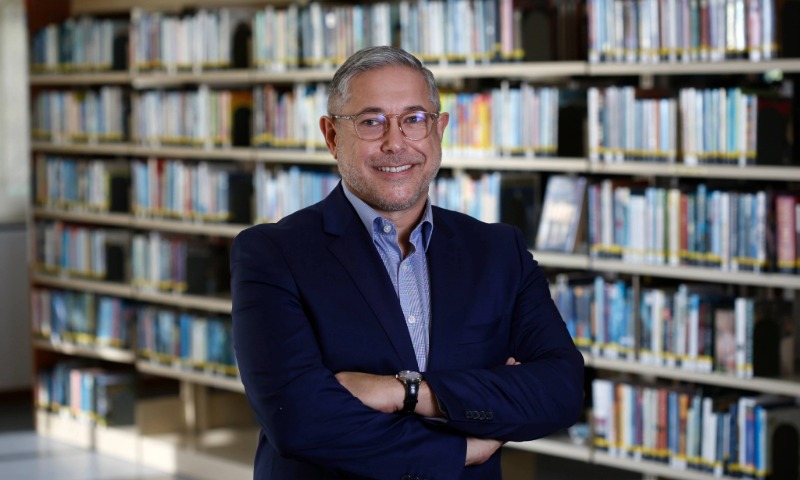
Dr. Nigel J. Winnard is a seasoned international school educator, leader, researcher, and consultant with over 20 years of headship experience across Africa, the Middle East, Europe, Asia, and South America. Holding a Doctorate in Educational Leadership from USC and an MA from Michigan State, he founded Sudan’s first IB World School at Khartoum International Community School, then led the American School of Rio de Janeiro’s growth and transition to become a two-campus IB World Continuum School. He currently serves as Head of Le Bocage International School, Mauritius’s oldest IB World School.
Recently, in an exclusive interview with K12 Digest, Dr. Winnard shared insights into the realities and reimagination of international education drawn from more than 20 years of headship across Africa, the Middle East, Europe, Asia, and South America. Addressing teacher mobility and shortages, he argued that successful schools will grow communities of belonging and philosophical alignment, building local capacity rather than relying on transient expat labor — true internationalism, he stressed, is a mindset, not a passport. He also shared his personal hobbies and interests, future plans, words of wisdom, and much more. The following excerpts are taken from the interview.
Hi Nigel. With more than 20 years of headship across continents, you’ve led in Sudan, Brazil, and now Mauritius. Looking back at your first headship, what moment convinced you that international education was your calling?
There wasn’t a single “Aha!” moment. It was more a pull to do something that broke new ground. My first headship in Sudan was an absolute privilege. I was part of an incredible project inspired by someone else’s vision. I will always be grateful to the school’s founders, Osama and Samia, for showing me that real change is possible if you are prepared to go all in, no matter what the obstacles. And trust me, there were more than a few of those. For me, the pull of international education is the potential to reimagine schooling as a truly intercultural enterprise. That said, the reality on the ground is that such reimagining often encounters incredible resistance, but that is where the work is. I sometimes wonder if humans are courageous enough to really reimagine schools beyond tinkering with the edges. But that doesn’t stop me trying and hoping.
What do you love the most about your current role?
Well I’ve been here for three weeks so maybe it’s a little early to say what I love the most! But what I will say is that I am loving the process of asking questions. There is huge pressure on school leaders to ‘do’ things, and not enough value placed on the learning and listening dimension of school leadership. What I am really loving is being in that space. I get a deep satisfaction from those foundational conversations with parents, students and staff. I’ve grown to value collective momentum over top-down control, though never at the expense of the needs of students here and now. We don’t have any right to waste time in schools: childhood is too precious.
You’ve built IB programs where none existed and stewarded the oldest IB school in a nation. What trend in the IB’s evolution do you think is most critical for its next 10 years?
Now there’s a question. Ask me on my best day and I will share my hopes for the IB achieving deliberate balance: upholding its signature intellectual rigour while intensifying focus on student wellbeing, personal agency, and realistic hope. But in my darker moments I worry that the IB won’t be able to free itself of factory-like compliance or token diversity initiatives that merely veil privilege without dismantling it. The IB has an incredible opportunity to develop ethical, adaptable thinkers for a staggeringly complex world. Or it could just keep shuffling the pieces on the board without admitting that, in so many ways, we need a whole new board.
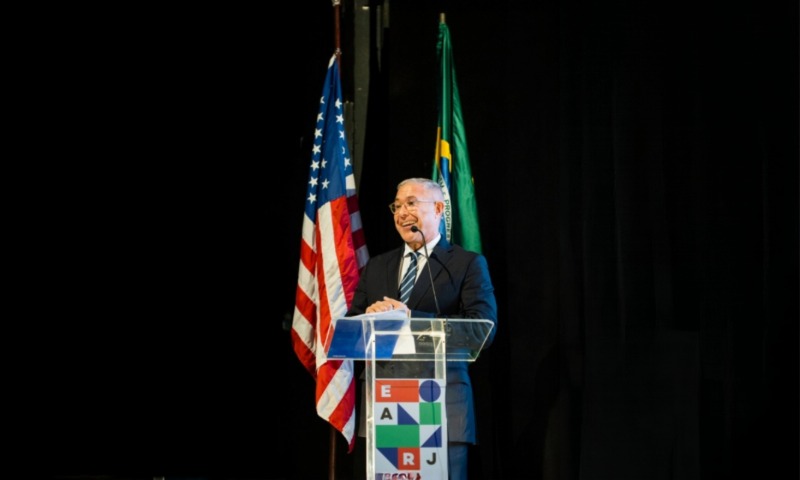
Teacher mobility and global shortages are reshaping staffing. Five years from now, what will the most successful international schools do differently to attract and keep educators who thrive?
The most successful international schools in terms of teacher retention will be those that grow their own professional communities of belonging. They will be less about attracting the travelling expat and more about building cultures of philosophical alignment and shared values. The enormous growth of the international schools market will only be sustainable if schools develop local capacity. They cannot rely on the traditional transient international labor market, and nor should they. International schools can become catalysts for local educational enrichment if they commit to developing local teachers whose international mindset and global outlook are what makes them international, not the colour of their passport – or the colour of their skin.
Many educators aspire to international headship. What skill do aspirants consistently undervalue until they sit in the Head of School chair?
There is a case to be made for the undervalued skill of coalition-building. It is a skill subtler and more vital than bold vision or swift decisiveness. Sustainable headship is not about quick wins or shiny new projects. It is about discerning cultural undercurrents, cultivating trust among diverse stakeholders, and then transforming personal conviction into unified action that others agree makes sense. That requires relational trust and coalitions of support. How far can any leadership extend without first drawing people into shared forward motion? The other undervalued element of headship that comes as a bit of a surprise to some new heads, is that the work is not about learning per se, but ensuring the conditions for learning are in place.
Books shape how we lead and learn. What book lives on your desk after 20 years of headship, and what margin note from it still guides you?
Good question. For many years it was John Rae’s Letters from School. It framed much of my thinking about stewardship, parenting, and the importance of forgiveness and mistakes in a school. I go back to Montaigne’s On the Education of Children quite often, with his lessons from 1575 bizarrely still relevant. But the one constant on my desk is not about education or schooling, but poetry. It is escapism from the day-to-day, and a reminder that we can often see things more clearly if we use fewer words.
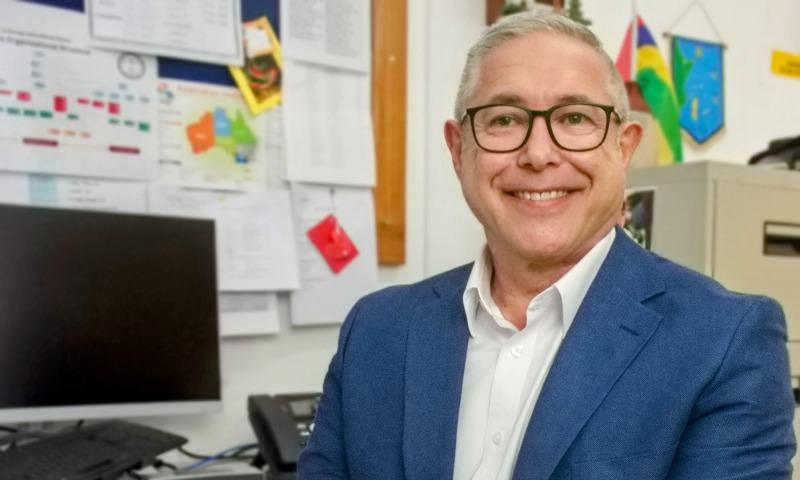
Rest fuels sustainable leadership. What hobby, ritual, or weekend activity helps you return to school on Monday ready for the complexity of headship?
This might get me into trouble, but John Lewis spent a life arguing for the importance of “good trouble”, so here goes. The truthful answer is that it is next to impossible for heads today to find that balance to which we all supposedly aspire. We can try to switch off with hobbies, long walks on the beach, meditation and mindful breathing and so forth, but the 24/7 demands of the WhatsApp-Online-iVerse are unrelenting. We are called upon to be leaders, mentors, marriage and grief counselors, teachers, and saints: legal experts, strategic planners, medical experts, financial analysts, politicians and saviors of the planet. And that is just a typical Tuesday. None of that is either reasonable nor sustainable. But that is part of the larger question of what schools have become in the world in which we live. Yet despite all of that I still believe 100% that it is the most incredible job in the world.
Where do you see yourself in the next 5 years?
I once spent an hour, as the head of a large and prestigious school, with a multi-million dollar budget and a 350 employee workforce, searching for a lost water bottle with a young student who was beside himself. We searched that entire campus. I cancelled meetings and postponed whatever else I had planned. It took us a while but we found it. I will spend the next 5 years, 10 years, however long I have left in this business, helping young people find whatever matters to them. Even if it is a water bottle.
If you could put one sentence on the wall of every staff room, what would it say?
Staff rooms have a bit of a tendency to concentrate fatigue, pressure, and sometimes competing ambitions. But if Ted Lasso can have a statement on the locker room wall to inspire AFC Richmond then maybe I can come up with one that I hope would inspire teachers in a staff room. But my choice wouldn’t be so much about inspiring learning, or praising teaching, or kindling passion. I would like every teacher in every staffroom to know and believe something that I know eats away at all of us when we question if we did everything we could have done to help our students: “Remember – you are enough”