




Chris Bradbury, Principal at Radford College, is a distinguished and visionary educational leader whose dynamic contributions have elevated school leadership, teaching excellence, and student achievement in many school contexts. Throughout his career as a Principal and systems leader, Chris has championed improvements in academic outcomes, student wellbeing and inclusive educational practices.
Chris has a genuine commitment and passion for the growth of young people to achieve their personal best through instilling a love of learning. An award-winning teacher of History, Legal Studies and Politics, his leadership was recognised by the Teacher’s Guild of New South Wales with an Honorary Fellowship Award exemplifying integrity, service and transformative leadership in education. His commitment to learning has seen him earn a diverse range of qualifications both in Australia and internationally at Harvard and Oxford.
Recently, in an exclusive interview with K12 Digest, Chris shared insights into his career journey in education, emphasizing student growth, values-based culture, and leadership. He highlighted the importance of presence, physical and emotional, in leadership. He also shared his dream destination, future plans, words of wisdom, and much more. The following excerpts are taken from the interview.
Hi Chris. Please tell us about your background and areas of interest.
With a career in education spanning 24 years, my journey has been defined by a deep commitment to both academic excellence and the development of student character. My teaching background is in the Humanities, specifically in History, Legal Studies, and Politics.
Before arriving in my current role as Principal of Radford College in the ACT, I held a variety of middle and senior leadership positions at Hurlstone Agricultural High School and The King’s School. These experiences provided a strong foundation for my first headship as the Principal of Northholm Grammar, a role I held for six years. Each of these schools has shaped my understanding of how diverse school cultures can foster growth and excellence.
My areas of interest include sport (in particular rugby league, cricket, running), travel, foreign affairs and politics, all of which provide a broader perspective on the world we are preparing our students to enter.
What do you love the most about your current role?
The greatest reward of Headship is centred in the human element of the role. It is a position that sits at a rare intersection: one foot in the immediate, vibrant life of the classroom and the other in the long-term strategic stewardship of our school legacy.
At the heart of my passion for this role is witnessing student growth and achievement. There is a profound sense of pride in observing a student’s trajectory over time. To see a hesitant Year 7 student transform into a confident, articulate Year 12 leader – or to witness the “lightbulb moment” when a child finally master’s a concept they have long struggled with – is the true heartbeat of the school.
This individual growth is supported by the work of building a values-based culture. I find deep fulfillment in shaping the “spirit” of the College. It is one thing to write words like character, kindness, and leadership into a strategic document; it is quite another, and far more rewarding, to see those values manifest in the daily, unprompted actions of students and staff. When these principles become the “lived experience” of our community, the mission of the school truly comes to life.
Finally, I am motivated by the concept of educational legacy. The strategic decisions we make today – whether refining a pastoral care framework, implementing a new curriculum, or developing a world-class facility – will impact thousands of lives long after my own tenure ends. Ultimately, it is this combination of the daily “small wins” in the hallway and the enduring, long-term impact on the community that keeps me inspired and dedicated to this calling every single day.
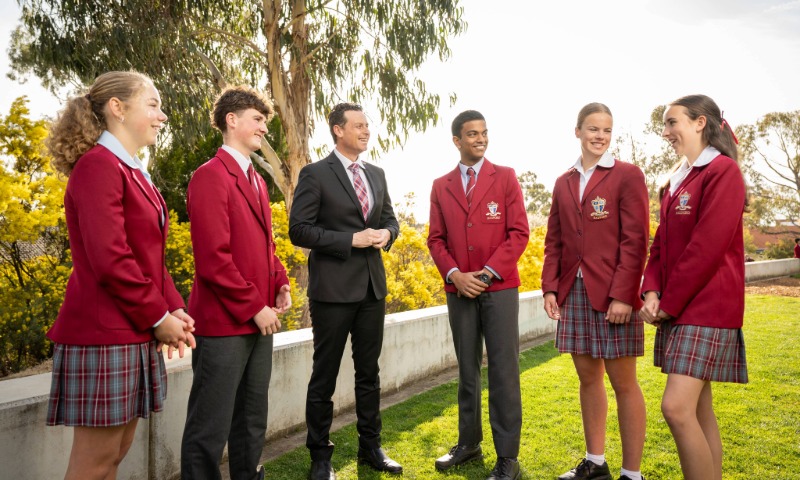
What trends in education technology are you most excited about?
New advances in technology, from the introduction of artificial intelligence (AI) chatbots like ChatGPT to the growing accessibility of virtual-reality tools has expanded the boundaries of the classroom. For educators, at the heart of it all is the hope that every learner gets an equal chance to develop the skills they need to succeed.
In our current educational context, I’m most excited by the responsibility schools have in using technology purposefully for specific educational outcomes rather than as a default delivery method. There is a prevailing assumption that digital technology is an inherent ‘force multiplier’ for learning when in fact many digital initiatives in schools are based on a misunderstanding on how the human brain processes information.
The concept of “Digital Natives” – the idea that children born into the technology age have brains wired differently for multitasking – is a fallacy. While students may be proficient at using devices, their biological cognitive architecture (memory, attention, and processing speed) remains identical to previous generations. Assuming they can “naturally” navigate digital distractions is a mistake that hinders deep learning that schools in partnership with families need to address effectively. Although there are benefits to technology, it should never be the primary driver of pedagogy. The teacher must act as the expert who understands cognitive load. Technology is most effective when used as a ‘tool for creation’ rather than a ‘vessel for consumption,’ and often low-tech environments are superior for the initial phases of deep conceptual learning.
For schools, we need is to establish a ‘balanced’ approach to emerging technologies. To maximise student learning, schools must navigate the tension between innovation and cognitive health. While it is essential to embrace the transformative opportunities provided by artificial intelligence, virtual reality, and collaborative digital platforms, this must be balanced against a clear-eyed acknowledgment of the pitfalls. A successful modern pedagogical approach utilises these high-tech tools to enhance immersive learning and analytical efficiency while simultaneously protecting the ‘sanctuary’ of deep, focused thought. In meeting the trends in education technology, we need to get this balance right to ensure technology serves to amplify human intelligence rather than unintentionally degrading the fundamental cognitive processes required for mastery.
What role should schools play in addressing global issues like climate change and sustainability?
Schools play an important role in addressing climate change and sustainability by educating students about its causes and impacts, promoting sustainable practices within school operations, and empowering students to become environmentally responsible citizens who advocate for change in their communities and beyond.
Climate change and sustainability is not just an academic exercise; it about the future and equipping young people with the knowledge and skills to navigate the complexities of a rapidly changing world and become proactive agents of change.
At Radford College, our departments are intentional in weaving climate education into the fabric of their curriculum to provide a holistic understanding. Curriculum enhancement is achieved through a variety of approaches such as interdisciplinary learning, solutions-oriented learning and experiential education.
Social responsibility and leadership are key features of a Radford Education, therefore we empower Student-led initiatives. Students are not passive recipients of information; they are active agents of change. Schools can empower students to take the lead in climate action initiatives, fostering their leadership skills and sense of responsibility. We have Sustainability Captains that lead environmental initiatives and are representatives on regional and national sustainability projects. Radford College proudly achieved its fourth star in its sustainability accreditation becoming the first school in the ACT to receive sustainability certification through the Sustainable Schools Program.
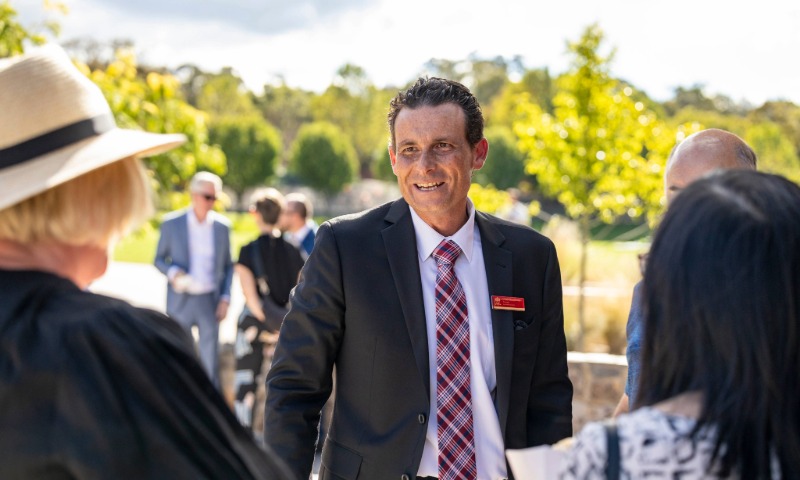
How do you think schools can better support student mental health and wellbeing?
Supporting student mental health and wellbeing is a critical responsibility that sits at the very heart of a thriving school. To truly support our young people, schools must move beyond reactive measures and instead cultivate a proactive, safe learning environment built on the foundational pillars of belonging and connection.
A sense of belonging is the essential starting point; students must feel seen, known, and valued for who they are before they can engage deeply with learning. This is achieved through the intentional cultivation of positive relationships – not just between peers, but through mentoring programs where staff act as consistent, supportive advocates. When a student feels they belong to a community that cares for their individual journey, they develop the internal confidence to believe in their own agency and potential.
The implementation of comprehensive character education programs should not be treated as adjuncts to the curriculum but integrated into the daily lived experience of the school. By explicitly teaching resilience, empathy, and ethical decision-making, we provide students with a “mental toolkit” to navigate the complexities of modern life.
Crucially, schools must foster a culture of high expectations with high support. While we should maintain high standards for every student, these must be equally complemented by high levels of pastoral support and academic care. This balance ensures that “stretching” for excellence does not lead to breaking under pressure.
A strong partnership between the school and families is vital. When parents and educators work in alignment, it creates great support around the young person, ensuring that wellbeing and mental health is reinforced both at home and at school. By focusing on this holistic journey of becoming, we empower our students to emerge not just as successful academics, but as the best, most resilient versions of themselves.
What’s a book or resource that has had a significant impact on your thinking recently?
Tony Blair’s On Leadership: Lessons for the 21st Century had a significant impact on my thinking. For a school leader, Blair’s insights into the “Art of Reform” are invaluable. He emphasises that leadership is essentially the management of momentum. He articulates a philosophy where clarity of purpose must be matched by a relentless focus on data and accountability; yet cautioned by the understanding that a leader must maintain their “political capital” to spend on the battles that truly matter. His concept of the “leader as a learner” mirrors the values of a quality education. He suggests that the transition from a traditional “command and control” style to a “collaborative and empowering” model is the only way to sustain an institution in the globalised, digital era.
Blair closely examines the psychology of leadership, particularly the isolation of the “final say.” He encourages leaders to build a “inner circle” of truth-tellers – individuals who prioritise the institution’s mission over personal loyalty. This directly speaks to the importance of mentoring and fostering a culture of professional practice, where feedback loops are shortened and excellence is a shared responsibility rather than a top-down mandate. Blair frames leadership through humility and experience. The advice and experiences shared relate to the role of Principal and the lessons will be invaluable for the new year.
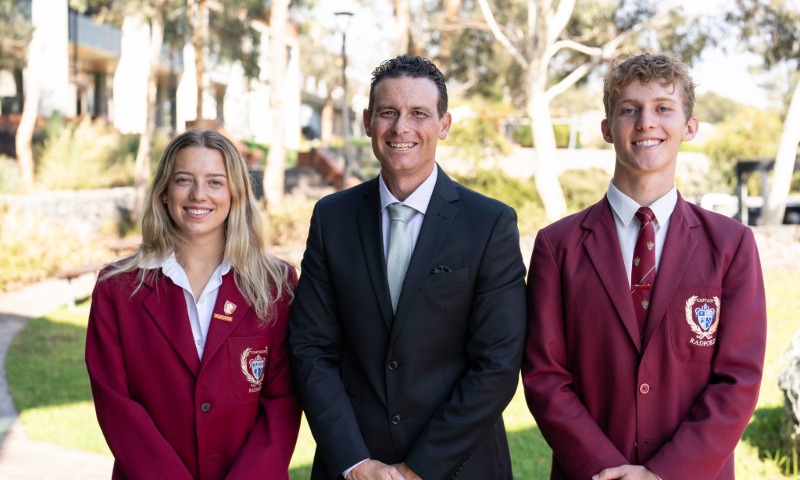
If you could travel anywhere in the world, where would you go and why?
The destination I would love to travel is Egypt. I have attempted to reach the land of the Pharaohs on two previous occasions, and both times, major global events have intervened to spoil our plans.
The primary draw is, of course, the unparalleled history and culture. Egypt is the cradle of civilisation. The opportunity to stand before the Great Pyramids of Giza, explore the Valley of the Kings, and sail the Nile is more than just sightseeing; it would be an unbelievable experience. Beyond the historical allure, Egypt represents an amazing part of the world to explore with my family. I believe that travel is one of the most powerful ways to broaden our children’s perspectives and spend quality time together in a different environment. Navigating the vibrant bazaars of Cairo, sharing traditional meals, and experiencing a culture so distinct from our own would be a transformative experience for us all.
What’s one thing you’re passionate about outside of education?
If you had asked me several years ago what my passions were outside of education, running would certainly not have been on the list. For most of my life, I was never particularly interested in distance running; however, the unique circumstances during the pandemic, combined with the persistent encouragement of a few good friends, completely changed my perspective. What started as a way to get out of the house has evolved into a genuine passion that I now lean on.
I have found that running offers far more than just physical fitness. While the cardiovascular benefits are significant, the mental clarity it provides is even more valuable. In the quiet rhythm of a run, I find a unique space for staying focused and relaxing away from the complexities of school leadership. Moreover, I enjoy the personal challenge of the sport. I am constantly striving to improve my performance over longer distances, finding deep satisfaction in the discipline required to reach new milestones.
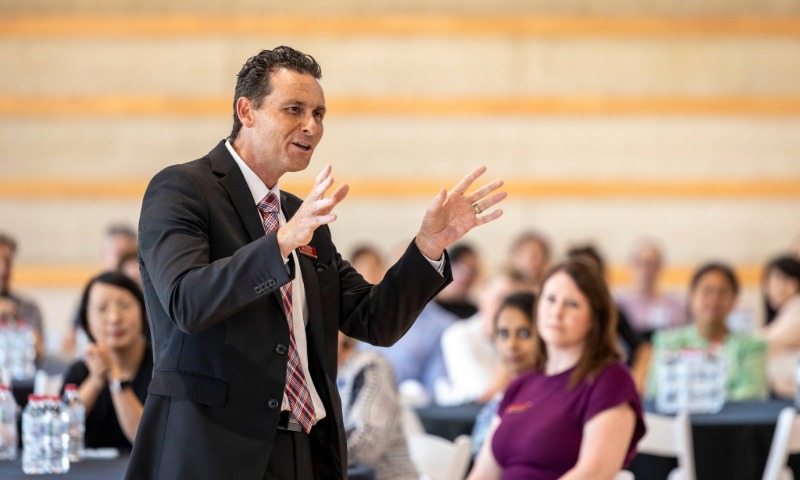
Where do you see yourself in the next 5 years?
I’ve just completed my first year at Radford College. We are about to launch our next Strategic Plan which will cover our three year journey. It is my intention that in the next five years we have delivered on our strategic priorities continuing to foster our learning culture based on excellence, inclusivity, community engagement and developing well-rounded individuals who are prepared for the challenges of modern life. And we have embarked on our next strategic plan which continues to be ambitious in delivering on high quality teaching and learning, pastoral care and the evolution of our masterplan.
Looking back on your career, what advice would you give to someone just starting out in school leadership?
The number one piece of advice I would give someone starting out in school leadership is to be aware there will be many challenges but also great satisfaction. Be very clear that the role is not a job, it is a lifestyle choice and you need to have your family on board to support you and the appropriate support network around you. School leaders can be very good at giving everyone else advice on how important it is to look after one’s self but not so good at heeding this for their own wellbeing.
Staying positive and optimistic (even if it is just outwardly!) is important for the troops. I love Rudyard Kipling’s words on leadership in his poem If: to “… keep your head when all about you are losing theirs”. Creating order out of chaos; instilling confidence and trust within your community; and looking and listening with a discerning mind and heart for all things I would advise future leaders to aspire to.