



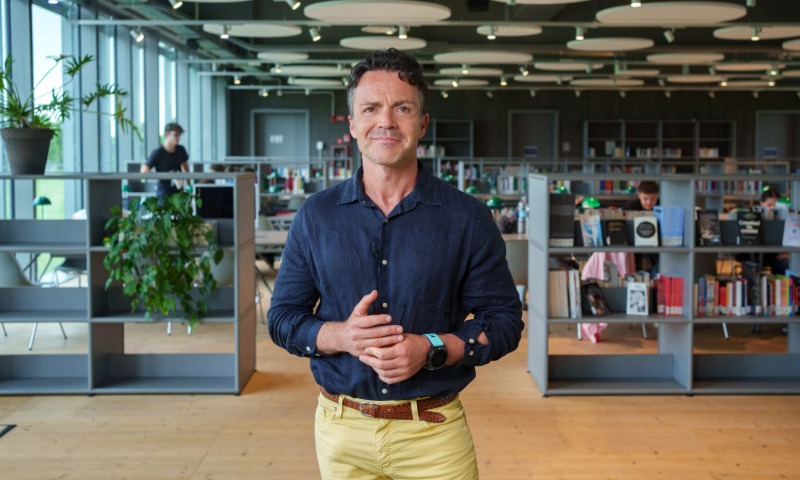
Emiliano Cori is Head of School at H-FARM International School Venice. Educated in the humanities, with a background in classical studies and philosophy, he has held senior leadership roles across international schools in Europe. An experienced IB practitioner, he serves as an IB evaluation team leader and has contributed to multiple authorisation and evaluation visits, supporting schools in aligning purpose, practice and culture. His work is shaped by a commitment to intellectual rigour, ethical coherence and the enduring values of truth, goodness and beauty. Emiliano is particularly interested in the thoughtful integration of technology, including artificial intelligence, into education, and in cultivating school cultures where academic excellence, wellbeing and human relationships are held in deliberate balance.
Recently, in an exclusive interview with K12 Digest, Emiliano shared insights into his commitment to re-humanizing education by balancing academic rigor, wellbeing, and ethical values. He discussed how his school is adopting AI to extend human capacity, not replace it, and stressed the importance of schools addressing global issues like climate change by “practising a different relationship with the world.” Emiliano also shared his personal hobbies and interests, future plans, words of wisdom, and much more. The following excerpts are taken from the interview.
What inspired you to pursue a career in education leadership?
A few years ago, while working in Switzerland, I was invited to step into a senior leadership role. I did not accept immediately. What ultimately convinced me was the growing sense that secondary education, in particular, needed leaders willing to commit fully to its renewal. I felt an ethical pull to re-humanise schooling: to move forward without severing ourselves from what the past has already taught us. Western philosophy, with its long reflection on truth, goodness and beauty, has shaped my thinking profoundly. Education risks becoming hollow when values are reduced to slogans and actions drift away from intentions. When the opportunity arose to lead H-FARM International School Venice, a place where Italian cultural roots meet an international vocation and a strong link to both local and global communities, I recognised a rare chance to align vision and practice in a truly coherent way.
What do you love the most about your current role?
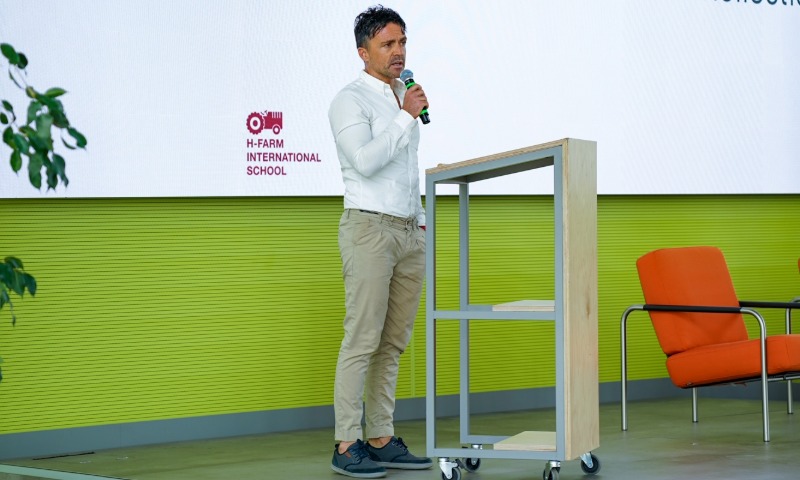
I value the complexity of the role and the fact that no two days are ever the same. School leadership sits at the intersection of human relationships, intellectual life and organisational responsibility. What I find most rewarding is the possibility of having a real impact on young people’s lives, not in the abstract, but through daily decisions that shape the culture of a school. It allows me to translate a vision into lived reality, slowly and imperfectly, yet meaningfully.
What trends in education technology are you most excited about?
Artificial intelligence is clearly the defining conversation of our moment, and our school is actively integrating it into the curriculum. What interests me most is not the technology itself, but the ethical stance we adopt towards it. AI invites us to ask what it truly means to be human, to think, to create and to judge. Used wisely, it can extend human capacity rather than diminish it. The challenge is to ensure that both adults and young people remain active, critical and responsible, working with technology rather than surrendering agency to it.
What role should schools play in addressing global issues like climate change and sustainability?
Schools should not be limited to teaching about these issues; they should become places where a different relationship with the world is practised. Climate change calls for a genuine paradigm shift. We must move away from an exploitative stance towards nature and rediscover a living relationship with the environment and the wider cosmos. Education has a responsibility to help young people experience themselves as connected beings, capable of respect, care and responsibility, rather than as isolated consumers of resources.
How do you think schools can better support student mental health and wellbeing?
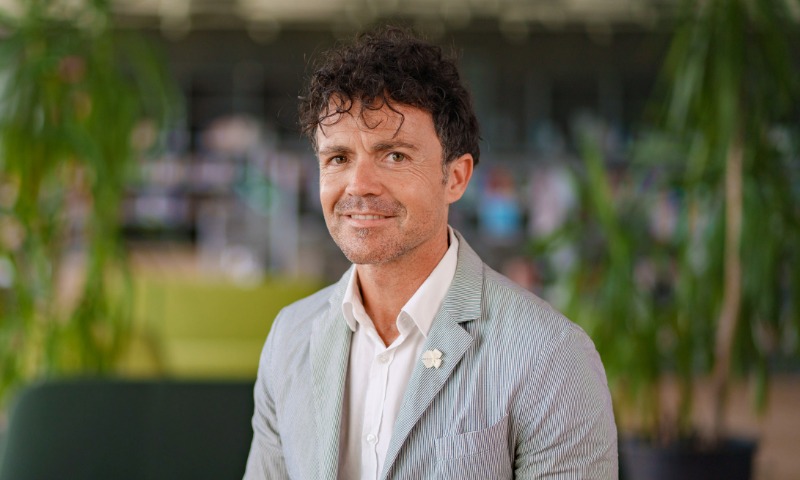
Schools need to rethink their role as part of a wider ecosystem that includes families and students themselves. Wellbeing cannot be outsourced to programmes alone. Every teacher should be someone who knows how to listen, who pays attention, and who recognises that learning is inseparable from emotional life. This requires time, trust and a culture where relationships are taken seriously, not treated as an optional extra.
What’s a book or resource that has had a significant impact on your thinking recently?
The Future of Teaching by Guy Claxton has resonated strongly with me. It offers a thoughtful critique of mechanistic approaches to learning and argues persuasively for an education that develops judgment, adaptability and intellectual humility, qualities our students will need far more than narrow technical competence.
If you could travel anywhere in the world, where would you go and why?
I am deeply drawn to Asia, particularly Japan and Thailand. These are cultures I know only partially, yet they fascinate me for their traditions, their sense of form and meaning, and their different ways of holding together modernity and heritage. Travel, for me, is always an opportunity to learn how else one might live and think.
What’s one thing you’re passionate about outside of education?
I have a strong attraction to speed and adrenaline, and whenever possible I enjoy driving on track with sports cars. Alongside this, sport plays an important role in my life, especially activities that combine endurance and strength. Spartan races, which demand both physical resilience and mental discipline, capture something I value deeply: effort, balance and perseverance.
Where do you see yourself in the next five years?
At present, my commitment to H-FARM International School is total. Looking further ahead, I can imagine myself leading a school in Eastern Europe, perhaps in the Czech Republic or Slovakia. These are regions rich in cultural depth and intellectual tradition, and I would welcome the challenge of contributing to educational leadership there.
Looking back on your career, what advice would you give to someone just starting out in school leadership?
Guard your integrity carefully and take the time to develop a clear vision. Do not be excessively hard on yourself; leadership is learned through reflection and experience, not perfection. Above all, keep the child at the centre of every decision. When choices are difficult, that principle rarely leads you astray.