



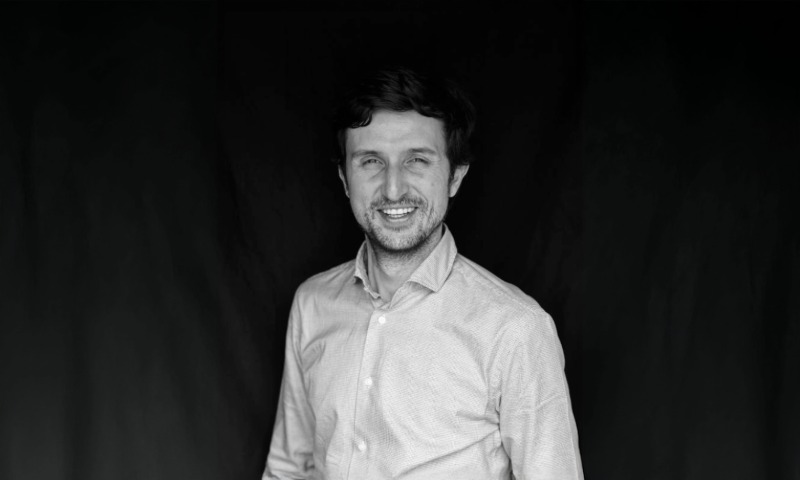
Giuseppe Auricchio is the Chief Learning Innovation Officer at SEK Education Group, leading transformation across SEK International Schools and Universidad Camilo José Cela. With over two decades of experience in reimagining learning and organizational growth, he focuses on integrating technology, pedagogy, and innovation at scale. He has spearheaded initiatives such as the world’s first fully online IB Diploma Programme, SEK’s Corporate Intelligence Office, and a group-wide Learning Experience Framework. Previously, he held leadership roles at Proeduca (UNIR) and IESE Business School. Giuseppe holds an Ed.D. from the University of Pennsylvania, an MBA from London Business School, and a B.Sc. from Georgetown University.
In an exclusive conversation with K12 Digest, Giuseppe Auricchio talks about his unconventional journey from finance to education, the pivotal moments that reshaped his understanding of how people learn, and the evolving role of innovation in school systems across geographies. Beyond strategy and systems, he speaks about the personal values that shape his leadership, his global perspective shaped by living across cultures, and the skills young professionals must cultivate to thrive at the intersection of education and technology. Below are the excerpts of the interview.
Walk us through your journey and the moments that shaped your worldview in education.
My path into education was not planned. I began in finance, working in derivatives at Deutsche Bank—an environment that was analytical, fast, and intellectually demanding. Yet even in those early years, I sensed something was missing. I found myself far more intrigued by how organisations learn, how people grow, and how leadership shapes performance than by the mechanics of the markets themselves.
That intuition led me to step away and pursue an MBA at London Business School. LBS broadened my sense of possibility and revealed how strongly I was drawn to environments where learning is the core product—not a side activity. It became a bridge between two worlds: the quantitative discipline of finance and the human-centred mission of education.
A pivotal turning point came when I joined IESE Business School. In my early roles designing programs for corporate clients, I experienced firsthand the transformative power of learning. Watching executives reshape their thinking and their careers left a deep impression on me. During this time, I also enrolled in a Doctor of Education (Ed.D.) at the University of Pennsylvania. That experience changed me profoundly. It deepened my understanding of learning theory, adult development, and the role of reflection in leadership. It shifted my focus from “building programs” to “building learning experiences,” and from delivering content to shaping institutional innovation.
Another defining moment was joining Proeduca. The scale was completely different. Instead of serving a few thousand executives, we were reaching tens of thousands of students globally. It made me appreciate the power—and the responsibility—of accessibility: innovation matters only when it reaches the mainstream, not just the privileged few.
Today, at SEK, I have the privilege of working across K–12 and higher education. The most important insight I carry is that learning is not a phase of life; it is a lifelong journey. Institutions must be designed to accompany people through transitions, not simply deliver content. That belief guides everything I do.
What are the biggest challenges in school education today, especially for innovation across geographies? How have you dealt with resistance or inertia?
Schools face a paradox: the world around them is changing at extraordinary speed, yet the operating system of schooling remains largely unchanged. The challenge is rarely about knowing what to do—there is no shortage of ideas, technologies, or pedagogical models. The real difficulty lies in aligning strategy, governance, and culture so that innovation can actually take root.
Three obstacles appear again and again. First, structural inertia: schools are complex social systems, built for stability rather than reinvention. Second, fragmented capacity: different geographies and communities operate at different levels of readiness, which makes consistent implementation difficult. And third, the fear of losing what works: educators care deeply about students, and that often translates into caution when faced with change.
When you work across multiple countries, these challenges multiply. Readiness varies even more. Cultural expectations shift. The pace at which you can move is uneven. And innovation cannot simply be copy-pasted; it has to be interpreted locally, in dialogue with the people it is meant to serve.
When I encounter resistance, I try not to interpret it as opposition. Most of the time, it is protection—teachers protecting their craft, families protecting their children, leaders protecting practices that have served them well. I’ve learned to start small, create evidence early, and involve people in the design rather than presenting them with a finished solution.
Innovation moves when people feel respected, when they feel ownership, and when they see that change is not something being done to them, but something being built with them.
How do you see AI, adaptive learning, and data transforming daily practice in K-12? How is SEK preparing?
I believe AI will raise the bar on what a learning experience can be.
Over the next decade, we will see a fundamental shift: from teaching many students the same thing at the same time, to supporting each learner on a dynamic, personalised pathway.
AI will make it possible to generate and adapt activities in real time, offering each student the right challenge, at the right moment, in the right way.
Students will have AI companions that help them practise, reflect, and explore—tools that are attentive to their needs, responsive to their pace, and available whenever curiosity strikes.
Teachers, in turn, will gain a much richer understanding of how their students are learning. Instead of focusing mainly on outputs—tests, assignments, final products—they will be able to see the learning process itself: progress, areas of growth, and moments of struggle that previously remained invisible.
Just as importantly, many routine tasks will be automated. This is not about replacing teachers; it is about freeing them. More time for relationships, for guiding critical thinking, for the formation of character and judgement. AI will not diminish the human role in education—it will elevate it.
For schools, this transformation requires preparation. We need new workflows, new teaching routines, new ways of orchestrating learning journeys that are no longer linear or uniform. It is an institutional shift as much as a technological one.
At SEK, we are approaching this through structured adoption. We have developed clear policies, created training pathways for teachers and leaders, launched pilots across multiple schools, and built a Corporate Intelligence Office to bring our data and AI capabilities under one roof. We are learning by doing—carefully, responsibly, and with a long-term view.
Our ambition is simple: use AI to make learning more humane, more personalised, and ultimately more impactful.
How do you lead teams, build a culture of experimentation, and measure impact? What principles guide you?
Innovation requires two things that often feel contradictory: ambition and humility. Ambition to imagine something better, and humility to accept that we will not get it right on the first try. That balance guides much of my work.
My leadership style is grounded in clarity and trust. I try to articulate the “why” and the destination, but I involve teams deeply in defining the “how.” I have found consistently that people support what they help to build. To make progress, we work in short cycles—prototype, test, reflect, adjust. It keeps momentum high, but also allows us to learn quickly from reality rather than from assumptions.
For that to work, psychological safety is essential. People need to feel free to express doubts, challenge assumptions, and surface problems without fear of consequence. When that environment exists, experimentation becomes natural.
Measuring impact matters, but I try not to turn it into a bureaucratic exercise. We look at evidence of learning, and the lived experience of students and teachers. I prefer to think of our approach as “data-informed,” not “data-driven,” because intuition and professional judgement remain important compasses.
The hardest part of leading innovation is that institutions are not designed for it—they are designed for operating. Much of the work involves building bridges between today and tomorrow, creating the structures and routines that allow the organization to move forward without feeling destabilized. It is slow, patient work, but deeply rewarding when you begin to see cultural shifts take hold.
Outside work, what keeps you curious or energized? What personal values or experiences influence your work?
Curiosity has always been my anchor. I find joy in understanding needs and designing solutions around them—whether it’s a learning model, a new technology, or a recipe. Cooking, in particular, is a passion of mine. It has taught me a great deal about creativity and discipline. In many ways, cooking and learning design feel similar: both require balancing structure with improvisation, respecting technique while leaving space for experimentation.
Another powerful influence has been living and working in many different countries. Over the years, I have lived in, or spent extended time working across, more than a dozen national contexts—North America, South America, Europe, the Middle East, Africa. This exposure has given me a deep respect for cultural nuance and the enormous role context plays in shaping learning. What feels intuitive in one country may feel foreign in another.
Finally, my children also shape how I think about education. Watching them grow reminds me that learning is emotional long before it is academic. Their questions, frustrations, and moments of discovery continually reshape my view of what schools must do—especially the importance of personalisation, and building confidence.
In the end, these experiences—family, curiosity, international work—have shaped a simple conviction: in education, nobody has all the answers. We are all learning—students, teachers, leaders alike. And the moment we stop learning, we stop serving.
What advice would you give to those entering the intersection of technology and education? What skills or mindsets are underrated?
Three ideas come to mind.
First, learn to think across disciplines. Innovation in education happens in the spaces where fields intersect—where pedagogy meets psychology, where technology meets ethics, where data meets human judgment. If you box yourself into one domain, your perspective narrows. The most interesting solutions usually come from people who can connect ideas that do not normally sit together.
Second, become comfortable with ambiguity. This field moves quickly—especially now, in the AI era. The people who thrive are not those who always have the answer, but those who stay curious, question their assumptions, and adapt when new information appears. Flexibility is becoming as important as expertise.
Third, stay close to learners. It is easy to get absorbed by tools, frameworks, and strategies, but the most meaningful insights come from watching how students actually learn and how teachers actually teach. The closer you stay to the real experience of the classroom, the better your innovations will be.
As for underrated skills: listening, writing clearly, and translating complexity into simple, practical steps. These capabilities often determine whether your ideas turn into action or remain elegant theories.
How do you envision SEK’s role evolving globally? What would success look like in 2030?
SEK has the ingredients to be a genuine global reference: a rich history, an entrepreneurial spirit, a strong international footprint, and the courage to evolve. Over the next decade, I see us becoming an integrated learning ecosystem—supporting students from early childhood through university and into adulthood, with a growing international presence, a coherent philosophy about how learning happens, and an innovation agenda powered by a strong digital backbone.
By 2030, success would mean that our learning model is not only distinctive and innovative, but truly lived. Students taking ownership of their learning. Teachers using AI and data seamlessly, as an unobtrusive extension of their craft. Schools collaborating across borders, sharing practices and insights. And our university and K–12 network advancing a shared vision of purpose-driven, competency-based education.
But the real measure of success is simpler: our graduates. If they leave us with confidence, curiosity, and a genuine desire to contribute meaningfully to the world, then we will have fulfilled our mission.