



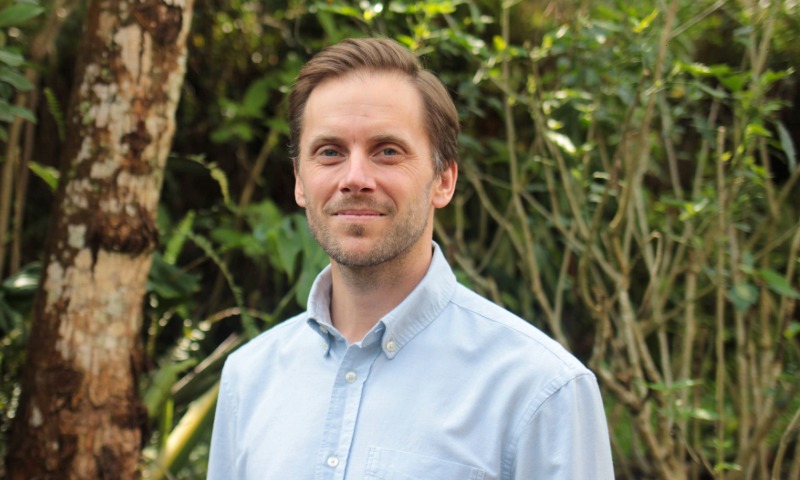
Adam Beeson is Strategic Enrollment Director at New Summit Academy Costa Rica, a supportive boarding school and study abroad experience for high school students, and The Bridge Costa Rica, a supportive gap program for young adults. He brings nearly two decades of international school teaching and leadership experience in Europe and the Americas. Adam is actively involved in the wider field of international and independent school education, contributing as a presenter at the Small Boarding Schools Association (SBSA), The Boarding Schools’ Association (BSA), and the International Baccalaureate (IB) Global Conference of the Americas. He previously served as an IB Examiner and as a member of the International Schools Anti-Discrimination Taskforce, and he is a contributor to various publications, including the Wellbeing in International Schools Magazine, where he was also a founding member of the editorial team. Adam holds an M.A. in International Education from the University of Bath (UK), a B.A. in English from Brevard College (USA), and an International Teacher Certificate from the European Council of International Schools.
Independent and international school campuses in the late afternoon can feel predictable.
Students move from class into the rhythms of their extracurricular activities. A game starts on the field. Music lessons begin in the band room. A dress rehearsal takes place in the theater. A few students gather around a table to finish homework. The structure is familiar, and for many students, it works.
At a glance, everything appears to be unfolding as expected. But beyond the activity, what kind of growth is actually taking place?
In a time when young people are asked to build impressive resumes, manage digital identities, and keep pace with an increasingly efficient world, much of their development happens within systems designed to optimize outcomes.
What is often missing is space for reflection, perspective, and intentional disruption.
Study abroad and study away experiences offer a different pathway. By placing students in unfamiliar environments, these programs break up routine and invite a level of engagement that is difficult to replicate on a traditional campus. Research points to salient personal growth among students who participate in immersive semester and year-long programs.
What emerges is not just change, but developmental acceleration.
The Individual: Growth in Real Time
One of the clearest outcomes of a study away experience is values clarification. When students are removed from familiar cultural and social contexts, they are forced to confront assumptions they did not know they held.
I experienced this firsthand as a study abroad student in Austria, where I found myself in conversation with peers explaining perspectives I had never before questioned. The realization set in that many of my beliefs were not universal but contextual, and that awareness has shaped how I have made decisions ever since.
Alongside values, identity development also accelerates. Immersive programs are learning environments where students gain a clearer sense of who they are and who they want to become. This is not surprising. When students leave behind established roles and reputations, they are given space to experiment with new ways of being.
In practice, this shift can be striking. Students often arrive to our Supportive Immersion experiences in Costa Rica carrying a narrative about themselves that has been reinforced over time. In a new environment, that narrative begins to loosen. These changes emerge over time in environments where different behaviors are both possible and expected.
Confidence grows in a similar way. When students navigate unfamiliar environments, they are required to solve problems, communicate across differences, and manage uncertainty. Rather than simulated classroom exercises, students navigate real experiences with real consequences, leading to increased self-efficacy and a greater willingness to take initiative.
Over time, competence builds, and students begin to see themselves as contributors to the world around them, capable of shaping their life rather than reacting to it.
Interpersonal skill development is another consistent outcome of immersive study away programs. While academic gains are present, students point more often to communication, collaboration, and conflict navigation as the most meaningful areas of growth.
These interpersonal skills carry particular weight at a time when our interactions with others are increasingly mediated by screens.
The Community: Growth That Spreads
What makes these experiences especially relevant for schools is that the impact does not stop with the individual.
Students return to their home campuses with new ways of thinking, interacting, and participating, and these shifts have measurable effects on school communities.
One of the most immediate changes can be seen in how students engage with others. Increased perspective-taking leads to more thoughtful conversations, and students who have learned to navigate difference in one context bring that skill into another.
In independent and international school settings, small shifts in communication can have an outsized impact. A student who approaches conflict differently can influence how a peer group handles tension. Over time, these interactions shape the tone of a community.
Leadership is another area where the effects of study away become visible. Students who have experienced greater autonomy often return with a stronger inclination to participate and contribute. They take initiative and engage more fully. In some cases, they step into formal leadership roles; more often, they lead by asking new questions and modeling different behaviors.
Taken together, these changes begin to influence school culture. When even one student returns with a higher level of engagement and reflection, the effects ripple outward.
Rethinking the Role of Study Away
For schools, this raises an important question. How should study away experiences be positioned within a school’s broader educational offerings?
Too often, semester schools and year abroad programs are viewed as interruptions. The research suggests a different perspective. These experiences can function as extensions of a school’s mission, offering developmental opportunities that are difficult to replicate within a single setting.
Study away programs are not one-size-fits-all, with Semester Schools Network offerings emphasizing leadership, sustainability, and global education, and therapeutic settings like New Summit Academy Costa Rica focusing on social-emotional growth, executive functioning, and wellbeing.
This is particularly relevant for independent and international schools. With close-knit communities and strong relational cultures, they are uniquely positioned to feel the impact of returning students. When approached as a partnership rather than a departure, study away can strengthen both the individual and the institution.
Development by Design
Returning to our independent school campus, the afternoon scene may look the same. Students still gather, play, and move through their routines.
But beneath the surface, something shifts: a student asks a different kind of question. Another steps forward where they might have held back. A conversation takes a more thoughtful turn.
These interactions are easy to miss, but not accidental. They are the result of experiences that place students in motion, challenge their assumptions, and invite them to engage more fully with themselves and the world around them.
The research is clear. When students step into unfamiliar environments, development accelerates.
The opportunity for schools lies in how intentionally they create those moments, and how they welcome students back ready to contribute in new ways.