



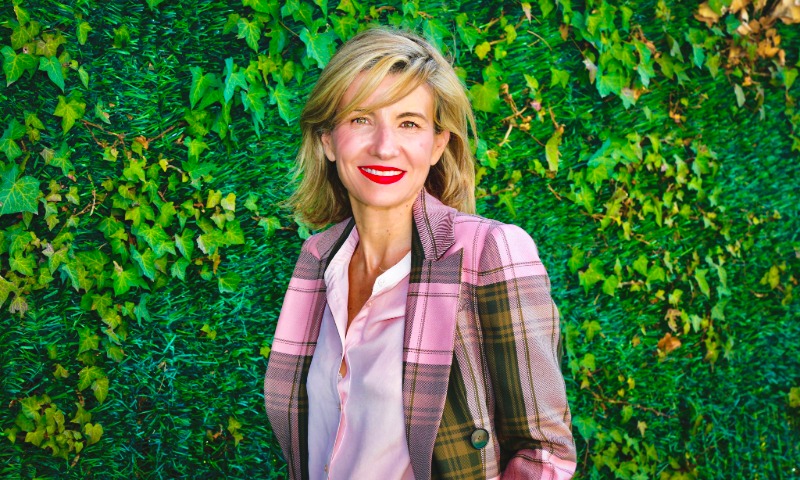
Pilar Moreno is Principal at Brains International School Conde de Orgaz and President of ASIBI, Association of International School in Spain and Portugal. She has over 20 years of experience in education. She is a qualified English philologist and can read in several languages, as well as an expert in protocol. Throughout her career, Pilar has attended numerous international education conferences, learning from global best practices.
Recently, in an exclusive interview with K12 Digest, Pilar shared her inspiring journey in education, emphasizing the importance of human connection, empathy, and community-based learning. She believes education should be holistic, focusing on social skills, emotional intelligence, and global citizenship. She also shared her personal hobbies and interests, future plans, words of wisdom, and much more. The following excerpts are taken from the interview.
Hi Pilar. Can you tell us about your career journey and how you got to where you are today?
My journey in education began when I was offered a role as Assistant to the Director of a school, a position that would change the course of my life. In that role, I worked closely with María Hita, a leader who truly shaped my understanding of what education and leadership can be. Under her guidance I learned what it means to lead with vision, empathy, and integrity. I observed how she listened to teachers, supported families, managed the complexity of a school, and I absorbed everything I could.
As time went by, I gradually took on more responsibilities: coordinating teams, liaising with families and educators, each challenge taught me something new about leadership, community-building…Those years working “in the trenches” gave me the experience, resilience and the values that underpin my educational philosophy today.
Eventually I became Director at Brains International School Conde de Orgaz, a position where I can put into practice all the lessons, I learned working under María Hita. Later, embracing a broader vision of educational collaboration, I accepted the role of President of ASIBI, striving to support bilingual and international schools across the country.
Looking back, that path — from assistant to director, from following to leading, has been guided by mentors, hard work, and a deep conviction that education is about shaping people’s lives.
What do you love the most about your current role?
What brings me the greatest satisfaction is that every day I have the opportunity to make decisions and that has an impact into the Community.
And, perhaps most importantly, I love the chance to foster a school culture where each person feels seen, heard, and valued. That human dimension, empathy, respect, belonging, is for me, the core of meaningful education.
What do you think are some of the biggest challenges facing educators today, and how can they be addressed?
One of the biggest challenges is, I would say, maintaining human connection. With everything it means.
Another challenge is supporting educators themselves: helping them grow, adapt, remain motivated and valued. Teaching and leading a school can be demanding, and without a strong framework of mentorship and collaboration, people risk burnout or disillusionment.
And I believe strongly in a community-based approach: when teachers, families, administrators and students work together, rooted in empathy, trust, and mutual respect, education can meet its highest purpose.
What do you think are the most significant trends or changes in the world of education?
We are in a very special and delicate moment. My personal point of view is that education has to have an holistic model.
Schools are increasingly recognizing that learning involves more than academic achievement as social skills or emotional intelligence.
The global dimension of education is more relevant than ever. Students must be prepared to engage with different languages, cultures, and international challenges.
In our school, Brains International School, we think that we play a key role in fostering open-mindedness, global citizenship, and intercultural understanding.
Education is becoming more humane: more attentive to the whole child, to their context, their needs, their individuality.
Have you had any mentors or role models who have influenced your career path?
I’ve been fortunate to learn from exceptional people at different moments of my career. María Hita, and in the last few years, my General Manager, Luis Manuel Tolmos.
One of the most influential people in my early career was María Hita. She taught me not only the practical side of school leadership but also the human dimension behind every decision.
Later in my journey, Luis also became a defining influence for me. As my leader, he encouraged me to aim high, to trust my own vision, and to believe deeply in what I could achieve.
He pushed me to step outside my comfort zone, to embrace ambition without fear, and to cultivate high expectations. His leadership gave me the confidence and the freedom to “fly higher,” and that has had a lasting impact on my professional evolution.
Their combined influence continues to guide my decisions and the values I bring to every role I undertake.
What do you think are some of the most important qualities or skills for educators to have, and why?
It’s actually a very difficult question to answer. It is so difficult because we cannot choose a single skill.
Teaching is nearly something divine and profoundly complex.
But if I had to choose just three, I would say communication, passion for education and flexibility.
Educators also need curiosity, fundamental for teachers and pupils.
Teachers must listen carefully, guide thoughtfully, collaborate openly, and build trust with students, families, and colleagues.
We forget as well that teachers are people with feelings, problems, and sometimes society ask them to solve problems that should be solved at home.
What is your favourite quote?
“Education is not preparation for life; education is life itself.” John Dewey
I love this quote because it reminds me that learning happens every day. For example, as Principal, I see students developing resilience and teamwork during a simple group project or learning empathy when helping a classmate. These everyday experiences are as important as academic knowledge—they shape who they are today.
This is why I focus on creating a school environment where every moment is an opportunity to learn, grow, and live fully.
Can you share a favourite hobby or interest outside of work that helps you recharge?
I enjoy playing tennis, practicing ballet, and Reading. Each of these helps me to recharge in different ways.
I also love traveling, discovering new places, and experiencing different cultures. These hobbies allow me to step away from my daily routine, reflect, and return to work with fresh energy and inspiration.
Where do you see yourself in the next 5 years?
A very good question, I have no answer at this moment. A wish could be continuing to serve the educational community.
And I hope to continue learning — because as educators we never stop being students ourselves. At the same time, I am open to new adventures and opportunities that allow me to grow, explore, and contribute in different ways.
What advice would you give to someone just starting out in their career in education?
I’m not usually someone who gives advice, but if I could share a few thoughts, I would say: surround yourself with good people who inspire and support you, nurture creativity in yourself and your students, don’t be afraid of change, and always dare to aim high. Education is a journey full of challenges and opportunities, and having courage, curiosity, and strong companions by your side makes all the difference. And very important, start with humility and curiosity.