

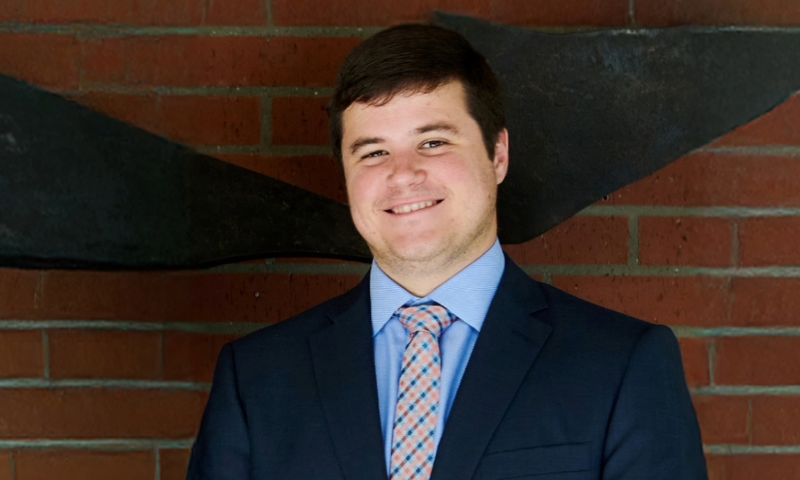
Dr. Blake Roberts is an experienced educational leader currently serving as the Secondary School Deputy Principal at Vienna International School. He holds a Doctorate of Education in Leadership from Virginia Commonwealth University, where his research focused on enhancing organizational health through performance evaluation and strategic feedback. His diverse professional journey has spanned multiple sectors and regions, including work in public and private schools in the United States, as well as international schools in South Korea and Austria.
With a career dedicated to driving strategic growth and strengthening student support systems, Blake has successfully led major institutional initiatives, such as the full restructuring of the Learning Support department and the implementation of restorative behavior frameworks. Formerly a Director of Professional Learning for SENIA, an international inclusion organization, he has launched global certification programs for educators and helped organize flagship international conferences.
In an exclusive conversation with K12 Digest, Blake talks about the evolution of his leadership journey from the classroom to senior administration and the defining experiences that shaped his philosophy of leading from any position. He reflects on building a culture of care within a globally diverse school community, strengthening inclusion through restorative practices and Universal Design for Learning, and ensuring that student wellbeing and academic excellence go hand in hand. He also shares his perspective on the rapid pace of global change, the importance of institutional identity, and the responsible integration of artificial intelligence guided by ethical standards such as the EU AI Act.
Your career has spanned various roles within international education. What key experiences shaped your journey from classroom educator to Deputy Principal at Vienna International School?
The transition from the classroom to senior leadership was less of a departure and more of a natural evolution, significantly accelerated by my transformative time at Chadwick International. It was there that I first truly experienced a culture where leadership isn’t defined by a title, but by action and initiative. I was consistently supported and encouraged to lead from whatever position I held, which normalized the transition to formal administration and gave me the confidence to scale my impact.
Beyond the leadership opportunities, the people I worked with there were incredible. Spending half a decade working alongside some of the most talented teachers in the IB world served as a benchmark for what I believe we should all be striving for in our daily practice. They showed me that being a great educator isn’t just about following a framework, but about a restless aspiration to be better for your students every single day. That standard of excellence is something I carry with me now in my role at Vienna International School, where I try to foster that same sense of “leading from wherever you are” within our own faculty.
Vienna International School serves a highly diverse and globally mobile community. What unique opportunities and challenges come with leading in such an environment?
Leading at VIS is an incredible privilege because we aren’t just teaching global citizenship; we are actually living it. With over 80 nationalities and 120 languages represented on campus, the real opportunity here is the daily collision of perspectives. Our students don’t just read about international relations; they negotiate them every day in the cafeteria and the classroom.
By bringing all these voices together, we have the chance to build a community that reflects the world we actually want to live in. This aspiration is deeply rooted in our school’s history and our longstanding connection to the United Nations community in Vienna, as we strive to model the same values of peace, diplomacy, and mutual respect. It’s a space where cultural nuance is a lived reality, giving our students a head start in becoming the kind of empathetic, adaptable leaders the world needs.
The challenge, however, is ensuring a sense of belonging and continuity for families who are often in transition. It requires us to be more than just a school; we must be a stable “home base” that provides a consistent value system and a high level of pastoral care to support students through the unique pressures of a mobile lifestyle.
The IB framework emphasizes inquiry, global citizenship, and critical thinking. How do you ensure these principles translate into meaningful day-to-day learning experiences for students?
We move beyond the theoretical by embedding these principles into the “how” of our teaching instead of just focusing on the “what.” This means moving away from rote memorization and toward a culture of questioning. In our classrooms, you will see students tackling real-world problems such as analyzing climate data or debating ethical dilemmas in history. This requires them to apply critical thinking in real-time.
To make this inquiry truly effective for everyone, we are increasingly implementing Universal Design for Learning (UDL) practices. By providing multiple ways for students to engage with a topic and express what they know, we ensure that inquiry isn’t a “one size fits all” process. We prioritize student agency and allow them to lead their own investigations, which naturally fosters a sense of responsibility toward their global community. When a student sees that their work has relevance outside the school gates, global citizenship ceases to be a concept and becomes a lived experience.
Artificial intelligence and emerging technologies are reshaping education. How are you integrating AI thoughtfully within your school’s academic and administrative practices?
At VIS, we view AI as an essential tool for literacy rather than a shortcut to be feared. We are currently collaborating with other EU-based schools to share best practices and ensure our approach is at the forefront of international education. We are also letting the EU AI Act inform our next steps, ensuring that as we move forward, we are aligned with the latest ethical and regulatory standards.
We are continuing to develop a robust AI Policy that focuses on thoughtful integration within our teaching. The goal is to help students understand how to use these tools responsibly to enhance their research and creative processes while maintaining strict academic integrity. Our goal is to ensure that while the technology evolves, the human element of education remains the primary driver.
In your view, what are the most pressing challenges facing international schools today, and how should leaders respond to them?
The most significant challenge is the rapid pace of global change, which often outpaces traditional curriculum cycles. We are preparing students for a workforce and a world that is increasingly unpredictable, but I believe the real differentiator for a school is its sense of identity. A lot of schools seem to lose focus on this, yet being able to truly live by your mission and understand who you are is what sets a school apart in a very competitive market.
As leaders, we have to respond by prioritizing this authenticity alongside adaptability. We need to move toward more interdisciplinary learning and treat emotional intelligence as a core competency rather than a “soft skill.” Furthermore, we have to address the growing mental health crisis by integrating wellbeing into the very fabric of our academic programs. It can’t be treated as an extracurricular add-on; it has to be part of our identity and how we operate every day.
Leadership in schools often requires balancing academic excellence with student wellbeing. How do you personally approach that balance?
I believe that academic excellence and wellbeing are not competing interests; they are intertwined. In my daily work at VIS, student wellbeing is not just a secondary focus, it is integral to everything I do. A student who feels seen, safe, and supported is inherently better equipped to take the intellectual risks necessary for high achievement.
My approach is rooted in relational leadership. I believe that leadership is built on the quality of the connections we have with our staff, students, and parents. By leading with a “culture of care,” we ensure that our pursuit of results never comes at the cost of a student’s sense of self-worth. When we prioritize these relationships and celebrate growth, resilience, and curiosity as much as we celebrate grades, the excellence follows naturally.
Beyond your professional responsibilities, what interests or values keep you grounded, and what advice would you offer students and aspiring educators looking to build a meaningful career in education?
I find my balance by staying connected to the world outside the school gates. Living in a city as culturally rich as Vienna is a constant source of inspiration; I’ve particularly leaned into the local coffee house culture, which provides a perfect space for reflection. Whether I am out exploring the city’s history or simply enjoying the outdoors, those moments help me maintain a clear perspective. They remind me that while our work is vital, it is also important to stay curious and present in our own lives.
My advice to anyone entering this field is to never lose sight of your “why.” Education is a marathon of the heart, and it is easy to get bogged down in the logistics. I truly believe that to be a great educator or student, you must never stop exploring the world and learning from other cultures and perspectives. For students, I encourage you to be brave enough to fail, because that is where the most profound learning actually happens. For aspiring educators, remember that your greatest impact won’t be the specific content you deliver, but the way you made your students feel about their own potential.