



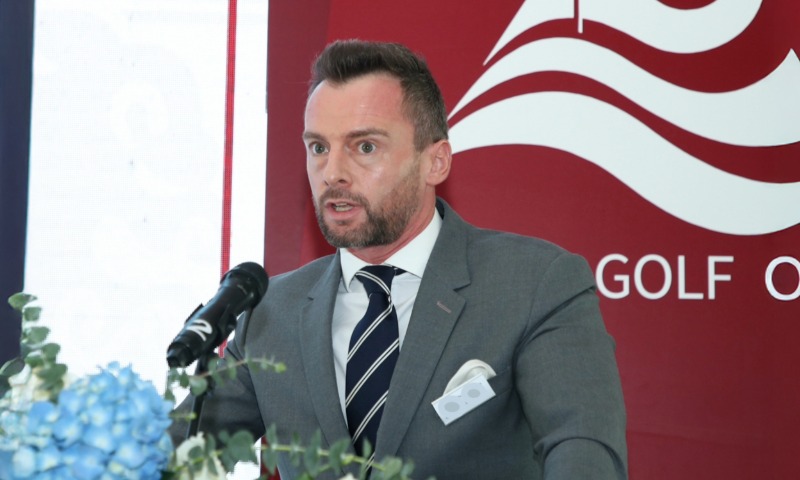
Dr Denry Machin’s diverse background spans international schooling, independent boarding, and the UK state sector. Formerly Head of Upper School at Harrow Bangkok and Associate Director of Special Projects for Harrow International Management Services, Denry now works on international school openings, upgrades, mergers and turnarounds. Focussed on the implications of business thinking within education, his PhD led to publications on the economics of international schooling, organisational psychology, and school marketing. He sits on the peer-review panel for the Journal of Research in International Education.
Denry currently supports the University of Warwick with their iQTS and PGCEi teacher training programmes, and previously lectured for Keele University on their MBA (Education), MA, and Doctoral programmes. He also serves on the Governing Body of a not-for-profit international school in Malaysia. He has written numerous books, including co-authoring the best-selling DK Business Book. His most recent book, International Schooling: A Teacher’s Guide, co-authored with Dr Stephen Whitehead, offers practical advice for teachers on the international adventure.
Recently, in an exclusive interview with K12 Digest, Denry shared insights into how his path as an economics and business studies teacher with an MBA naturally evolved into focusing on the ‘business of education,’ culminating in a PhD that now informs his work solving ‘business’ problems for international schools through an educational lens. Writing International Schooling: The Teacher’s Guide with Dr Stephen Whitehead came from repeated questions from PGCEi, MA, and MBA students, and Covid provided the pause to turn those into a book for both newbies spotting red flags and old-hands recognizing themselves in real stories. He also shared his personal hobbies and interests, future plans, words of wisdom, and much more. The following excerpts are taken from the interview.
Your career bridges UK state schools, boarding, universities, and complex international school launches across Asia. Looking back, what was the first moment you realized education and business operations couldn’t be separated, and how did that shape your path?
For me, it was a natural evolution rather than a single defining moment. By trade and passion I’m an economics and business studies teacher, with an undergraduate degree in business and an MBA. So, having spent my career in schools, it was perhaps inevitable that my thinking would coalesce around the ‘business of education.’ It probably came as no surprise to those who knew me that this became the focus of my PhD.
That background also made my career path an obvious one: moving from my role as Head of Upper School at Harrow Bangkok into a group new school development position with Asia International Schools Limited, the operator of the Harrow International schools across Asia.
Bringing together those two backgrounds, what I do now is help schools solve ‘business’ problems—making sure that an educational lens informs problem-solving.
What do you love the most about your current role?
Put simply, variety.
Whilst no two days in a school are the same, they are structured around routines—and, in the case of my time at Harrow Bangkok, the regular chimes of a clock tower. As a consultant, in contrast, one works with different people, on different problems, often in different countries. That variety is what I thrive on.
Writing academic papers, business texts, and ‘International Schooling: The Teacher’s Guide’ shows a commitment to both scholarship and practice. What gap did you see in the market that made you write the book, and who is it really for?
As my co-author, Dr Stephen Whitehead, and I wrote in the dedication, the ‘Teacher’s Guide’ was written ‘for all the teachers who asked all the questions which led to everything in [the] book.’
At the time I was teaching on PGCEi, MA, and MBA (Education) programmes, and across all of them the same questions and conversations kept repeating. Some of the answers I wrote up as course content (modules on ‘for profit’ schooling, for example), others as blogs. Then Covid happened, giving us the chance to pull it all together into the book.
Who is it for? Newbies and old-hands alike. The hope is that any reader, whatever their level of experience, will take something from it. Newbies tell us they use it to inform their career decisions—and to spot red flags when applying to schools. Old-hands tell us they find themselves nodding along, recognising something of themselves in the stories we included to ensure the book represents real people and real experiences.
The academic papers, whilst less enjoyable to produce (the peer-review process can be…painful), were a natural extension of the PhD work. Doctoral research has little value gathering dust on a university shelf, so making it accessible and (a little more) digestible felt important.
International school corridors are full of student art, languages, and big questions. What’s the most memorable conversation you’ve had with a student or teacher that reminded you why this work matters?
The conversations that have stayed with me longest are not those which happened in classrooms. Over the years, students have sought me out to ask various questions about ‘life’; those questions covering pretty much every aspect of it. Those exchanges, evidenced by the fact that alumni often refer to them years later, had far more value than anything I ever taught in economics or business. Hearing little quips and nuggets of advice echoed back to me, often many years later, is a reminder of the impact we have.
I also recall reviewing an art teacher’s portfolio at interview. He’d clearly gone through a ‘phase’, with most of his work in various shades of blue. I commented on it, apparently revealing my artistic ignorance. I appointed him anyway, and he proceeded to tease me about the ‘blue’ comment for the entirety of his time at the school.
Both are a reminder that schools are about relationships; everything we do is built on relationships.
Leaders are shaped by what they read. Which one book — academic, business, or fiction — changed how you think about schools as organizations, and what line still stays with you?
That’s very difficult to answer—I read a lot, and I’m known for pressing books on colleagues when related conversations come up.
Perhaps unsurprising, then, that I actually wrote a book collating wisdom from various things I’ve heard, seen, and read: The Wisdom of Heads.
But if I had to choose one book, I’m a fan of Danny Meyer’s Setting the Table. One of his central ideas is ‘pushing the salt’, an allegory for repetition. It’s saying the same thing in staff briefings, repeatedly. It’s picking litter up in corridors when you see it, and picking up staff who don’t. It’s daily reminders. It’s standing at the school gate reinforcing rules. It’s about setting high standards, holding people accountable, and correcting them when those standards drift. Ultimately, it’s about accepting the infinite nature of leadership—that constant, gentle pressure is simply part of the job.
If you could travel anywhere in the world, where would you go and why?
I am very fortunate to have travelled for both business and pleasure—I’ve seen a lot of the world.
I like adventure, so travel is more about ‘what’ than ‘where’: I want to climb the Matterhorn and Mont Blanc. Why? Because, as Mallory said of Everest, they are there. I’d love to ski the route down from Piz Gloria in Switzerland, made famous in On Her Majesty’s Secret Service. I also want to visit Antarctica, though the prospect of seasickness through the Drake Passage does put me off somewhat.
What’s one thing you’re passionate about outside of education?
I like to stay fit. I’m a firm believer that staying fit allows one to bring more energy to projects and problems. I try to do something active and challenging most days; only rarely am I accused of resting!
Where do you see yourself in the next 5 years?
I’ve never been a fan of planning over such long horizons. Anything can, and as experience teaches us, usually does happen. Whilst project management often requires forecasting over long periods, the fidelity of those plans is much higher over shorter timeframes.
I like what Jason Fried and David Heinemeier Hansson have to say here—and if we were meeting face-to-face I’d put a copy of their book Rework into your hands. Their argument is that long-term plans act as blinders. That had they rigidly followed a five-year plan, they would never have spotted the opportunity that became their most successful product. In schools, as in business, the most important decisions often emerge from circumstances you couldn’t have planned for. So rather than where I’ll be in five years, my focus is being well-positioned to recognise and respond to the next opportunity when it arrives.
Looking back on your career, what advice would you give to someone just starting out in school leadership?
Very much building on my last answer, two things: build a network and get a variety of experience.
It’s a truism that opportunities present themselves through people. The bigger the ‘surface area’ of your life, the bigger your network, the more opportunities you are likely to encounter.
Similarly, gaining experience across different types of schools, different curricula, and different roles within schools opens doors. It is all too easy in schools to end up on a defined track, which is fine if that is your passion and preferred path, but breadth of experience keeps more career paths and a greater variety of leadership posts available to you.