



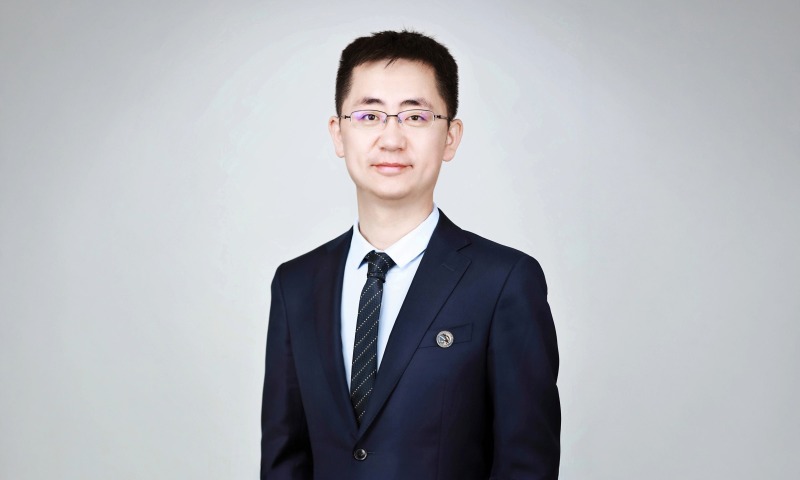
From IB Economics teacher and SAT teaching authority to international school administrator, Mr. Ever Li has spent decades in international education. In recent years, Mr. Li has researched and creatively practiced pathways for transforming traditional schools, promoting reforms centered on efficiency and vitality. Mr. Li is also a popular and charismatic mentor deeply trusted by students and families. He has personally mentored students admitted to Harvard, Yale, and other prestigious universities. His most recent book, Educating in the BANI Era, explores theoretical and practical guidance for parenting. He remains a firm idealist in education.
For many years, schools confused fairness with sameness. We believed that treating every child equally meant giving them the same lesson, the same pace, the same test, and the same definition of success. But in education, sameness is not always fairness. Sometimes, it is precisely what prevents a child from being truly seen.
This realization is becoming urgent across education systems around the world. For decades, standardized systems have played an important role in creating structure, opportunity, and shared expectations. The challenge is not to abandon standards, but to stop mistaking standardization for fairness. As society changes, schools must ask a more difficult question: how can we preserve academic rigor while allowing children to develop through more than one path?
This question is not abstract to those of us working inside schools. After more than a decade as a school principal and educational leader, one truth has become increasingly clear to me: children do not grow, think, or learn in identical ways. Some grasp abstract concepts quickly but need support in emotional regulation. Some need more time with foundational literacy but show remarkable creativity, leadership, or empathy. These differences are not exceptions to education. They are the very material education must work with.
I have seen students who were quiet in lectures become confident during project presentations. I have also seen mathematically gifted students lose motivation when asked to wait too long for the rest of the class to catch up. These moments remind us that the child in front of us is always more complex than the system designed to measure them.
This is why personalized education is not simply a teaching strategy. It is becoming central to how schools think about excellence, human development, and the deeper meaning of equity. The paradox is that education becomes more equitable not when every child receives the same thing, but when every child receives what allows them to grow. At its core, personalization is a way of recognizing the intrinsic value of every student.
The question then is how schools can put this belief into practice. It requires change in two areas: how we teach, and how we support moral and character development.
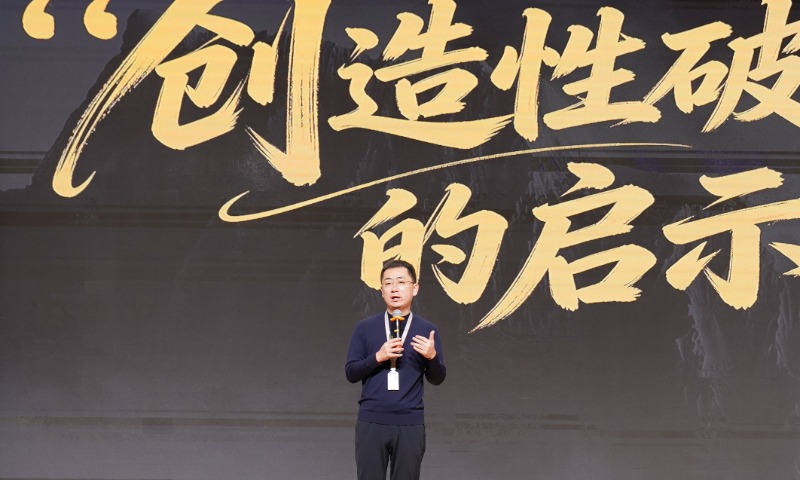
Redefining How We Teach
First, we must move away from a standardized approach to academics. Every student learns at a different pace and absorbs information in different ways, so both teaching and assessment must become more flexible.
We can no longer stand at the front of a classroom and deliver the same static lecture, expecting twenty different learners to process it in the same way. In practice, this means creating multiple pathways for learning. At our school, Beijing Haidian Kaiwen Academy, one example is the Jingrun Mathematics class, which offers students with strong mathematical potential a more focused and challenging pathway. The purpose is not to label students, but to ensure that ability, pace, and interest are met with greater precision. Students who are ready to move ahead should not be held back by the average pace of the class. Likewise, students who need more time to strengthen foundational literacy should be supported without being made to feel behind.
Assessment must also become more personalized. Project-based learning, presentations, and interactive simulations allow students to demonstrate mastery in different forms. A student may struggle with formulas but excel at leading a team, explaining a concept, or applying knowledge to a real world problem. A multiple-choice exam should not be the only lens through which that student’s ability is recognized.
Guiding Moral and Character Education With Greater Precision
Personalization must also extend into moral and character education. Character building is not a standardized process. Every student walks into the classroom carrying unseen experiences: family background, emotional patterns, personality, and a different level of trust in adults. As a result, students respond differently to correction, guidance, and emotional support.
We cannot discipline or guide every child in the same manner. Personalization in moral education requires teachers to practice a high level of emotional intelligence. There are several layers to this work: reading the setting, refining tone, and choosing the right moment.
Reading the setting is essential for teachers. For a highly sensitive child, a public correction in the middle of the classroom might trigger a defensive shutdown. For them, character guidance should take place in a safe, one-on-one setting. For another student, a brief and respectful redirection in a group setting may be entirely appropriate. The setting must protect the child’s psychological safety.
In moral guidance, tone often determines whether the message can be received at all. An educator should distinguish the difference between firmness and harshness, and between gentleness and permissiveness. When teachers read a student’s emotional state and choose a tone that fits the moment, they are more likely to reduce defensiveness and build trust.
Timing also matters. Some students process emotions externally and need timely guidance soon after an incident, while the connection between action and consequence is still clear. Others become emotionally flooded. For the latter group, attempting to communicate in the heat of the moment will not work. An educator must know when to let the situation cool down, allowing the student to calm down before engaging in meaningful dialogue.
Education should be a process of one life encountering another. As educational leaders and practitioners, we must move beyond uniform models that appear fair but become rigid in practice. Every child is a distinct being, with their own talents, temperaments, needs, and possibilities. True equity is not the uniformity of an assembly line. It is the commitment to see each child clearly, understand what they need, and create the conditions in which their strengths can emerge.
The industrial model of education was designed for efficiency. A personalized model asks for something more difficult: attentiveness. It requires more nuance, more empathy, and greater adaptability from teachers and school leaders. But this is precisely where real education begins.
When we move toward personalization, we stop merely managing students. We begin educating the whole person.