



Concordia International School Hanoi may have opened its doors in 2011, but its story began long before that. The school is part of the Lutheran Church-Missouri Synod (LCMS) educational network, which boasts a rich educational tradition spanning over 150 years. From the very beginning, Concordia Hanoi was built on a clear vision: to bring a world-class, student-centered American education to the heart of Vietnam.
That vision was strengthened by close ties to two respected sister schools, Hong Kong International School and Concordia International School Shanghai. Sharing the same educational philosophy and commitment to excellence, the schools provided a strong foundation as Concordia Hanoi welcomed its first families and students.
What started as a small but ambitious community soon gained momentum. Families were drawn not only to the school’s academic standards but also to the culture of care that surrounded them. As enrollment grew, so did the opportunities to expand what the school could offer.
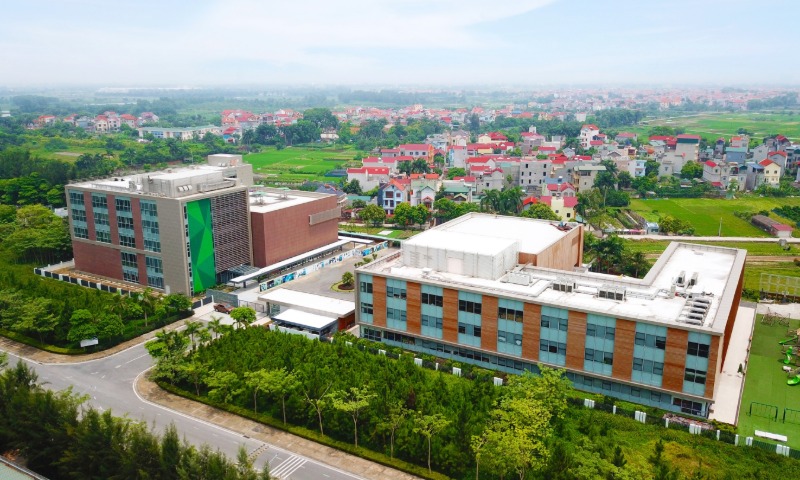
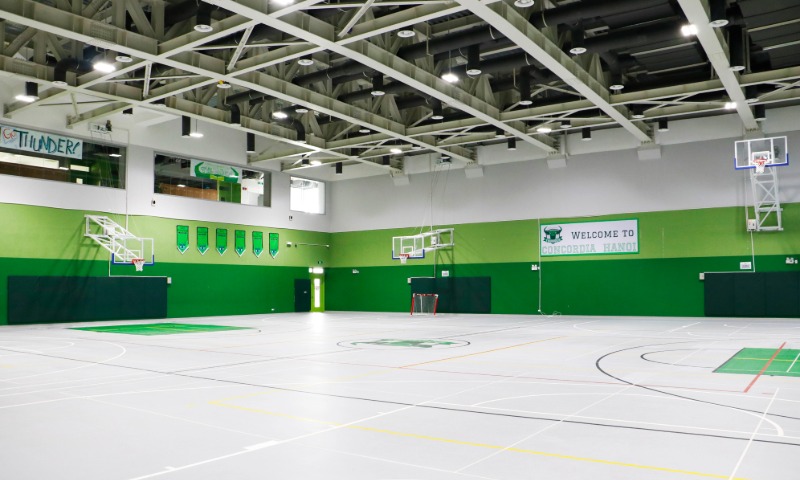
A defining moment came in 2016 with the opening of Concordia Hanoi’s purpose-built campus in Dong Anh. Designed specifically for learning, the campus echoes the school’s belief that environment matters. Sunlight streams into collaborative classrooms. Students move between advanced science and robotics labs, professional visual arts studios, and athletic facilities designed to encourage both performance and participation. The new campus allowed the school to broaden its Advanced Placement offerings, strengthen its arts and athletics programs, and welcome an increasingly diverse student population representing more than 45 nationalities.
Yet growth has never been measured simply by numbers. Throughout its journey, Concordia Hanoi has remained focused on building something deeper: a community where students are known, supported, and prepared to make meaningful contributions to the world around them.
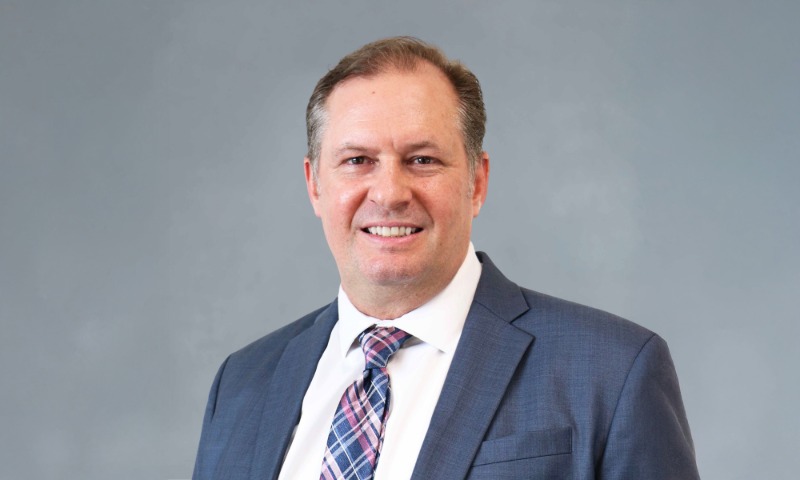
Driving that commitment is a belief that academic success and student well-being should never exist in opposition. Across the international education landscape, achievement is often associated with pressure and stress. Concordia Hanoi has chosen a different path. “Our data proves that students achieve elite academic outcomes because they are supported. Our vision is to remain a place where student well-being, joy, and academic rigor coexist harmoniously,” says Dr. Doug Grove, Head of School.
That philosophy is apparent in every aspect of school life. Concordia Hanoi’s identity is guided by a clear mission, four core values, and a commitment to nurturing the whole child. Student-Centered, Excellence, Community, and Service are not words displayed on a wall. They are principles that define daily decisions, classroom experiences, and relationships across campus.
Being student-centered means recognizing that every learner arrives with unique strengths, needs, and aspirations. Excellence is viewed as a journey of growth rather than a destination. Students are encouraged to pursue high standards while developing resilience, creativity, and a lifelong love of learning. Community remains equally important, fostering meaningful connections among students, families, faculty, and the wider world. Service, meanwhile, is integrated throughout the educational experience, helping students develop empathy, responsibility, and an understanding of their role as global citizens.
These values support what Dr. Grove describes as a transformational approach to education. Academic achievement remains important, but it is only one part of a student’s development. Intellectual growth is balanced with opportunities in athletics, the arts, leadership, and service. The goal is to prepare students not only for university success but also for purposeful and fulfilling lives.
A key part of that process is the partnership between school and home. Concordia Hanoi believes that student growth is strongest when families and educators work together toward shared goals. “When we enroll a student, we enroll the whole family,” Dr. Grove explains.
That sense of partnership can be felt throughout the campus. Parents are welcomed as active participants in their children’s educational journey, creating a supportive network that extends well beyond the classroom.
In a competitive international school market, Concordia Hanoi’s greatest distinction may be its ability to combine exceptional academic outcomes with a deeply caring culture. Students are challenged to aim high, but they are never expected to navigate that journey alone.
“We don’t believe students should have to choose between rigorous preparation for the world’s top universities and a joyful, balanced upbringing. While many international schools achieve high test scores through high-stress, high-pressure environments, our students excel because they are supported,” says Dr. Grove. It is a philosophy that has shaped Concordia Hanoi since its earliest days and continues to guide its future. As the school looks ahead, its focus remains unchanged: creating an environment where students flourish academically, grow in character, and develop the confidence to lead lives of purpose and service.
Where Every Student is Known, Challenged, and Supported
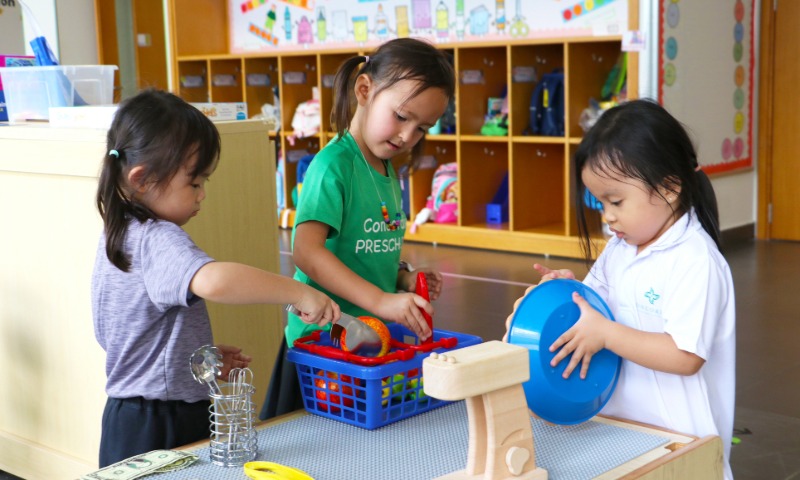
Walk through the halls of Concordia Hanoi on any given day, and one thing quickly becomes clear: relationships matter here. Students greet teachers by name. Conversations continue beyond the classroom. Younger and older students interact naturally across grade levels. The atmosphere feels purposeful yet relaxed, creating a sense of belonging that is often difficult to quantify but easy to feel. This culture is intentional.
With small class sizes and strong teacher-to-student ratios, Concordia Hanoi has built a learning environment where students are seen as individuals rather than numbers. Teachers serve as mentors, coaches, and trusted guides who invest deeply in both academic growth and personal development.
Across the campus, learning is active and collaborative. Students debate current issues, design solutions to real-world challenges, conduct hands-on experiments, and work together on projects that encourage creativity and critical thinking. Curiosity is encouraged. Questions are welcomed. Discovery is celebrated.
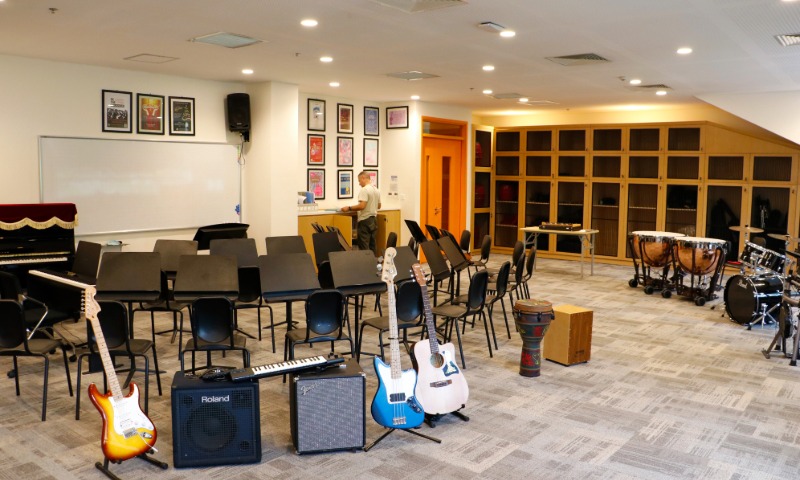
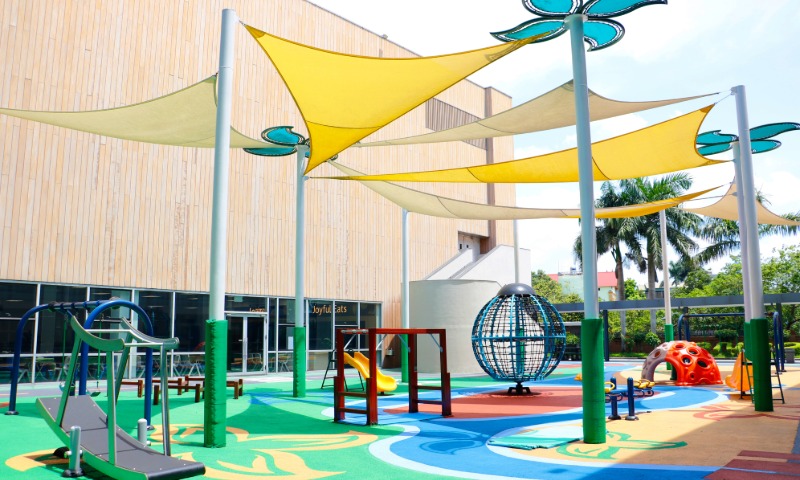
The school also recognizes that meaningful learning happens when students feel healthy, balanced, and connected. Physical activity, creative expression, and social-emotional development are woven into daily life rather than treated as extras.
That commitment becomes especially important during the high school years, when academic expectations naturally increase. To ensure students receive the support they need, school counselors conduct weekly wellness check-ins with every high school student. These conversations help create a safety net that extends far beyond academics.
Throughout the campus, students are equally engaged in service and leadership. Some are organizing community initiatives. Others are exploring environmental challenges or developing projects that support local and global causes. Service is not reserved for special events. It is part of the rhythm of everyday life, helping students develop empathy, responsibility, and a growing sense of purpose.
That same intentionality shapes the academic experience. An American standards-based curriculum provides the foundation for learning across every grade level. The framework provides consistency while allowing teachers to meet students where they are academically, socially, and emotionally.
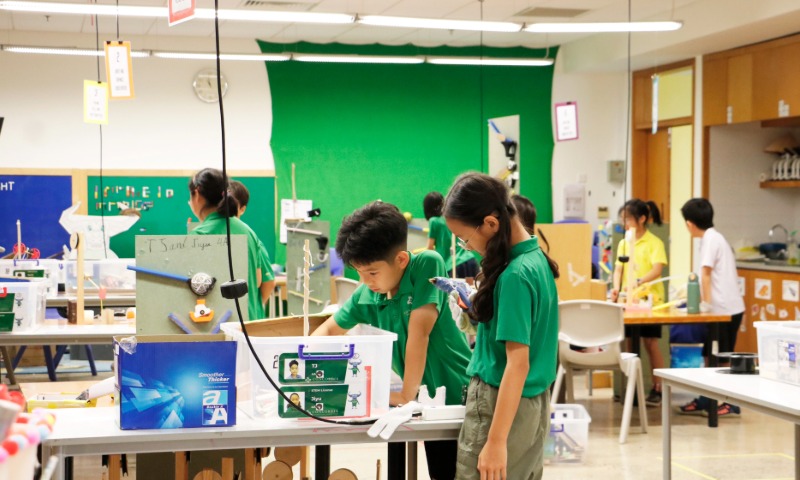
In the Elementary School, classrooms are filled with exploration and wonder. Teachers focus on nurturing curiosity while building strong foundations in literacy, mathematics, science, and communication. Learning feels joyful because students are encouraged to ask questions, investigate ideas, and discover connections for themselves.
As students enter Middle School, the focus shifts to supporting one of the most transformative periods of their lives. Adolescence brings new academic demands alongside significant social and emotional changes. Teachers and counselors work closely with students as they develop independence, resilience, and the confidence to navigate increasingly complex challenges.
By the time students reach High School, they are ready to take greater ownership of their learning. A wide range of Advanced Placement courses allows them to engage with university-level content while exploring subjects aligned with their interests and future goals. Dedicated counselors work closely with each student to design personalized pathways that reflect their talents, aspirations, and ambitions.
Reflection remains a constant throughout this journey. Students are encouraged to regularly examine their work, consider their growth, and identify opportunities for improvement. Through this process, they learn to recognize patterns in their thinking, celebrate progress, and develop the self-awareness needed for lifelong learning.
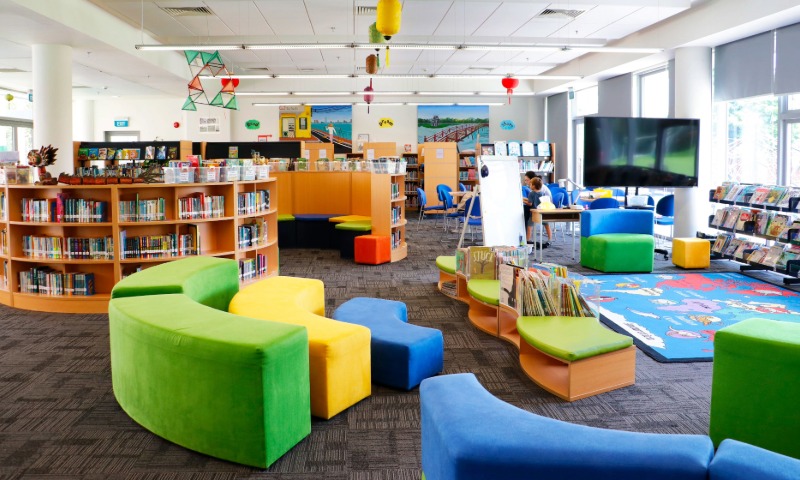
For Dr. Grove, academic excellence is about far more than grades or test scores. He says, “We believe that academic excellence does not mean rigid perfection or uniform compliance. Instead, we define academic excellence as the pursuit of personal growth, critical thinking, and the realization of our unique potential.” This philosophy influences every aspect of the school’s approach. Success is measured not simply by outcomes but by growth, engagement, and the development of each student’s unique strengths.
The school rejects the idea that achievement must come at the expense of well-being. Instead, students are challenged within an environment designed to support them every step of the way. Dedicated English as an Additional Language specialists and Learning Support professionals provide targeted assistance, ensuring every learner has access to the resources needed to succeed.
The same mindset shapes classroom instruction. Teachers embrace inquiry-based learning, encouraging students to explore complex questions, analyze evidence, and develop original solutions. Mistakes are treated as valuable learning opportunities rather than failures. By removing the fear of getting things wrong, students gain the confidence to experiment, take intellectual risks, and think creatively.
True innovation begins with curiosity, and curiosity flourishes when students feel safe. At Concordia Hanoi, that sense of safety comes from knowing there is always someone paying attention, offering support, and believing in their potential. It is a culture that allows students to pursue excellence while remaining fully themselves, laying the foundation for the opportunities that await beyond graduation.
Preparing Students for a Future Yet to Be Written
The future will demand more than academic knowledge. Tomorrow’s graduates will need adaptability, independence, critical thinking, and the ability to navigate an increasingly complex world. At Concordia Hanoi, preparing students for that reality begins long before they submit a university application.
The school’s academic program is designed as a carefully structured developmental journey. Each stage equips students with the skills, habits, and experiences needed to thrive both at university and beyond. Advanced Placement courses play an important role in that preparation, but their purpose extends beyond earning university credits or strengthening applications.
For Concordia Hanoi, the AP framework serves as a vehicle for teaching students how to learn independently. Students are challenged to manage demanding workloads, organize complex projects, synthesize information from multiple sources, and develop the study habits expected at leading universities. They learn to take ownership of their education while building the confidence needed to succeed in increasingly autonomous environments.
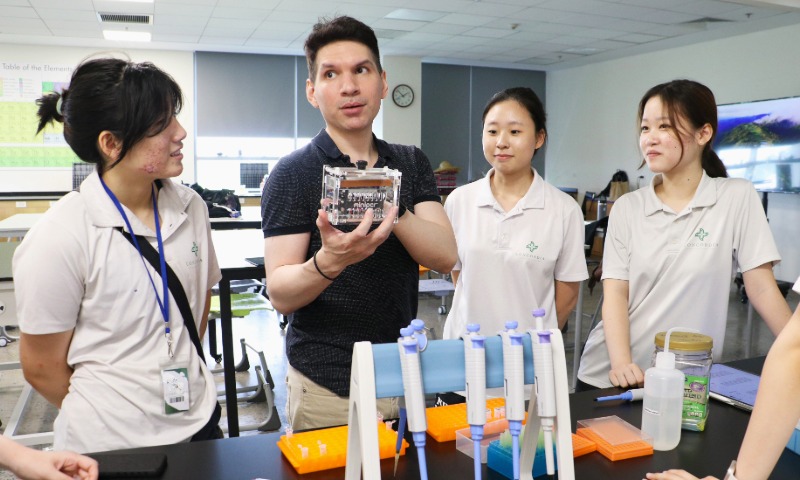
The flexibility of the school’s curriculum also allows students to explore pathways aligned with their future aspirations. A student interested in engineering might pursue advanced mathematics, robotics, and technology-focused coursework. An aspiring medical professional can engage in sophisticated scientific research using professional-grade laboratory facilities. Students are encouraged to tailor their academic experiences around their passions while maintaining a strong foundation across disciplines.
That level of personalization is supported by a comprehensive university counseling program that begins as soon as students enter High School. Ninth-grade students focus on building the organizational and academic habits required for long-term success. By Grade 10, they begin exploring potential career pathways and examining how their interests connect with future opportunities. Grade 11 students strengthen their academic profiles while engaging directly with visiting university representatives from around the world.
By senior year, preparation becomes even more focused. Students participate in a dedicated College Boot Camp, working alongside admissions professionals from leading universities. They also complete a yearlong Senior Seminar designed to prepare them for the realities of independent living. Topics range from personal finance and time management to cultural transitions and self-advocacy, helping students develop practical life skills that extend far beyond the classroom.
Yet the school recognizes that some lessons can only be learned through experience. That belief is reflected in a distinctive internship program required for all rising seniors. During these placements, students step into professional environments aligned with their intended fields of study or career interests.
Some shadow biomedical engineers. Others work alongside business leaders, data analysts, designers, or creative professionals. The experience allows students to test assumptions, gain practical insights, and begin building professional networks before they even graduate from high school.
These experiences often bring classroom learning into sharper focus. Students return with new questions, deeper motivation, and a clearer understanding of how their studies connect to the world around them.
The same real-world mindset shapes the school’s approach to innovation and technology. Rather than treating technology as a standalone subject, Concordia Hanoi integrates it across the curriculum as a tool for exploration, creativity, and problem-solving. Students are encouraged to move beyond consuming information and become creators, researchers, and innovators.
Innovation, according to Dr. Grove, begins with a willingness to take risks. He shares, “We intentionally foster this across all grade levels. Our teachers cultivate classroom environments where mistakes are viewed as essential in the learning process.”
This philosophy creates space for experimentation. Students learn to approach challenges with curiosity rather than fear, developing the confidence to explore unfamiliar ideas and pursue creative solutions. Technology supports that journey.
Across classrooms and specialized learning spaces, students have access to tools and resources that mirror those found in universities and modern industries. From computer science and robotics to data analytics and advanced coding, learners engage with emerging technologies in meaningful and practical ways.
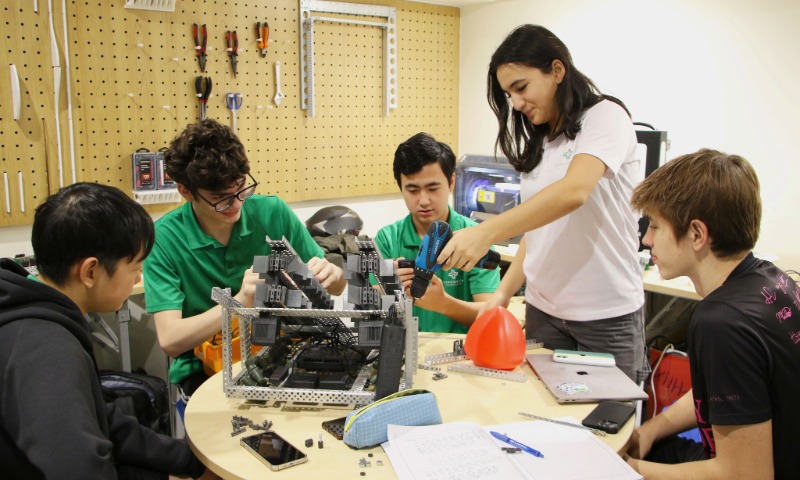
Courses such as Big Data and advanced Robotics challenge students to think like engineers, analysts, and innovators. They write code, analyze information, build systems, and tackle increasingly sophisticated problems that require collaboration and persistence.
Learning, however, extends far beyond campus walls. Experiential learning is deeply embedded throughout the Concordia Hanoi experience. Students regularly engage with the wider community through service initiatives, field studies, research projects, and hands-on learning opportunities.
Elementary students may explore environmental stewardship through campus sustainability efforts. High school students often collaborate with local organizations to address community challenges and develop solutions with tangible impact.
Throughout these experiences, Hanoi itself becomes part of the curriculum. The city, its people, and its communities serve as living classrooms where students learn to apply knowledge, develop empathy, and deepen their understanding of the world.
By the time they graduate, Concordia Hanoi students leave with more than academic credentials. They leave with the confidence to navigate uncertainty, the skills to adapt to change, and the mindset to contribute meaningfully wherever their journeys take them. And in a world that continues to evolve at remarkable speed, those qualities may prove to be their greatest advantage.
Every Student’s Journey, Uniquely Designed
Concordia Hanoi’s student-centered approach begins with a simple belief: no two learners are exactly alike. Each student arrives with different strengths, interests, challenges, and aspirations. The role of the school is not to fit students into a predetermined mold, but to create pathways that allow them to thrive as individuals.
That commitment is reflected in Concordia Hanoi’s intimate 8:1 student-to-teacher ratio. Small class sizes allow educators to know students deeply, understanding not only how they learn but also what motivates them, where they need support, and what dreams they hope to pursue.
For students whose first language is not English, specialized support begins early. English as an Additional Language (EAL) specialists work closely with students to build confidence and fluency while ensuring they can fully engage with grade-level content. In the Elementary School, each grade level is supported by a dedicated EAL specialist who helps students develop the language skills needed to participate meaningfully in classroom discussions, collaborative projects, and academic inquiry.
The same individualized attention extends to students with learning differences. Learning Support educators collaborate with teachers and families to develop accommodations and strategies tailored to each student’s needs. The goal is not to lower expectations but to ensure every learner has access to the same rigorous opportunities as their peers. This balance of high standards and personalized support is a defining feature of the Concordia experience.
Despite its close-knit size, the school offers an impressive range of opportunities typically associated with much larger institutions. Students can choose from 27 Advanced Placement and university-level courses, allowing them to build academic programs that reflect their individual passions and future ambitions.
Some students pursue advanced mathematics and science. Others immerse themselves in the arts, athletics, robotics, or international diplomacy through Model United Nations. Whatever path they choose, students benefit from the same level of personalized guidance and mentorship. That guidance becomes especially meaningful when students begin planning for life after graduation.
At Concordia Hanoi, university counseling is not simply about gaining admission to prestigious institutions. It is about helping students discover environments where they will flourish academically, personally, and professionally.
One of the school’s most distinctive practices is its annual “Happiness Engineering” meeting. Each year, students, parents, and counselors spend up to two hours together exploring academic progress, career interests, course selections, wellness, and long-term aspirations. The conversations are thoughtful, comprehensive, and deeply personal.
Rather than asking only where a student wants to go, the process focuses on who they want to become. The counseling team provides individualized guidance throughout all four years of high school, helping students navigate university systems across North America, Europe, Asia, Australia, and the United Kingdom. Students are encouraged to develop applications that reflect their authentic interests, experiences, and personal stories.
Concordia Hanoi also nurtures a culture of original research and academic inquiry through the Concordia International Research Conference Hanoi (CIRCH). Hosted annually by the school, the conference brings together outstanding high school researchers from around the world to present independent research, exchange ideas, and engage with scholars and peers. For Concordia students, CIRCH provides an opportunity not only to showcase their work but also to participate in an international academic community that values curiosity, innovation, and evidence-based thinking.
Some spend their week inside medical laboratories. Others work with technology companies, creative agencies, businesses, or nonprofit organizations. The experience gives students the opportunity to test career assumptions, develop professional skills, and gain firsthand exposure to the realities of the workplace. In many cases, those experiences become defining moments. They help students confirm their ambitions, reconsider possibilities, or discover entirely new passions.
A Community That Connects the World
Students at Concordia Hanoi learn alongside classmates representing more than 45 nationalities and cultural backgrounds. With families from Vietnam, South Korea, North America, Japan, Europe, and many other regions of the world, diversity is not something the school promotes from afar. It is woven into everyday life. The result is a community where cultural curiosity develops naturally.
Students grow up celebrating different traditions, hearing multiple languages, and learning how to engage respectfully with viewpoints that may differ from their own. These daily interactions foster empathy, open-mindedness, and the interpersonal skills increasingly valued in a connected world.
For many families arriving in Hanoi from abroad, that sense of belonging is one of the first things they notice. New students are welcomed quickly. Friendships form across cultures. Parents often describe the school as feeling like a second home long before they expected it would.
Beyond the classroom, student life is equally vibrant. Concordia Hanoi views extracurricular experiences as essential extensions of learning. Whether students are pursuing athletic excellence, artistic expression, technological innovation, or community leadership, they are encouraged to discover passions that enrich their lives and shape their character.
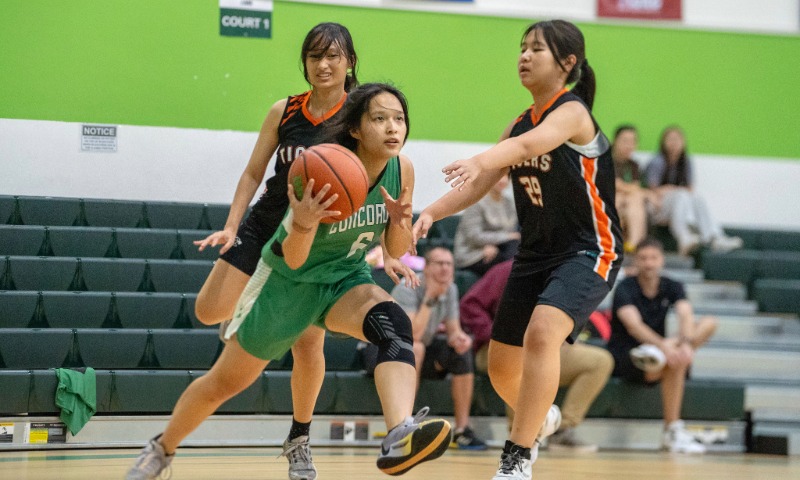
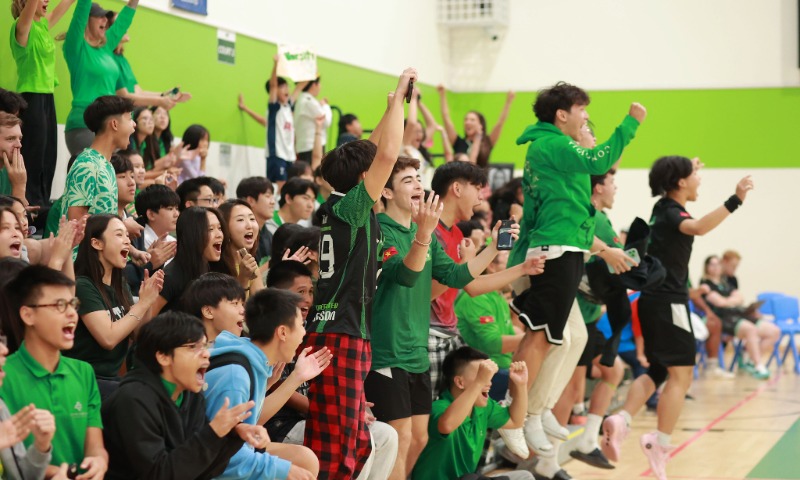
Athletics play a significant role in that journey. Across various sports, students learn the value of perseverance, teamwork, discipline, and resilience. As members of regional international school conferences, Concordia’s teams regularly compete against much larger schools while developing a strong sense of school pride and camaraderie.
The arts hold an equally prominent place within campus life. Throughout the year, musicians perform in concert bands, orchestras, and vocal ensembles. Student actors bring stories to life through theatrical productions in the school’s Black Box Theater, while concert bands, orchestras, and vocal ensembles regularly perform in the professional auditorium at the Dong Anh Community Center.
In bright studios across campus, artists experiment with painting, ceramics, sculpture, graphic design, photography, and film production. Annual exhibitions provide opportunities for students to showcase their creativity while celebrating the unique perspectives they bring to their work.
The school’s culture of empowerment extends beyond organized activities. Students are encouraged to take ownership of their interests and create opportunities where none exist. If a club or organization does not yet exist, students are invited to build it themselves.
On any afternoon, the campus buzzes with activity. Robotics teams test new designs. Debate students prepare arguments. Model United Nations delegates discuss global issues. Chess players analyze strategies while digital media creators work on their latest projects.
Leadership opportunities are equally accessible. Through Student Council, students play an active role in shaping school culture, organizing community events, and serving as a bridge between their peers and school leadership. Their voices are valued, and their ideas often help shape the student experience.
Underlying all of these opportunities is a shared commitment to service. Students regularly partner with charities, schools, and community organizations throughout Hanoi. They organize fundraisers, support environmental initiatives, teach English, and participate in projects that create meaningful local impact. These experiences help students understand that leadership is not simply about influence. It is about responsibility.
By engaging with real challenges and real communities, students learn that even small actions can create lasting change. They begin to see themselves not only as learners, but as contributors to a better world.
Building a Society for the Future
Confidence cannot be handed to a student. It grows through experience. Through responsibility. Through moments when young people discover that their ideas matter and their actions can make a difference. That belief sits at the heart of student leadership at Concordia International School Hanoi.
Students are encouraged to move beyond participation and become creators of opportunity. Whether launching a new club, organizing a community initiative, producing digital content, or leading a fundraising campaign, they are given the freedom and trust to take ownership of their ideas.
Along the way, they develop practical skills that will serve them long after graduation. They learn how to manage projects, collaborate with teams, solve problems, communicate effectively, and lead with purpose.
Student Council provides another avenue for meaningful leadership. More than a student organization, it serves as an active link between the student body and school leadership. Students advocate for improvements, contribute ideas, and help shape the culture of the community they call home. That culture is built upon one of Concordia Hanoi’s most enduring strengths: community.
For Dr. Grove and his team, education is fundamentally relational. Academic excellence flourishes when students, families, and educators work together toward a shared goal. That philosophy guides every aspect of campus life, with parents viewed as true partners in helping students thrive through a shared purpose between home and the learning environment.
This philosophy extends far beyond admissions. Parents are active partners in school life, contributing their time, expertise, and energy through a wide range of initiatives. The Parent Support Organization helps organize events, fund student-centered programs, and strengthen connections across the community. Gatherings such as the Fall BBQ, Fall Carnival, and Christmas Fair create opportunities for families to build lasting friendships while celebrating the diversity that defines the school.
The school also invests intentionally in parent learning. Through Parent Workshops, Coffee Mornings, and Town Hall discussions, families gain practical insights and strategies that help strengthen the partnership between home and school. These conversations create alignment around a shared objective: helping every child thrive.
The strength of those relationships is reinforced by a highly experienced faculty. Concordia’s educators bring an average of 18 years of teaching experience, and the vast majority hold advanced degrees. Yet what distinguishes them most is not their credentials. It is their commitment to knowing students personally.
Teachers serve as advocates, mentors, and trusted adults who celebrate successes, navigate challenges, and remain attentive to both academic and emotional well-being. Together, these relationships form a powerful support network that extends across the entire school community. Students know they have people who believe in them, encourage them, and stand beside them throughout their educational journey.
As Concordia Hanoi looks toward the future, its focus is not on becoming bigger. It is on becoming better. The school continues to invest in innovative learning spaces, emerging technologies, and forward-thinking academic opportunities that will prepare students for a rapidly changing world. At the same time, leaders remain committed to preserving the close-knit culture that has defined Concordia since its earliest days.
The future will require new skills, new knowledge, and new ways of thinking. Concordia Hanoi is determined to ensure its students are ready. Yet Dr. Grove believes one priority stands above all others. “As academic environments worldwide become increasingly high-stress, our priority is to prove that elite student outcomes can be achieved through wellness rather than anxiety.”
It is a vision that reflects the school’s broader purpose. Academic achievement matters. Innovation matters. University success matters. But ultimately, Concordia Hanoi measures its success by something deeper. The goal is to remain a place where students feel known, families feel connected, and every child has the opportunity to grow into the best version of themselves.
No matter how much the school evolves, that commitment remains unchanged: ensuring Concordia International School Hanoi always feels like a safe, supportive, and joyful second home for every family it welcomes.
For More Info: https://www.concordiahanoi.org/
About
Dr. Doug Grove, Head of School, Concordia International School Hanoi
Dr. Doug Grove is an educational leader with over 25 years of experience across international K-12 schools, university administration, and educational research. He currently serves as the Head of School at Concordia International School Hanoi, where he focuses on strategic growth, curriculum development, and community building.
His leadership within the international school network includes previous roles at Concordia International School Shanghai as Interim Head of School and Senior Director of Business Development. In higher education, Dr. Grove served as Associate Provost and Vice President of Enrollment and Program Development at Concordia University, Irvine, where he managed student recruitment and academic program expansion.
Alongside his institutional roles, Dr. Grove is an educational entrepreneur. He is the co-founder and president of Multi-Dimensional Education, Inc., and previously founded Continuous Improvement Associates. He also contributes to organizational governance, currently serving on the Board of Governors for AmCham.