




Geert Simons is a Belgian international education leader and Director-CEO of St Andrew’s International School in Turi, Kenya, who will shortly take up the leadership of ICS Paris. He has led schools and educational organisations across Europe, Africa and the Middle East, combining educational vision with strategic and organisational leadership. His philosophy, “Channelling Passion into Purpose,” reflects his belief that schools should recognise and nurture the potential within every student and colleague. Geert advocates academic excellence alongside character, leadership, adventure and international-mindedness. A systems thinker with an entrepreneurial outlook, he is particularly interested in school culture, sustainable growth and the future of education. Outside school, he is a keen mountaineer and rock climber.
Recently, in an exclusive interview with K12 Digest, Geert shared insights into a career shaped by “Channelling Passion into Purpose.” On the future of education, Geert sees the biggest shift as moving from knowledge transfer to developing human judgement, with schools teaching students to work with AI while cultivating empathy, creativity, integrity and leadership that technology cannot replace. Looking ahead, he plans to lead an ambitious international school community in Europe, grounded in strong culture, sustainable growth and relationships. His advice to future leaders is to see potential in your people, give clarity and purpose, and build a culture where possibility becomes reality. The following excerpts are taken from the interview.
Hi Geert. Every leader’s path starts with a moment of clarity. What was the earliest experience that made you realize education was where you wanted to shape lives and futures?
I do not think there was one dramatic moment. It grew partly from my own experience as a student in the Belgian education system. At the time, the system seemed primarily designed around the average student, with a rather uniform approach to learning that relied heavily on listening. Those who wanted to explore further, learn differently, or truly excel could easily become disappointed. I often found education more restrictive and predictable than inspiring.
That experience made me want to help improve education from within. I chose to become an educationalist because I believed schools could do much more than bring everyone towards the same average level. They could recognise individual potential and give young people different ways to discover what they are capable of achieving.
What attracted me was the opportunity to see potential before it is always visible to the person themselves. Young people already possess curiosity, talent and passion. Our responsibility is to recognise those qualities, nurture them and help give them purpose. That belief eventually became my leadership philosophy: channelling passion into purpose. It continues to shape how I lead schools and how I think about education.
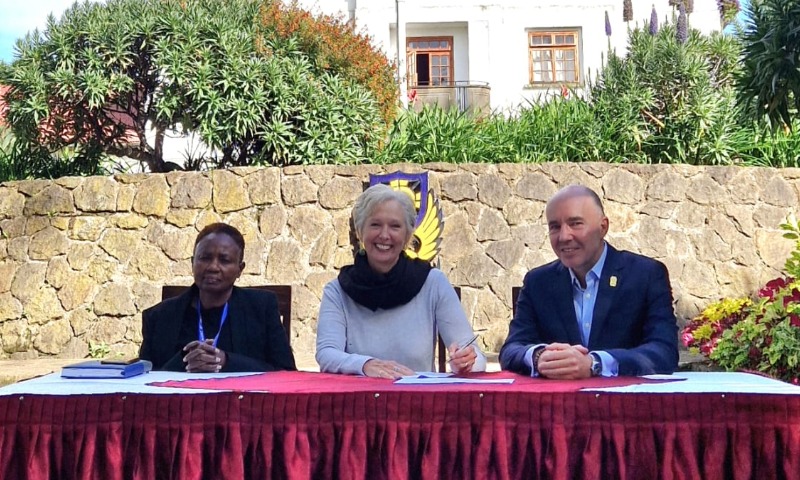
As Director-CEO, you hold both educational and organizational leadership. What part of the role brings you the most energy and why?
I am most energised by bringing people together around a compelling direction and then turning that vision into something tangible. Educational ambition is only meaningful when the organisation has the culture, people, systems and resources to deliver it.
I enjoy working at that intersection. I can move from discussing the experience of an individual student to considering school culture, academic strategy, financial sustainability, governance or future growth. These are not separate conversations. Every organisational decision should ultimately create better conditions for students and teachers to flourish.
The most rewarding moments are when a school community begins to believe more strongly in what is possible. Once people share a clear sense of purpose, energy grows, confidence returns and meaningful change becomes achievable.
The purpose of school is being redefined. What do you see as the single biggest shift in how international schools will educate students over the next 5 years?
The biggest shift will be from primarily transferring knowledge to developing human skills and human judgement. Artificial intelligence has made access to information, analysis and content creation almost instantaneous. Consequently, knowing something will no longer be enough, academic excellence will no longer be enough. Students must learn how to question information, evaluate evidence, recognise bias, make ethical decisions and use technology intelligently: they need to learn how to become the ‘human differentiator’ in a fast-developing technological society.
This does not make knowledge less important. Good judgement is impossible without a strong foundation of knowledge. However, schools will need to combine academic rigour with curiosity, creativity, collaboration, character and real-world problem-solving. So, leadership development through character formation becomes even more essential.
The most successful schools will not compete with artificial intelligence. They will help students understand how to work with it while developing the distinctly human qualities technology cannot replace: empathy, courage, integrity, imagination, creativity, critical judgement, relationships and a sense of responsibility towards others.
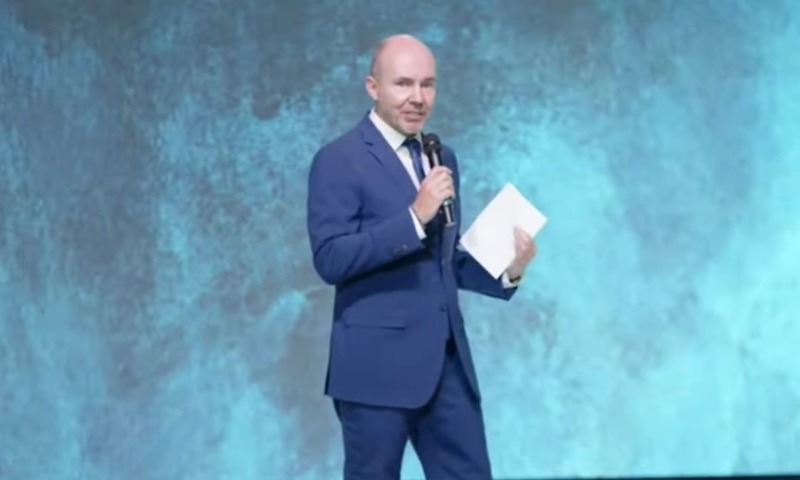
Boarding and residential life are changing. How do you see the role of boarding schools evolving to meet the needs of families and students by 2030?
By 2030, the strongest boarding schools will be understood less as places where students simply live and more as intentionally designed communities for growth. Their greatest advantage is the luxury of time. Learning, relationships, leadership, wellbeing, adventure and character development can continue beyond the classroom.
Families will rightly expect boarding schools to provide outstanding safeguarding, highly personalised pastoral care and strong mental-health support. At the same time, students need more than protection. They need opportunities to develop independence, resilience and confidence. The challenge is to create an environment that offers both security and meaningful responsibility.
Boarding will also become more flexible, with full, weekly and short-term options meeting different family needs. Its enduring value, however, will lie in genuine human connection. In an increasingly digital and sometimes isolating world, belonging to a diverse, purposeful community may become more valuable than ever.
Teachers are navigating more complexity. What skills and mindsets will educators need most to thrive in the future of schooling?
Future educators will need to be confident learners themselves. Subject expertise will remain essential, but teachers must also be curious, adaptable and willing to reconsider practices that may have worked well in the past.
They will need the confidence to use technology without allowing technology to determine the purpose of learning. They must know when artificial intelligence can deepen learning and when students need to struggle, discuss, create or think independently. That requires professional judgement rather than simply technical competence.
Relationships will remain at the heart of excellent teaching. Students learn best when they feel known, challenged and supported. Teachers will therefore need emotional intelligence, cultural awareness and the ability to create belonging in increasingly diverse communities. Above all, they must retain high expectations and genuine optimism about what every young person can become.
Teachers will also need to identify the uniquely human skills connected to their subjects and understand how subject content can help students become the human differentiator in a technology-rich world. This will require them to select the knowledge that is truly essential and design ways for students to engage with their subjects that technology cannot reproduce. Across all disciplines, learning should develop critical thinking, creativity, ethical judgement and the ability to consider how knowledge, ideas and decisions affect people and society.
Leaders are shaped outside the office too. What book, talk, or idea has influenced your thinking about education and leadership most recently?
Milan Kundera’s book The Unbearable Lightness of Being has profoundly shaped my philosophy of life. The novel explores the tension between lightness and weight, freedom and commitment, and the search for meaning in a life that can only be lived once. It encouraged me to see that passion and freedom are important, but that they gain meaning when connected to responsibility, commitment and purpose. This thinking lies at the heart of my leadership philosophy, “Channelling Passion into Purpose.” Passion provides energy, but purpose gives that energy direction and allows it to make a lasting difference.
More recently, I have been reflecting on the idea that a healthy culture must often come before sustainable strategic improvement. Leaders naturally focus on structures, targets, programmes and measurable outcomes. These matter, but even the best strategy struggles in a culture where trust is weak, expectations are unclear or people no longer believe that improvement is possible.
Culture is created through repeated daily experiences. It is shaped by what leaders pay attention to, what they tolerate, how decisions are made and whether words are followed by action. This has reinforced my belief that leadership begins with listening and clarity, but it must lead to consistency. People do not judge a school’s values by what appears on the wall. They judge them by what they experience every day.
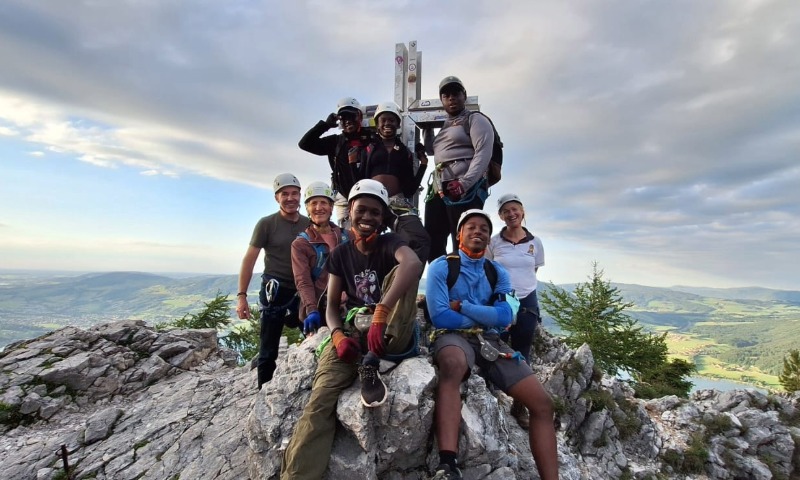
Everyone has a way to recharge. What hobby or passion outside of school energizes you and helps you return with clarity?
Mountaineering and rock climbing give me energy and perspective. In the mountains, daily distractions disappear and your attention becomes very focused. You assess the conditions, trust your preparation, make decisions with incomplete information and remain aware of the people around you.
There are clear parallels with leadership, although that is not why I climb. I value the physical challenge, a little bit of suffering, the landscape and the simplicity of concentrating completely on the next movement or the next stage of a route.
The mountains also encourage humility. Ambition matters, but conditions can change quickly and no summit is guaranteed. Knowing when to continue, when to change course and when to turn back is as important as determination. I usually return physically tired but mentally clearer.
Travelling gives me a different kind of energy. Experiencing unfamiliar cultures, landscapes and ways of living challenges my assumptions and reminds me that there is rarely only one way to understand the world. Reading offers a similar journey without requiring me to leave home. It creates space for reflection, introduces me to ideas and perspectives beyond my own, and often helps me return to leadership questions with greater clarity and curiosity.
Where do you see yourself in the next 5 years?
I see myself leading an ambitious international school community in Europe while continuing to contribute to the wider conversation about the future of education. After many rewarding years in Africa, my family and I are returning to Europe, and I will soon begin the next chapter of my career in France at ICS Paris.
My focus will be on building a strong and distinctive school culture, creating sustainable growth and ensuring that educational innovation remains grounded in genuine human relationships. I am particularly interested in how schools can combine academic excellence, international-mindedness, leadership and character development, and intelligent use of technology.
In five years, I hope to see a school community that is stronger, more confident and more clearly recognised for the value it brings to students and families. For me, meaningful leadership is ultimately measured by what continues to flourish beyond the leader.
If you could leave one sentence of advice on the desk of every future school leader, what would it say?
See the potential in your people, give them clarity and purpose, and build a culture in which they have the courage to turn possibility into reality: ‘Channelling Passion into Purpose’.