



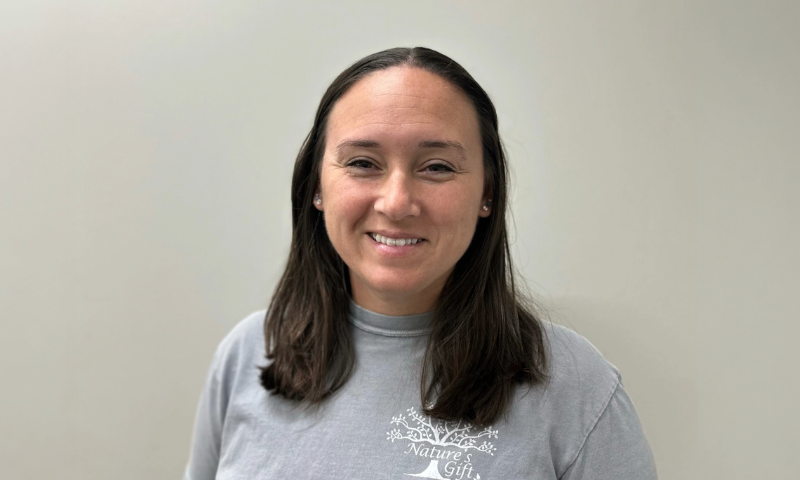
Erin Wolski is the founding leader of Nature’s Gift Microschool, the first school in the Indiana Microschool Collaborative network. She brings 16 years of experience as both an elementary and special education teacher and has created a learning community centered on trust, collaboration, and lasting relationships. At Nature’s Gift, a K–12 public microschool located on the grounds of Nameless Creek Youth Camp, Erin helps bring personalized, hands-on learning to life. The school combines core academics with outdoor exploration and real-world projects, giving students opportunities to build essential skills, follow their curiosity, and progress at their own pace. Close partnerships with families are central to this approach, with parents and educators working together to support each student’s goals and growth. Erin also serves as the architect of the Indiana Microschool Collaborative’s Commons App learning framework, helping shape the network’s badge system and the ways student growth is recognized. Her work draws on expertise in learner-centered design, competency-based assessment, and microschool operations to support learning experiences that respond to individual students’ strengths, interests, and needs.
At 4:30 p.m. on May 28th, 2026, I pulled into my driveway, home from the last day of school. Following my kids into the house and hanging my keys on the hook, I braced for the familiar wall of end-of-school-year exhaustion, but it never came.
Instead, I felt surprisingly energized. I set down my overflowing bag, settled into my office, and opened my laptop to capture the feeling. In years past, the last day of school meant collapsing onto the couch, barely moving for days as I slowly recovered from the grueling month of May. But not today. Today was entirely different.
Why?
May 28th was the bookend to Nature’s Gift’s inaugural year. Twelve months earlier, I joined Eastern Hancock Schools’ superintendent, Dr. George Philhower, in founding Indiana’s first K-12 microschool, a community centered on relationships, personalization, and autonomy for 62 students. After spending the previous 16 years teaching in traditional public schools, stepping into the unknown as Nature’s Gift’s lead educator came with a massive learning curve, making the past 365 days both the scariest and most impactful of my life.
My first year of teaching at a microschool wasn’t easier than years past. In many ways, it was harder. Building something from scratch meant every week brought new questions, challenges, and opportunities to rethink what education could be. Yet here I was, ending the year proud, energized, and already dreaming about next year.
The setting was different, but the core elements were the same: students still needed to be known, challenged, and supported; teachers still poured everything into their work; and parents still desperately wanted to be true partners in their children’s learning.
What changed were the conditions surrounding the work.
Building environments where teachers and their students thrive
With a new school year just a few weeks away, I find myself still thinking about how different my last day felt from last days before.
Teacher burnout has become one of the defining crises of modern education. Talented educators leave the profession every year, while countless others simply count down the days until the next break. We often discuss this exhaustion as if it were the unavoidable cost of teaching.
Teaching will always be demanding work. It asks us to care deeply, respond constantly, and carry enormous responsibility for young lives. Addressing burnout requires serious conversations about compensation, planning time, and workload. But we must also ask a more fundamental question: What if the profession is struggling not because teachers are asked to do too much, but because they are asked to do meaningful work inside systems that make it unnecessarily difficult?
The answer is to build environments where teachers are trusted, responsibility is shared, creativity is expected, and relationships are the nonnegotiable key to unlocking a student’s potential.
Systemic change doesn’t belong to microschools alone. Rather, every school must examine the conditions under which its teachers work. Traditional schools are filled with talented educators, dedicated leaders, and vibrant communities. I know because I spent 16 deeply meaningful years in them. Many are already fostering these conditions, while others can start simply by asking: What is preventing our teachers from doing their best work?
- Where can educators be given greater autonomy?
- How can responsibility be shared more effectively?
- What demands consume time without adding value to learning?
- How can schedules be redesigned to foster real collaboration?
- How do we make lasting relationships with students and families the core design principle of our schools?
Answering these questions does not require every school to shrink or abandon what works. It simply requires leaders and communities to examine which parts of their systems support meaningful work and which stand in its way.
In a microschool, I had the freedom to respond to students in real time, collaborate deeply with my team, build genuine relationships with families, and look far beyond the horizon of a single academic year. Even better, because we’re a K-12 campus, I have the privilege of teaching many of these same children for years to come. That matters because it means we are not closing the book on our time together or worrying whether next year’s teacher will truly know and understand them. Their stories continue with us. The trust we built will not reset when the calendar turns.
Those conditions did not just change the experience of teaching. They changed the way time itself felt.
In previous years, May was as frantic as it was thrilling. Had we covered all the standards? Was the paperwork finished? What else needed to be checked off before the clock ran out? The final weeks always felt like a desperate sprint to a finish line.
This year, no one was counting down the days. Instead, we spent the final week and a half fully present with our students. We played, reflected on their growth, and celebrated the community we had built. The energy my team poured into those final days was inspiring.
And it was not just my experience. During that last week, my teammates organized weekly Thursday morning coffee meetings for us throughout the summer. They wanted space to talk about what we had learned, how to refine our approach, and what we wanted to design for next year.
That might be the clearest sign that something fundamental had shifted. When teachers are exhausted by a system, summer is an escape from the work. When they are energized by purpose, summer becomes a space to reimagine it.
This year did not diminish my faith in traditional education. Instead, it expanded my vision of what it can become – a system where teachers see growth all around them, are inspired by their peers, and are eager for what comes next. If changing conditions can change my entire teaching experience, then thoughtful shifts in any school can help educators rediscover the joy and purpose that brought them to the profession in the first place.
My hope is that, one day, stepping into June feeling energized, fulfilled, and ready for what comes next will no longer be an exception. It will simply be the way school ends.