



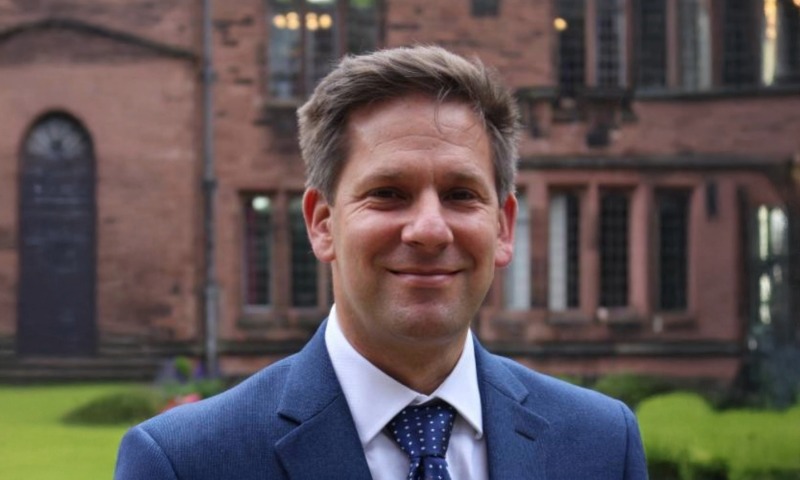
Nic Ford is the Head of Bolton School Boys’ Division, one of the UK’s leading independent schools. Prior to headship, he was academic deputy head in two schools, and he is recognised for his commitment to academic excellence, pastoral care and educational innovation. A Geography graduate from University College London, he completed his PGCE at the Institute of Education and has spent nearly three decades in teaching and leadership roles across the state and independent sectors. Nic is particularly known for championing technology-enhanced learning and developing opportunities that help pupils realise their full potential while contributing positively to the wider community beyond school.
Recently, in an exclusive interview with K12 Digest, Nic shared insights into how education as an agent for social mobility has shaped his leadership, turning both “outstanding” and “special measures” OFSTED outcomes into progress. Looking to 2030, he argued that schools using data to deepen understanding will be separated from those merely monitoring performance by their discipline in collecting the right data, not mass data, because strategic collections across knowledge and skills criteria cut through noise and transform outcomes, while indiscriminate tracking creates confusion. If he could put one sentence on every staff room wall, it would be “what you do matters,” a simple reminder that teaching and learning transform lives, especially at the start or end of a six-period day. The following excerpts are taken from the interview.
Hi Nic. Your leadership journey spans Whitmore, Pleckgate, and Bolton School, with OFSTED turning “outstanding” and “special measures” into progress. Looking back at your first leadership role, what moment convinced you that transforming teaching and learning was your calling?
I believe education has the ability to change lives; it is an agent for social mobility. I spent the early part of my career as a teacher learning the different ways to help students learn, to enable them to make progress in my own subject and get good results in public examinations, but also from engagement and interest in my subject. The opportunity to scale that across a whole school was an exciting leadership challenge that could make a difference to many, many more students. That’s how I knew it was what I wanted to do.
What do you love the most about your current role?
I work in a very good school that has a fantastic community; parents, students, and teachers all working together towards the same goals – to produce young men who will go on to make a difference for good in their lives and the lives of others.
Data and tracking have moved from accountability tools to learning tools. By 2030, what will separate schools that use data to deepen understanding from those that use it to monitor performance?
I think we are already seeing this transformation; data can significantly help teachers and leaders identify learning gaps and transform outcomes. However, as systems for analysing data become more sophisticated, the importance shifts from collecting lots of data to collecting the right data. Schools that collect mass data for monitoring will not be able to see the wood for the trees, with competing information creating confusion. The most successful schools will have more strategic data collections across a variety of knowledge and skills-based criteria.
Innovation in education often cycles quickly through new tools and initiatives. In five years, what will distinguish schools that innovate sustainably from those chasing trends?
Schools that chase trends usually find innovations fade and old practices remain. The key thing is understanding the ‘why’, focusing on change for the right reasons. Too many schools innovate with a product or an idea rather than a clear sense of why. The schools that plan more strategically will see initiatives become embedded and part of normal practice; those that focus on a particular tool will see nothing change.
Recruitment and retention remain the biggest constraint on school quality. Five years from now, what will the most effective schools do differently to grow, keep, and honor great teachers?
Workload and well-being are key to retention. Creating the right culture, away from high-stakes accountability, is key. Teachers need to feel safe and trusted to teach, and that is a key part of ensuring staff want to stay in a school. The next challenge is professional development, training staff to lead, and then creating opportunities for teachers to remain curious and follow their interests and ideas. Teaching is the best job in the world when the culture is right.
Books shape how leaders think about learning and systems. What book has the most notes from your years in senior leadership, and what idea from it shows up in your schools?
Probably ‘Leaders eat last’ by Sinek. Leadership is about people, and good leaders have emotional intelligence. This is what I try to do in my schools: prioritize people over systems.
Rest fuels sustainable leadership. What hobby or ritual helps you return to school on Monday ready for data, deployment, and dialogue?
I run. Being in nature, running gives me the emotional fuel to get up on Monday mornings.
Where do you see yourself in the next 5 years?
Who knows. I love my job, am happy doing what I am doing right now. I have learnt over the years that opportunity finds you if you do a good job.
If you could put one sentence on the wall of every staff room, what would it say and whose words are they?
Something simple like ‘what you do matters’… just a reminder that teaching and learning transform lives. It can be hard to remember this sometimes at the start or end of a six-period day.