




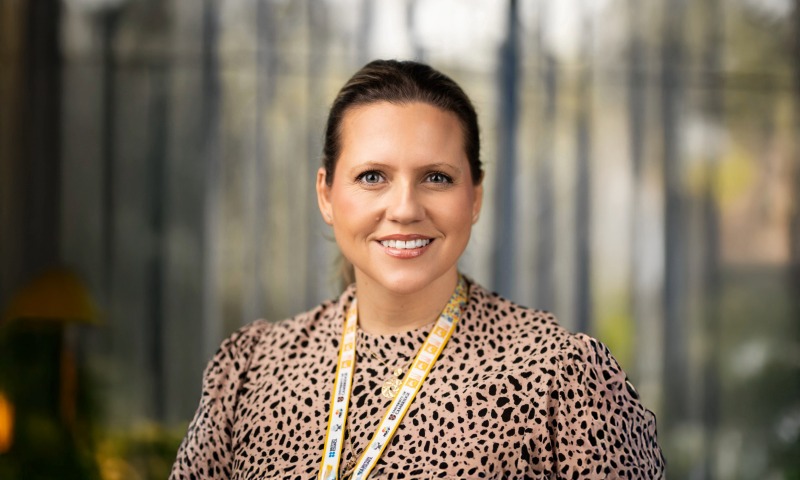
Dr. Helen Chatburn-Ojehomon is an educational leader and researcher focused on international school leadership, teacher agency, and the growth of international education in emerging markets. She serves as Deputy Head of School at Ibadan International School, Nigeria, providing leadership across Pre-School, Junior, and Senior School while supporting academic development and student wellbeing. She holds a Doctorate in Education from the Ontario Institute for Studies in Education (OISE), University of Toronto. Her research explores how school leaders foster teacher autonomy in private international schools in Nigeria, contributing to evolving leadership practices in expanding education sectors.
Dr. Chatburn-Ojehomon is also an IBEN workshop leader and co-founder of the IB Schools Association of West Africa, the region’s first IB-recognized network. Through her work, she actively shapes conversations around leadership, teacher professionalism, and the systems that enable educators and students to thrive.
In an exclusive conversation with K12 Digest, Dr. Chatburn-Ojehomon talks about the evolving role of school leadership in today’s complex education landscape, highlighting the importance of teacher autonomy, student wellbeing, and community-driven learning environments. She reflects on her journey through international education, the challenges of managing diverse school ecosystems, and the growing need to balance academic excellence with mental health support. She also shares her perspective on how artificial intelligence is reshaping teaching practices, urging educators to adopt technology in ways that enhance critical thinking rather than replace it.
Your career in education spans leadership, research, and community engagement. Could you share the key moments that shaped your journey toward becoming Deputy Head of School at Ibadan International School?
My career in education has evolved through a combination of classroom practice, international collaboration, and leadership development. Early in my career, I taught Grade 6 at Ibadan International School and was part of the faculty team that led the school to become the first International Baccalaureate (IB) authorized Primary Years Programme (PYP) world school in Nigeria. At the time, inquiry-based learning was still unfamiliar in many contexts, and the experience of building that programme shaped my professional identity as an educator. I was part of a team of incredibly talented educators – all women by the way – who were dedicated to developing a deep understanding of the IB’s educational frameworks. We were all strongly motivated by the belief that education can make the world a better place. When the opportunity arose, I became the school’s IB Coordinator, and this springboarded me into the world of International Baccalaureate Educators’ Network (IBEN). As an IBEN Workshop Leader, Evaluation Leader, and Consultant, I travelled across the IB Africa, Europe, and Middle East Region, training teachers, visiting, evaluating, and authorizing schools. This had a major impact on my career and outlook. The idea-borrowing and transplanting that goes on through IBEN is incredibly powerful. I was always particularly passionate about independent international schools who are choosing to run the IB in Africa, where initial teacher training typically does not support inquiry-based and student-centred learning. After achieving a certification in adult learning from Humber College in Canada, I was eager to further develop my leadership and became the Deputy Head of School at Ibadan International School. I grew further in this position, achieving my Master’s degree and, most recently, my Doctorate in Education at the University of Toronto. During this time, my professional network expanded greatly, and I became active in the international school leadership communities within Nigeria and Africa more broadly. My research focused on my current passions – the practice of school leadership in international schools in Africa and how these school leaders promote teacher professional autonomy in their schools.
As an educational leader in an international school setting, what are some of the most significant challenges and opportunities you see in school education today?
I think international schools and public schools face some similar challenges in the present day – managing increasing student diversity in terms of languages, cultures, socio-economic contexts, and learning needs; planning in a world that is rapidly changing due to technology; considering how to best prepare young people for the future while balancing the structural restrictions of the present. The kind of independent international schools I’m most passionate about also face some unique challenges, including balancing social justice commitments and the reality of elitism in many international schools, economic imperatives, and maintaining legitimacy in their communities. There are incredible opportunities in international education today, especially in emerging markets such as Nigeria and other African countries, where international schools have the opportunity to redefine schools as they define the kind of services and education that they will offer. In Nigeria, several UK franchises have recently entered the market, and we have a unique opportunity for international schools to redefine themselves completely. It’s an exciting time for international school leadership.

Your work has highlighted the importance of teacher autonomy and professional development. How can school leaders create environments where teachers feel empowered to innovate and grow?
We know that school leaders determine the culture of their schools, but their impact on student learning is largely mediated through the everyday work of teachers in their classrooms – and that usually happens behind closed doors. School leaders’ practice in developing teacher professional autonomy in their schools is critical to creating school cultures where responsibility for learning is shared. The days when a hero leader came in to save the school are gone, if they ever truly existed at all, so the question is, how do school leaders empower teachers, raise their self-efficacy, and develop their professional autonomy? School leadership is expressed in everyday practices, and in my work, I’ve documented several promising practices that school leaders in international schools in Nigeria use to promote teacher professional autonomy. Practices vary from developing formative teacher appraisal systems, to creating highly structured school policy environments that drive the school leader’s vision for the school culture, but I think the most important things that school leaders can do to create those environments is to ensure they offer opportunities to develop teacher self-efficacy through modelling agency and letting teachers see their decision-making in real time, offering opportunities for teachers to gain full mastery of teaching as a profession, providing feedback that is real and timely, and creating a psychologically and physically safe environment for teachers and students in their schools.
You have been actively involved in promoting mental health awareness within the school community. Why do you believe mental wellbeing has become such a critical part of modern education?
Schools across the world have to work harder than ever to create safe spaces for all their staff and students. In addition, the school, and this is especially true in international schools, has become the centre of life for many young people and their families. With parents working longer hours, school hours have also become longer, and children seem to spend more time in school than ever before. In some cases, the school is the safest place for children, and sometimes the only place where there are playgrounds and opportunities for children to interact with peers. Schools are central to the ecosystem of life for young people. For these reasons, there is a deep need for schools to focus on mental health as an intrinsic part of children’s education. In many ways, it makes sense for children and their parents to access social services like mental health services at schools, especially in contexts where these services are difficult to access or when there are cultural barriers, but in practice this does place a significant burden on schools.
That said, the real reason that mental wellbeing is a critical part of modern education is that it is an essential component of a person’s overall health. Students cannot learn if they are not healthy. At Ibadan International School, we often emphasize that the purpose of our school is learning, but no one can learn if they are not healthy and safe, so a big part of the job of the school leader is to create those school environments where students and teachers are healthy and safe, because students will be unable to learn and teachers will be unable to teach if those conditions are not met.
As technologies such as artificial intelligence begin to influence classrooms and school operations, how do you see these tools reshaping the role of educators and school leaders?
I see huge potential for AI in education – especially in terms of shifting teachers’ workloads and deepening their practice. A low-hanging fruit of AI is in developing teachers’ differentiation practices, and I don’t think it’s being fully utilized for that purpose yet, but I am sure there is a lot of change on the horizon and great opportunities await. I think school leaders should transparently model their own uses of AI to help teachers explore appropriate ways of adopting the technology. A critical challenge is to promote active, not passive, use of AI and to use it in ways that promote critical thinking, not replace it.
The key shift is in accelerating the trend we have been seeing in teaching for years – which I believe is now at a tipping point – and the role of the teacher is no longer to be a master of their subject area, but rather for them to master teaching as a professional practice. AI shifts teaching from being a profession about content delivery to being a profession about teaching practices. This is an easy shift for PYP teachers, and probably much easier for early years and elementary school teachers in general, but for subject teachers and secondary school teachers, it really represents a point of no return where school communities will no longer accept subject knowledge as the most important quality of a teacher. Education is a fundamentally human endeavour. We can already see the impact of excessive screen time on language and social development in young people, and as ethical educators, it’s time for us to bring the research into our practice and ensure we are promoting environments that focus on human development. Intentional use of technology to take some of the administrative load of education off teachers’ and school leaders’ plates is a great development. AI can also accelerate the adoption of best practices in education in all kinds of contexts. AI can be leveraged in truly innovative and positive ways in the classroom, but schools also need to put a lot more focus on human interactions and developing the skills that teachers and students need to use technology for human-centred ends. As school leaders, we need to lead the technology, even though many times it feels like the tech is leading us!
Outside your formal role in school leadership, you have been involved in community initiatives and advocacy work. How have these experiences influenced your perspective on education and leadership?
I operate across a wide range of networks when it comes to advocacy and community building. Bringing those different worlds together to create something new is something I find extremely energizing and joyful. My favourite thing about being human is sharing an experience of community with others. If I can do that professionally by creating ecosystems for human flourishing in schools, I feel very satisfied. If I can do that personally by deepening connections and entering into community with others, I feel very happy. I think at its core, school leadership is a deep act of advocacy – for our students, for their families, for our teachers, and also for ourselves.
Looking ahead, what advice would you give to students and young professionals who aspire to build meaningful careers in education and leadership?
Education is about building systems, shaping cultures, and navigating change. I cannot think of another profession that is so closely connected to the human condition as education. When interacting with young people about their future plans, I often ask them to reflect on Mary Oliver’s question from her poem “The Summer Day”, where she asked, “Tell me, what is it you plan to do with your one wild and precious life?” If a life of human engagement, often full of surprises and problems to solve, is something you desire, education certainly has a lot to offer.