


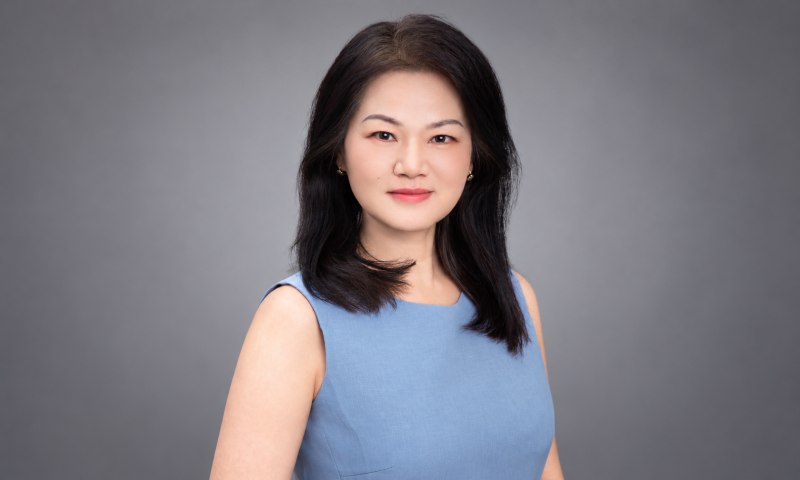
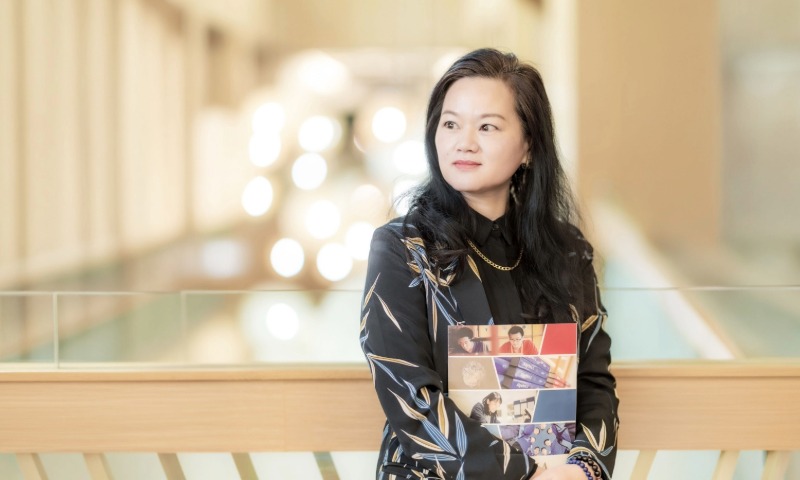
Lili Jia is Vice President of DIPONT Education Group and Head of School at DIPONT Huayao Collegiate School Kunshan. With 34 years in education, she has advanced from public school teacher to senior leadership in China’s leading bilingual and international schools, contributing to governance, growth, and accreditation. A pioneer of the International Baccalaureate (IB) programmes, she has actively practiced IB for 27 years, served as workshop leader, senior examiner, visiting team leader, and IB chair for multi‑programme and synchronized accreditation visits. She has delivered numerous workshops and presented at major conferences including NCTC (US), ACAMIS, EARCOS, IBC, and IES. Beyond leadership, she has driven cross‑cultural initiatives, notably co‑editing The Framework of Reference for Chinese Culture and Society in International Chinese Language Education and consulting for Gredos San Diego Educational Institution and GSD International School Costa Rica to design experiential learning and Chinese language immersion programs.
In an exclusive conversation with K12 Digest Magazine, Lili talks about her journey in education, the importance of aligning vision with classroom practice, and preparing students for a rapidly changing world. She discusses the evolving role of school leaders, the responsible use of AI in education, and the values of growth, equity, and curiosity that guide her leadership. She also shares advice for students and young professionals on staying curious and asking better questions.
Looking back at your career in education, which experiences have had the greatest influence on the leader and educator you are today?
Three experiences shaped me most profoundly.
The first was starting as a classroom teacher in a public school in China. Those early years taught me that every pedagogical decision, no matter how small, ripples into a child’s sense of self. I learned to listen before I led — to students, to colleagues, to the quiet needs of a classroom that no curriculum document could capture.
The second was stepping into international education and encountering the IB framework. Over 27 years of practicing the IB — as a teacher, workshop leader, senior examiner, School Authorized Visiting Team leader, and IB chair across multiple programmes — I’ve seen how a well-designed framework can transform not just individual classrooms but entire school cultures.
The third has been engaging directly in the governance, growth, and accreditation of bilingual and international schools in China. These experiences pulled me out of the classroom and into the boardroom — working with governing boards on strategic direction, leading schools through CIS, WASC, and Cognia accreditation cycles, and navigating the complex decisions involved in scaling a school while preserving its mission. They taught me that sustainable school improvement requires aligning three layers: the vision at the top, the systems in the middle, and the daily practice in classrooms. Without that alignment, even the best intentions stay stuck.
That conviction — that diversity of thought and tradition is a resource, not a challenge — remains at the heart of who I am as an educator.

What inspired you to take on your current leadership role, and what have been some of the most meaningful moments since stepping into it?
I didn’t step into leadership because I wanted a title. I stepped in because I kept seeing the same gap: between what schools said they believed and what they actually practiced in classrooms. I wanted to close that gap — and I realized that closing it requires more than a good mission statement. It requires building a leadership culture where progress is visible, accomplishments are celebrated, and every layer of the school is moving in the same direction.
One of the most important lessons I’ve learned is that alignment doesn’t happen by itself. In a bilingual, bicultural school environment, you have teachers from different educational traditions, parents with different expectations, and students navigating multiple cultural identities. Creating alignment across all that means constantly translating between perspectives — making sure the board understands what’s happening in classrooms, that teachers understand the strategic direction, and that parents see how the school’s values show up in their child’s daily experience.
The most meaningful moments for me have been the ones where that alignment became visible. Leading a school through accreditation self-study was one of those. It’s a demanding process — you’re asking every department to look honestly at their practice, to gather evidence, to name both strengths and gaps. But when the whole school community comes together around that process, something shifts. Teachers who rarely interact start sharing strategies. Middle leaders begin speaking a common language about teaching and learning. And when the accreditation report comes back recognizing the school’s growth, it’s not just an institutional achievement — it’s a moment the whole community can celebrate together.
I’ve also found deep meaning in the quieter milestones. A teacher who attended one of my workshops coming back months later to say, “That session changed how I plan my units.” A student who struggled with the extended essay writing to tell me they’d gotten into their first-choice university. A parent at a community meeting saying, “This is the first school where I feel my child is seen as a person, not a score.” These moments are proof that the work is reaching people — and I make sure they’re shared widely, because celebrating progress publicly is how you build momentum for the next step.
Presenting at conferences — EARCOS, ACAMIS, NCTC, the IBC Annual Conference — has reinforced this same principle at a broader level. Connecting with school leaders across Asia and beyond who are grappling with the same challenges reminds me that collaborative leadership doesn’t stop at your school’s gates. The best ideas I’ve brought back to my own school came from conversations with peers leading in very different contexts. That cross-cultural exchange — whether it’s between departments within a school or between educators across countries — is one of the most powerful engines for growth I know.
What do you believe schools need to do differently today to prepare students for a world that is changing so rapidly?
The most urgent shift is from teaching answers to teaching questions. In a world where information is instantly accessible, the ability to formulate good questions — to identify what matters, to challenge assumptions, to connect ideas across disciplines — is far more valuable than the ability to recall facts.
Schools also need to stop treating wellbeing as an add-on programme and embed it into the fabric of learning. Academic achievement and student wellbeing are not in tension; they are interdependent. A student who doesn’t feel safe, valued, or understood cannot access higher-order thinking, regardless of how brilliant the curriculum is.
Finally, schools need to model the adaptability they want to see in students. Professional development can’t be a once-a-year event. It has to be continuous, collaborative, and directly connected to classroom practice. Leading workshops across regional and in-school contexts, and watching schools grow through accreditation cycles, has shown me that the schools making the most progress are the ones where improvement isn’t a project with an end date — it’s a way of operating. Teachers are visible learners, experimenting, sharing failures, and growing alongside their students.

How do you see the role of a school leader evolving as expectations around academic achievement, student wellbeing, technology, and global learning continue to change?
The school leader of today can no longer be just an academic manager or the public face of the institution. The role has become fundamentally integrative — and it now spans three distinct domains that used to be separate: pedagogical leadership, institutional governance, and community stewardship.
We are expected to hold four dimensions simultaneously: academic rigour, student wellbeing, technological fluency, and global citizenship. But we’re also expected to manage growth — whether that’s expanding enrolment, adding new IB programmes, or building new campuses — without diluting the quality that got the school its reputation in the first place. And we’re accountable to multiple stakeholders: governing boards, accreditation bodies, parents, teachers, and students, each with different priorities.
My experience guiding schools through governance transitions and accreditation processes has taught me that there is no universal template. Every school community has its own constellation of values, expectations, and constraints. The leader’s job is to be a “sense-maker” — helping the community understand how these dimensions connect rather than compete.
I also believe the modern school leader needs to be a bridge-builder across educational traditions. The best practices I’ve seen don’t come from adopting one system wholesale; they come from thoughtfully blending the strengths of Eastern and Western approaches to create something that serves the specific community you’re leading.
With AI and emerging technologies becoming part of everyday learning, how do you think schools should approach the opportunities and challenges they bring?
My position is clear: AI is not going to replace teachers, but teachers who understand and integrate AI thoughtfully will replace those who don’t.
The opportunity is enormous. AI can help us personalize learning at a scale we’ve never achieved, free teachers from administrative burdens, and give students access to feedback that would otherwise require one-on-one tutoring. In my own school, we’ve been exploring how AI can support differentiated assessment design — helping teachers create multiple entry points for students with different needs and strengths.
But the challenge is equally significant. What does academic integrity mean when a student can generate a polished essay in seconds? What does “understanding” mean when answers are instantly available? These aren’t just policy questions; they’re philosophical ones that go to the heart of what education is for.
Our approach has been to treat AI as a pedagogical conversation, not an IT problem. We bring teachers together to explore, experiment, and develop shared principles — the same collaborative model I use when leading workshops and professional discussions. We don’t ban or blindly embrace; we think carefully about when AI serves learning and when it short-circuits it. And we model that thinking for our students, because they’re navigating these questions too.
From a governance perspective, this also means school leaders need to establish clear AI policies that are principled rather than reactive — policies that can evolve as the technology evolves, rather than needing to be rewritten every six months.
What values have guided your leadership throughout your career, and how do you bring those values into the culture and development of a school?
Three values anchor everything I do.
Growth over perfection. It is important to understand that we are not building a perfect school; we are building a school that gets better every year. That mindset frees people to take risks, to share failures openly, and to learn from each other. It’s the only culture in which sustained improvement is possible — and it’s the mindset that makes accreditation a catalyst for growth rather than a compliance exercise.
Equity of access to quality. Every student who walks through our doors — regardless of background, learning profile, or language — deserves access to the same high-quality educational experience. This isn’t just a moral imperative; it’s a design challenge. It means investing in teacher capacity, differentiating instruction, and continuously examining our systems for hidden barriers. It also means making governance decisions — about resource allocation, programme offerings, and admissions — through an equity lens.
Modelling in practice. Schools must practice what they teach. If we tell students to be curious, our professional development must model curiosity. If we tell students to collaborate, our faculty meetings must be collaborative. Credibility comes from coherence between words and actions — and this is especially visible during accreditation self-studies, where a school’s stated values are held up against its actual practices.
These values don’t live in a mission statement on a wall. They live in how we run meetings, how we give feedback, how we allocate resources, and how we respond when things go wrong.
Beyond your work in education, what interests or experiences have influenced the way you see leadership, learning, and personal growth? What advice would you like to share with students and young professionals starting their journeys?
Beyond my daily work in schools, two experiences have profoundly shaped my perspective.
The first is my work in cross-cultural curriculum design — collaborating with institutions in Costa Rica to build a Chinese Language and Cultural Immersion Program, and Associate editor for the publication of “The framework of Reference for Chinese Culture and Society in International Chinese Language Education”. These projects have taught me that leadership in education is, at its core, an act of translation: helping different traditions, values, and ways of knowing find common ground without losing their distinctiveness.
The second is the network of educators I’ve built through conferences and workshops across Asia and internationally — EARCOS, ACAMIS, NCTC, the IBC Annual Conference. Staying connected with peers who lead in different contexts keeps me intellectually honest. It prevents me from becoming complacent about my own assumptions and constantly exposes me to ideas I wouldn’t encounter within the walls of my own school.
If I were to share one piece of advice, it would be this: Don’t confuse the map with the territory. Your degree, your job title, your career plan — these are maps. They’re useful, but they’re not the reality. The reality is the people in front of you, the problem at hand, the moment you’re in. Stay present. Stay curious. And be willing to redraw the map as often as the territory demands. For students and young professionals: the world doesn’t need you to have all the answers right now. It needs you to ask better questions than the generation before you. That’s the real education — and it never ends.