



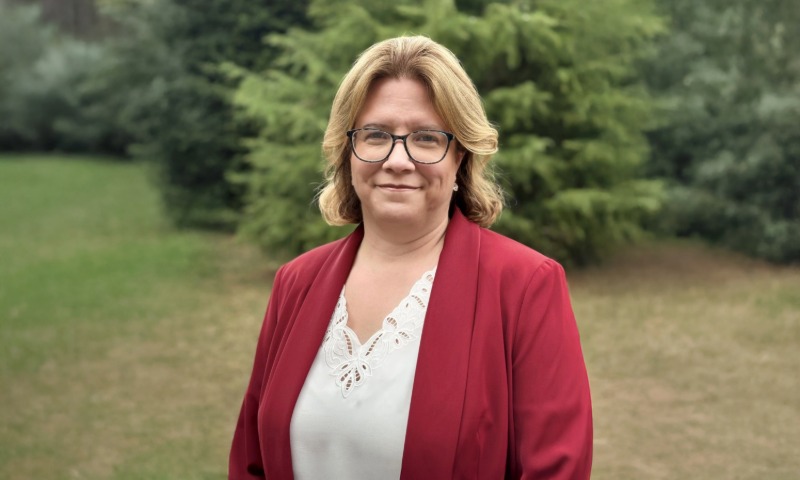
Becky Lovelock is the Head of Pocklington School Foundation, where she champions a holistic, “greenhouse, not hothouse” approach to education. As the first female Head in the school’s 500-year history, she blends rich tradition with forward-thinking innovation, ensuring every pupil is known, valued, and encouraged to thrive in a warm, low-pressure environment.
Becky previously served as Deputy Head Academic at Sydney Grammar School and led major curriculum reforms for the New South Wales Education Standards Authority. Her diverse career spans state, independent, day, and boarding sectors, shaping an adaptable, people-centered leadership style. She holds a Mathematics degree from the University of Bristol and a Master’s in Teaching and Learning from the University of Oxford. Outside of her professional life, Becky enjoys time with her family and walking in the countryside.
In an exclusive conversation with K12 Digest, Becky Lovelock talks about purpose driven leadership, navigating transitions with integrity, and why schools must embrace both tradition and thoughtful innovation. She recalls the formative experiences that shaped her service-oriented mindset and explains how measured risk-taking, character development, and strong pastoral systems prepare young people to thrive beyond the classroom. She also shares her perspective on the responsible use of technology and AI, stressing that tools should extend human capability without replacing connection.
Looking back on your journey in education, what moments or decisions have most shaped you as a leader?
I think my biggest pivotal moment came when I was 14, leading a patrol of younger Girl Guides on a night hike. I’d always been afraid of the dark, but their fear was louder than mine, so I focused in on them. By the end of the evening, not only were they having a ball, but I’d discovered that I’m happiest when I’m doing meaningful things that benefit others. That experience crystallised my service-oriented approach to leadership, which is to put people first, focus on purpose, and the courage will follow.
Professionally, I’ve worked across the state and independent sectors, in girls’, boys’ and co-educational settings, and in both day and boarding schools. That breadth has taught me to listen, adapt, and find common purpose in different cultures. I’ve also been fortunate to have other heads be very generous with their time and advice.
Every leadership role comes with its own challenges. What has been one of the most demanding phases of your career, and what did it teach you about leading people?
There have been many challenges over the years. I could mention the obvious ones, such as Covid, which had some clear challenges, but to be honest, I think that the most challenging phases have been about transitions. Transitions from one leader to another can be challenging for all, as people adapt to new personalities and priorities, and try to read the room. The period just before a transition can also be hugely challenging, balancing the excitement of a new role with the loyalty you still feel to the place you still work for, and of course, in headships, there is a very long lead-in time. One of the things I learnt over some of those transitions is how much people want to feel you genuinely care and are driven to want the best for the future of the overall organisation at the forefront of your mind, whether the one you are leaving or the one you are going to. If you clearly communicate that, and make all your decisions from that core aim, then it is easier to lead well.
School education is undergoing significant change. From your perspective, what are the most important shifts happening today, and how should schools respond to them?
We are navigating an era defined by rapid technological change, shifting social dynamics, and a growing recognition that the holistic aspects of our educational offering, such as targeted character development, are not “nice to have” but essential. To ensure that our young people are creators of the future, not merely consumers, we need to intentionally cultivate resilience, optimism, oracy, teamwork, performance skills, and physical wellbeing, alongside strong academics, so that these things become habits that will see them through life.
We also need to re-embrace measured risk. Schools should provide low-risk, high-support contexts where pupils can try, fail, reflect, and try again. Pastoral systems must be proactive to develop those traits I mentioned above. Being responsive when things go wrong is important, but the core focus of the pastoral team must be to focus on the day-to-day experience for all pupils and how to work on those traits.
Technology and AI are becoming part of everyday learning conversations. How do you see these tools supporting teaching, learning, and decision-making in schools, without losing the human touch?
Technology and AI are fantastic tools. But we should never forget that they are just that, tools. We want and need them to assist us, to extend human capability, but that has to be balanced with not allowing them to replace human connection. Used well, they can sharpen any number of aspects of teaching practice, including formative assessment, personalised practice, they can surface patterns in learning data, and free teachers from administrative burdens so they can spend more time on the interactions that make a truly successful classroom, that of questioning and feedback, along with genuine productive working relationships. We are currently reviewing the place of screens within our school environment and how to best position them to support, not take over from human thinking. Educated use must be balanced with structured removal, to ensure that the basic skills are still being learnt that will allow pupils to develop the ability to view AI produced material with a critical eye.
Balancing academic excellence with student wellbeing is a growing priority. How do you approach this balance in your leadership philosophy?
I believe that outstanding outcomes are not only possible in a low-pressure environment, but in many cases, more likely, and more sustainable into the future through the university. “A greenhouse, not a hothouse,” is the approach that we take at Pocklington. Academic ambition and wellbeing are not adversaries, but are mutually reinforcing when culture is right. We build sustainable routines, not peaks and troughs; we build small atomic habits, not heroics. We shape a curriculum and co-curriculum that develop complementary knowledge, skills, and attitudes.
Practically that means that we have clear expectations that are well communicated, for example, our “High Expectations” in the classroom that are aspirational and achievable. Pastoral systems explicitly teach resilience, optimism and reflective habits, along with a family environment where everybody knows everybody in a genuine and caring way, driven by staff who model calm warmth, candid feedback and belief in each pupil’s potential.
Outside your professional role, what personal values or interests help you stay grounded and influence the way you lead?
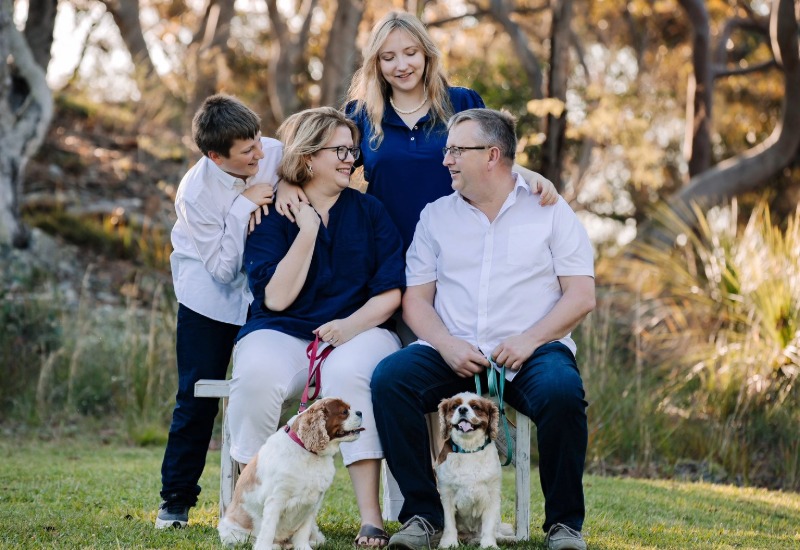
My immediate family is my foundation. My husband, Charlie, and our children, Em and Max, remind me daily that the whole can be greater than the sum of its parts! I’m happiest outdoors, walking (usually with our dogs), and I find quiet joy in simple, therapeutic hobbies, such as cross-stitch and baking, which help me slow down and be present.
I try to spend time “on the balcony” as well as “on the dancefloor”: walking the site, pausing to watch, and asking what others might see. As the poet William Henry Davies wrote, “What is this life if, full of care, we have no time to stand and stare.” And a piece of advice I return to often is: “Everyone you meet is fighting a battle you know nothing about. Be kind always.” Kindness, perspective, and presence: those are my anchors.
What advice would you offer to students and young professionals who aspire to meaningful leadership roles in education or other fields?
Find your purpose. I am a huge believer in finding work that serves others, as that will sustain you when challenges arrive.
Keep your eyes out for measured risks you can take. Work hard on whatever is directly in front of you and don’t plan too far ahead, but always keep your eyes on what opportunity might appear on the periphery of your vision and volunteer!
Learn from other leaders. Leaders you work for and leaders you haven’t worked for. Always invite candid feedback, and ask leaders how they think, make decisions and prioritise, not just what they do. Take every conversation and interaction as a learning experience, both of what to do, and sometimes of what not to do!
Guard your perspective. Moving to be the decision maker rather than the persuader you were as a deputy is a big change. Make time to “stand and stare” and check in with yourself that you are comfortable with the decisions you are making.
Be kind, always. Remember: “Everyone you meet is fighting a battle you know nothing about”. Kindness builds trust, unlocks collaboration, and is the foundation of lasting influence.