



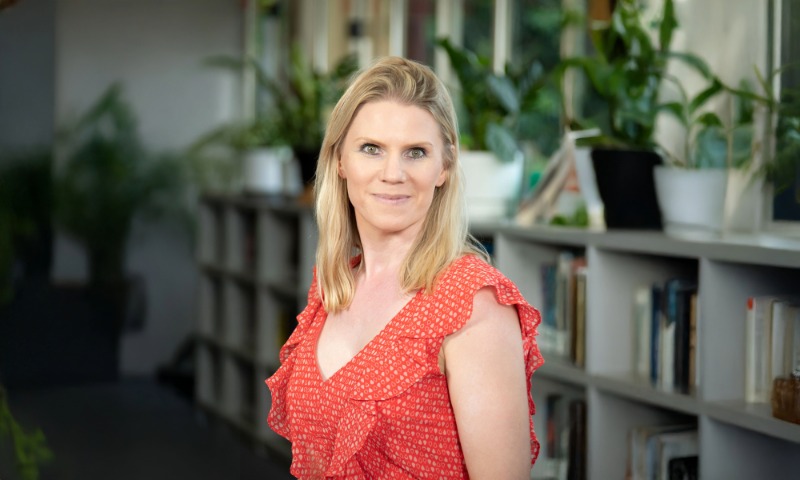
Dr Bek Duyckers is an award-winning Australian educational leader whose work centres on learning, leadership and the future of education. She has been invited to share her expertise internationally through presentations and leading professional learning. As Deputy Principal at Coomera Anglican College, Bek draws on her experience, postgraduate scholarship and executive development to translate ambitious thinking into thoughtful practice. Her contributions to teaching and leadership have been recognised through numerous awards and scholarships across her career, including Deputy Principal of the Year at the 2026 Australian Education Awards. Her leadership advances school transformation, ethical innovation and global competence, empowering educators and young people to realise their potential and contribute with purpose to communities locally and globally.
Recently, in an exclusive interview with K12 Digest, Bek shared insights into how her journey from classroom teaching to Deputy Principal of the Year at the 2026 Australian Education Awards has been driven by a commitment to see every learner as an individual and to question practices that limit opportunity. Drawing on her doctoral research in intercultural communication through international digital collaboration, she sees AI as a catalyst to move schools from occasional exchanges to sustained intercultural learning by reducing language barriers, while emphasizing that educators must retain authority to shape its ethical use and protect human connection. Looking ahead, she plans to deepen her contribution to school transformation by aligning curriculum, assessment and professional learning to cultivate global competence, ethical agency and belonging, empowering educators and young people to realize their potential and contribute with purpose. The following excerpts are taken from the interview.
Your journey from classroom teaching to Deputy Principal of the Year – Australian Education Awards 2026 reflects a deep commitment to educational excellence. What inspired you to choose education as your life’s work in the first place?
The desire to make a positive difference in young people’s lives drew me to education, knowing that its influence reaches far beyond their years at school, into who they become, the choices they make and the lives they go on to enrich. School has a profound influence on how students understand themselves, what they believe they are capable of and the possibilities they see for their future. Yet it does not cater well for every learner, and when a young person’s strengths go unrecognised, they can begin to underestimate what they have to offer. This matters deeply to me. Across the schools in which I have worked, my commitment has been to understand each learner as an individual and question the practices that may limit their opportunities. This begins with being curious about who they are, listening to their experiences and creating learning that offers both appropriate challenge and support.
Education should help young people recognise their strengths, develop their capabilities and grow in confidence and agency, with a sense of purpose. It should also help them understand how those capabilities can enrich the lives of others. There is something powerful in a young person coming to know themselves and recognising that their contribution matters.
Leadership has extended that purpose through the opportunity to empower the educators who make these experiences possible. A teacher’s words, expectations and willingness to understand a student can have an influence that lasts well beyond school. Supporting educators to recognise that influence, and giving them the conditions to exercise it thoughtfully, is central to my leadership work. The same care we bring to understanding students should shape how we lead adults: recognising their strengths, listening to their perspectives, respecting their expertise and investing in their growth. Empowerment also requires practical commitments, including time to collaborate, clarity about priorities, constructive feedback and the trust to make decisions and lead meaningful change.
As a leader, there is a responsibility to model those commitments and examine whether our own decisions help people do their best work. Developing educators and other leaders extends our impact through every student they teach, encourage and advocate for. The purpose that brought me into education continues through those relationships: helping people recognise possibilities in themselves, then enabling them to open possibilities for others.

Your passion for nurturing global competences through empathy, understanding and respect is central to your work. What excites you most about leading schools into this new era of influence?
What excites me most is the opportunity to help young people recognise that they can shape the communities and world they belong to. In Australia, global competence begins close to home, in how we listen with empathy, respond to unfamiliar perspectives and build relationships across differences. Our school communities hold a wealth of cultural knowledge, languages, beliefs and experiences that can enrich everyone’s learning. Digital technologies extend these possibilities, enabling students to learn with peers across countries and cultures. My doctoral research into intercultural communication through international digital collaboration explored this potential. Connection creates an opportunity; understanding requires thoughtful engagement. Students need opportunities to question assumptions, explore disagreement respectfully and work towards something meaningful together, recognising the value of their own perspective while remaining open to what others can help them see.
For me, the leadership opportunity is to make learning across cultures part of everyday school life. This means empowering educators to build reciprocal partnerships, with the time, trust and support to develop them thoughtfully. Learning with educators in different countries has reinforced the importance of curiosity, openness and understanding each community’s context. These principles also shape how we lead within our schools: whose voices inform decisions, how we respond to difference and whether every student can participate meaningfully. What gives me hope is seeing young people experience how another perspective can change the questions they ask and the possibilities they consider. When they bring that understanding to a shared challenge, they can develop responses that draw on more than their own experience. Schools can make this possible now, helping students recognise how learning with others strengthens what they can contribute together.
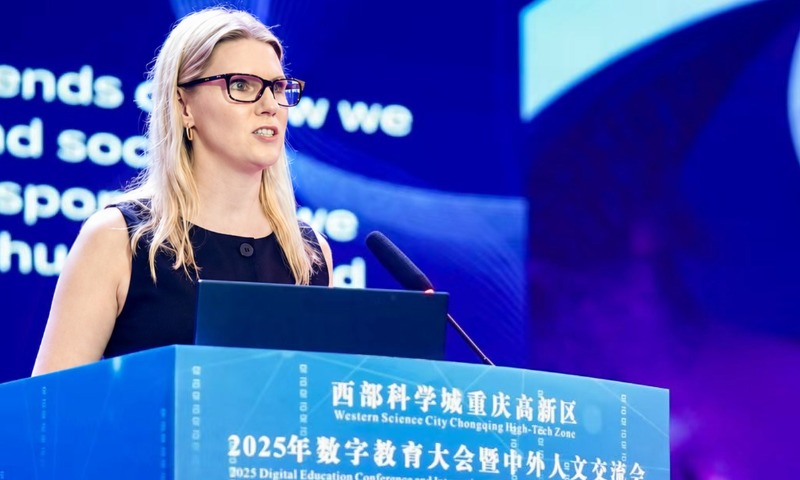
Education is moving from content delivery to cultivating global competences and humanistic values. How do you see the very purpose of schools evolving over the next five years?
As the world changes, what should remain at the heart of education, and how can schools evolve to serve that purpose? Over the next five years, I see schools becoming more deliberate about connecting what young people know with who they become and how they participate in the world. This brings academic learning, global competence and human development into closer relationship. Deep knowledge remains essential to examining evidence, questioning assumptions and engaging with complexity. As digital technologies, including artificial intelligence, reshape learning, students need to recognise when technology strengthens understanding, when reliance on it limits independent thinking and how their choices affect others. Schools’ role as human communities also becomes more significant, offering relationships through which young people feel known, build trust and learn to live well together.
Over this period, I expect this broader purpose to increasingly guide the changes schools make and be evident in students’ everyday experiences. Ethical awareness, agency and belonging broaden what we recognise as a successful education. Schools should look for evidence of how students apply knowledge, think independently and consider the consequences of their choices. That understanding should inform the opportunities and support we provide, helping us recognise strengths that might otherwise remain unseen. Students need meaningful problems to explore, decisions to make and a voice in shaping their education. For leaders, the work is to align curriculum, assessment and professional learning with these priorities, while giving educators the time and trust to shape that work together. The purpose of school is then carried forward through the people students become, how thoughtfully they use their knowledge, how they care for others and what they make possible together.
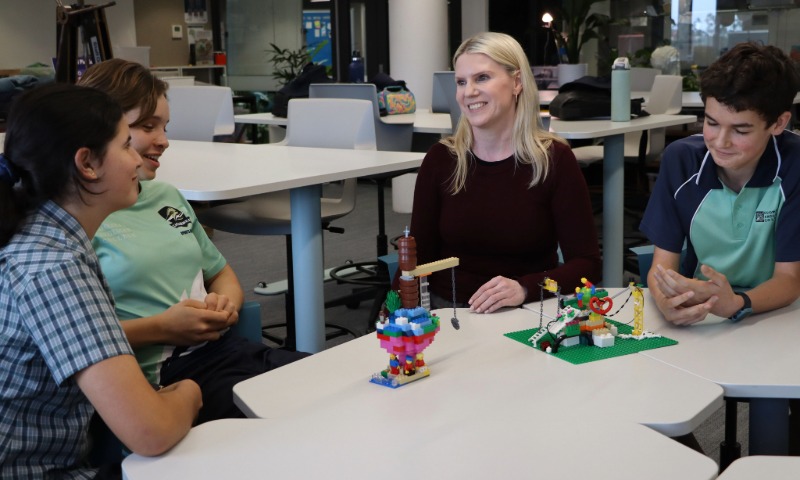
Your PhD focuses on digital technologies for international collaborations, a field now accelerated by AI. What major shift do you foresee in how digital technologies will redefine intercultural learning by 2031?
By 2031, digital technologies could enable more schools to move from occasional international exchanges towards sustained intercultural learning, where students across countries investigate shared questions and develop solutions together. My doctoral research explored collaboration between students in Australia, Spain and Thailand, including the challenges of language, assumptions and differing expectations. An idea that seems straightforward within one community may be understood very differently in another. Exploring those differences can reveal gaps in understanding and broaden the possibilities students consider. Students investigating water use, for example, could develop proposals together, examining how they would work within each community’s local conditions, cultural practices and priorities. Their partners’ knowledge and feedback would help them question assumptions, test ideas and refine their proposals.
AI could accelerate this shift by reducing language barriers and making ongoing collaboration more manageable. Translation, captions and shared discussion summaries could help students follow contributions, revisit unresolved questions, sustain dialogue and build relationships over time, while helping educators coordinate the work. Educators would remain central to designing purposeful learning and planning for equitable access and student privacy. As part of that learning, students would reflect on how another perspective has changed their thinking, check intended meaning directly with partners and consider whether AI summaries represent different voices fairly. Through these partnerships, students can learn with and from peers across countries and cultures, bringing different knowledge, lived experiences and ways of thinking to shared challenges. In doing so, they can expand one another’s understanding and develop solutions they may never have thought of within their own communities.
Educator burnout and retention are global challenges. What transformative trends in teacher empowerment and professional learning do you predict will define the next era?
The shifts with the greatest potential are those that help educators feel valued, exercise influence and sustain their sense of purpose. This begins with society recognising the expertise and care teaching requires, reflected in public trust, fair remuneration and professional respect. Stronger connections between classrooms and those shaping policy and resources could give educators a greater role in educational change. Listening becomes meaningful when their insights inform decisions and lead to action. Professional learning embedded in everyday practice, with protected time for collaborative inquiry and university partnerships, could help educators investigate shared challenges, test ideas and contribute knowledge that shapes education.
That agency should extend to AI. Educators need the capability and authority to shape its design and use, evaluate its impact and protect human connection. Addressing burnout also requires investment in specialist and administrative support, realistic expectations and flexibility across life stages. The impact should be evident in more manageable workloads, greater agency and educators choosing to remain because they feel valued, can grow and have fulfilling lives beyond school. The next era of educator empowerment will depend on how deeply societies value the profession and how much influence educators have in shaping its future.

Every leader has a philosophy that anchors them, especially when leading with trust and inclusivity. What is a favourite book, quote, or philosophy that deeply resonates with your humanist approach to leadership?
A humanist philosophy resonates deeply with me because it recognises every person’s intrinsic worth and encourages curiosity, understanding and care. My father, one of my greatest inspirations, lost both parents as a child and left school at fourteen after a disrupted education. Through hard work, determination and self-belief, he became an electrician, then a firefighter, progressing through the ranks to a senior role within the fire and emergency services. Throughout his career, he gave generously of his time, care and support to his family, friends and community. His example has shaped my appreciation of education as a privilege and learning as a lifelong source of possibility.
That same commitment to learning and service draws me to educators and leaders who persevere through adversity while creating opportunities for others. Their examples remind me that a person’s circumstances never tell their whole story. As leaders, we have a responsibility to take time to understand people, recognise strengths that may have gone unnoticed and create conditions in which they can grow. This includes approaching difficult decisions with care, fairness and honesty, while remaining open to perspectives that may change our understanding. Trust grows when people experience that their dignity and contribution matter. Education can change how people see themselves and their future. Leadership helps make that possibility real through the opportunities we create and the way in which we treat people.
Nurturing inclusive and harmonious societies is demanding work. What is your favourite way to disconnect, recharge, and nurture your own well-being?
I love watching the colours shift across the sky at sunrise or sunset. Beach walks, drives through the rainforest, Pilates and the gym help me unwind. I enjoy cooking, live music and time with family and friends, and find energy in my work and learning with like minds.
I love coming home from work and getting absorbed in planning an adventure, from choosing where to go to discovering places to stay, local food and festivals. From day trips to overseas adventures, I enjoy learning about different cultures through the people I meet and experiences we share.

Where do you see yourself in the next 5 years?
Over the next five years, I hope to deepen and extend the contribution my leadership makes in education, helping shape school communities where intellectual ambition, human connection and a broader understanding of success are reflected in everyday learning. My approach to innovation begins with curiosity about people’s experiences. It involves rethinking how learning is designed and finding better ways to recognise students’ strengths and growth. For me, bold, human-centred leadership includes having the courage to question established practices, the openness to learn from different perspectives and the commitment to work alongside others to expand what is possible for young people. Educators and young people have an essential part in shaping that work, contributing their knowledge and ideas as we explore possibilities, put them into practice and evaluate the difference they make.
My leadership pathway has not been linear, and I am grateful to those who recognised my strengths and capabilities and created opportunities for me to lead. Their trust has shaped my commitment to creating conditions in which others can grow in confidence and agency. I hope to continue drawing on my experience to lead school communities with clarity of purpose, translating ideas into thoughtful, sustained improvement. The opportunities I embrace will be guided by a clear ambition: to help education become more responsive to the people it serves, strengthen the quality of learning and expand young people’s opportunities to learn, achieve and contribute.
If you could leave one empowering message for the next generation of educators who want to build a more inclusive and harmonious society, what would it be?
Help young people recognise their own worth and the difference they can make in the lives of others. The way we teach and lead gives them daily experiences of what it means to belong, to be heard and to contribute. Take time to understand the person beyond their achievement or behaviour. Be curious about strengths that may have gone unnoticed and the experiences that shape how someone sees the world. Create opportunities for students to encounter different perspectives, question assumptions and work through disagreement with empathy and respect. These experiences help young people understand that their voice matters, while recognising how much they can learn from others.
Remain a learner yourself, and seek colleagues who will encourage you, challenge your thinking and help you grow. Your insights from the classroom deserve to inform the decisions that shape education. Have the courage to question practices that limit participation and work with others to create better opportunities. There is purpose in both the everyday care we offer and the changes we help make possible. A young person who leaves school knowing their strengths, valuing others and feeling confident to contribute carries that learning into their relationships, workplaces and communities. Your influence can continue through the choices they make and the possibilities they open for someone else.