



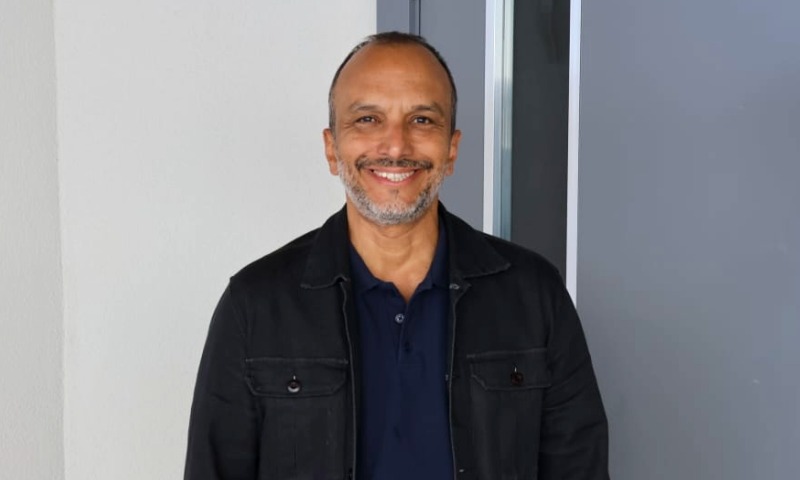
Charles Pimentel is a Research Fellow at the Transformative Learning Technologies Lab (TLTL) at Columbia University, where he investigates the use of sensors, microcontrollers, and Internet of Things applications in schools to support Data Science education. He is also a doctoral candidate at the Federal University of Rio de Janeiro, researching Data Literacy in K-12 education. In addition, Charles is a Design and Technology educator whose work explores how technology can promote social impact and student empowerment in schools.
Recently, in an exclusive interview with K12 Digest, Charles shared insights into bringing Data Science and Critical Data Literacy into K-12 classrooms. For AI in classrooms, he believes the next five years hinge on whether schools teach students to understand and question AI, not just use it, with teachers guiding judgment, ethics, and responsibility while tools like MIT Day of AI and Google Teachable Machine make the “black box” accessible. To include girls, neurodivergent, and low-income students, he designs safe, democratic classrooms where students use tech to explore community issues and see themselves as creators, not just consumers. His advice to early-career EdTech teachers is to study always, stand on the shoulders of giants like Papert and Freire, and lead with collaboration, vulnerability, and lifelong learning, because we must practice the change we want students to embrace. The following excerpts are taken from the interview.
Hi Charles. Your work sits at the intersection of STEM, Data Science, and Computer Science. What gap in traditional schooling first convinced you that Data Science belongs in K-12, not just University?
The gap lies in how schools still have not kept pace, in teaching and learning, with a society increasingly shaped by data and its impact on daily life. Today, data influences media, business, politics, and the labor market, yet students are rarely taught how to engage with it mindfully, critically, and responsibly. In my work as a researcher and educator, data becomes the fuel for STEM and design-based projects, where students develop and prototype solutions to real-world problems but they also collect, work with, analyze, and argue with data as part of the learning process. I see how this approach makes learning more meaningful and helps students connect their ideas and productions with the world around them. Data also creates opportunities for transdisciplinary learning, allowing students to understand how different areas of knowledge interact to address real challenges. That is why building a culture of data literacy must start in K-12, not at the university level.
Your focus on Critical Data Literacy is timely in an age of misinformation. What real-world event or classroom experience made you decide to research this topic for your Ph.D.?
My focus on Critical Data Literacy emerged from a classroom moment during AI workshops I taught in 2019 as part of my Master’s research. Through the FRANKIE platform, which I developed to teach machine learning concepts through educational robotics, students trained a robot to recognize images and interact with its environment. During one activity, a student asked who is responsible when a machine controlled by an AI algorithm makes a mistake: the owner, the developer, or the institution regulating its use. That question shifted the lesson from technical work to a discussion about ethics, bias, and real cases involving the misuse of data in media and politics. It made clear to me that students must not only use data, but also question it and understand how it shapes different areas of society.
AI tools are now in students’ pockets. What trend will determine whether AI in classrooms empowers learning or deepens inequality in the next five years?
The key trend will be how schools prepare students to understand and question AI, not just use it. AI can be a powerful support tool, but without strong foundations and guidance, it risks reinforcing superficial learning. The role of the teacher becomes even more important, not only to teach content, but to develop judgment, ethics, and responsibility. When students also learn how AI works, they are better equipped to use it critically rather than passively. Initiatives such as MIT Day of AI, Google Teachable Machine, and MIT App Inventor help make AI concepts more accessible by allowing teachers with different levels of experience to explore the fundamentals behind the “black box” of AI through practical and creative activities.
Accessibility and sustainability are central to your tech-for-good projects. How will EdTech need to evolve to genuinely serve neurodiverse and under-resourced learners?
EdTech needs to move beyond access and the assessment of isolated skills, focusing instead on differentiation and a more holistic understanding of the teaching and learning process. Students with different abilities and backgrounds need flexible pathways in process, assessment, and complexity to have meaningful opportunities to learn. At the same time, teacher training and professional development opportunities are essential so technology is not reduced to tools or resources. Approaches such as no-code and unplugged activities show that meaningful learning about technology can happen through reflection, discussion, and purpose, always keeping human needs at the center.
With AI, VR, and robotics converging, what will a “future-ready” middle school classroom look like five years from now?
As a Research Fellow at the Transformative Learning Technologies Lab, I have had the opportunity to follow initiatives that help schools respond to a rapidly changing society. I believe future-ready classrooms will integrate data exploration, robotics, and AI through accessible, transdisciplinary and hands-on experiences, not isolated subjects. Technologies like the microcontroller GoGo Board help democratize this process by allowing educators and students from different backgrounds to explore coding, and automation, developing creativity thinking, critical thinking, and problem-solving skills in meaningful and active ways. This future is also strengthened by partnerships between universities and K-12 education. In my Ph.D. research at the Federal University of Rio de Janeiro, I seek to connect university research with society through approaches that help prepare students to become informed and responsible citizens in a world increasingly shaped by technology and data.
Climate and social challenges demand interdisciplinary learning. How should STEM, Design, and Data Science merge in school to prepare students for real problems?
The world is interdisciplinary, and schools need to reflect that reality. My research in Data Science seeks to connect different areas of knowledge so that the integration between science, technology, engineering, and mathematics goes beyond technological innovation and also includes fields such as humanities and languages. I believe that elective subjects like Design and Technology play an important role through integrated projects that help students understand real-world challenges and how different fields can collaborate to solve them.
Great educators often have influences beyond their field. What book, film, or thinker outside Education has most shaped how you teach?
I am guided by the idea often attributed to Isaac Newton, that we see further by standing on the shoulders of giants. Seymour Papert, in Mindstorms: Children, Computers, and Powerful Ideas, shaped how I see learning as something students actively build, while Mitchel Resnick, in Lifelong Kindergarten, reinforced the importance of creativity and exploration. Leo Buscaglia, in Living, Loving and Learning, influenced my belief that teaching is fundamentally about human connection, and from Rubem Alves, I carry the idea that curiosity drives learning. These authors have deeply influenced my journey, but I am also shaped by the educators I work with every day, teachers committed to creating meaningful learning environments and who have contributed to my growth throughout my career.
You’re passionate about inclusion in STEM. What’s one practice you use to ensure girls, neurodivergent, and low-income students see themselves in tech?
I believe the classroom must be a safe and democratic space where students feel their voices and experiences matter. In my projects, students use technology to explore issues connected to their communities and realities, and their personal contributions help shape the development of the learning experience. When students prototype their ideas, collect and analyse data, develop solutions, and present their ideas to others, they begin to recognize themselves as capable creators, not just consumers of technology. In this process, students understand that they are part of a larger system where everyone matters, regardless of gender, special needs, or social background.
Designing tech-for-good projects and Ph.D. research is demanding work. What activity or ritual helps you disconnect, reset, and return with fresh ideas?
Academic and professional life can be intense, so I value moments of creative boredom and slowing down. Activities like biking, exercising, watching series, reading topics unrelated to my work, and spending time with my family help me disconnect and return with fresh ideas. Many insights emerge precisely in these moments when the mind has space to breathe and reflect.
If you could mentor one early-career teacher passionate about EdTech tomorrow, what’s the first lesson you’d teach them about leading with purpose, not just tools?
I would advise them to always study and be open to changes. Much like the idea I mentioned earlier, often attributed to Isaac Newton, I learned to see further by standing on the shoulders of giants. The works of Seymour Papert, José Armando Valente, Paulo Freire, Paulo Blikstein, and Mitchel Resnick are guides in my journey, and exploring academic articles and publications like K12 Digest continues to shape my development as an educator. Collaboration, sharing, open-mindedness, and the willingness to take risks without fear of showing vulnerability or being a lifelong learner are fundamental. If we want students to embrace change, teamwork, and continuous learning, we must believe in these values and practice them ourselves.