

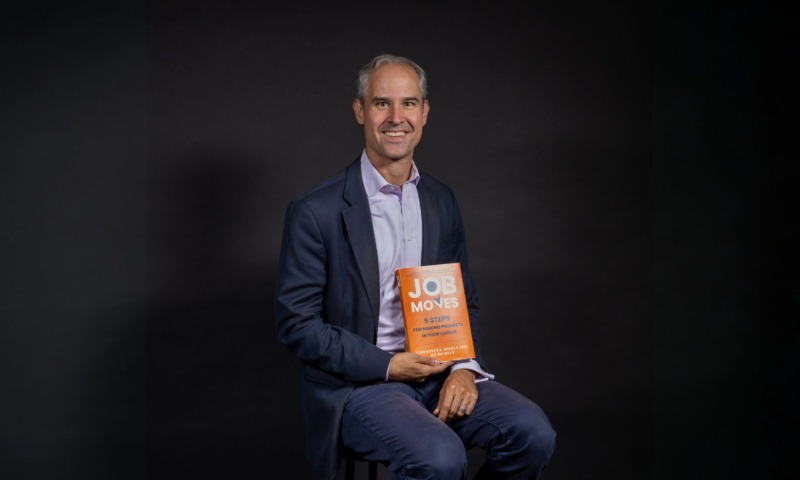
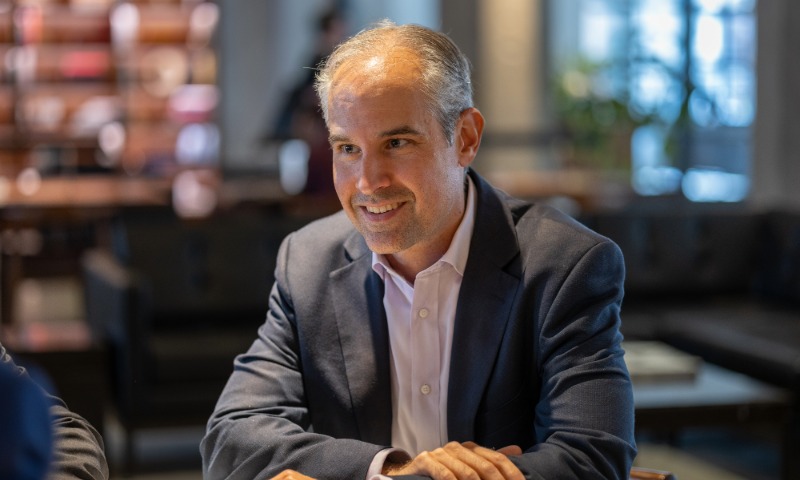
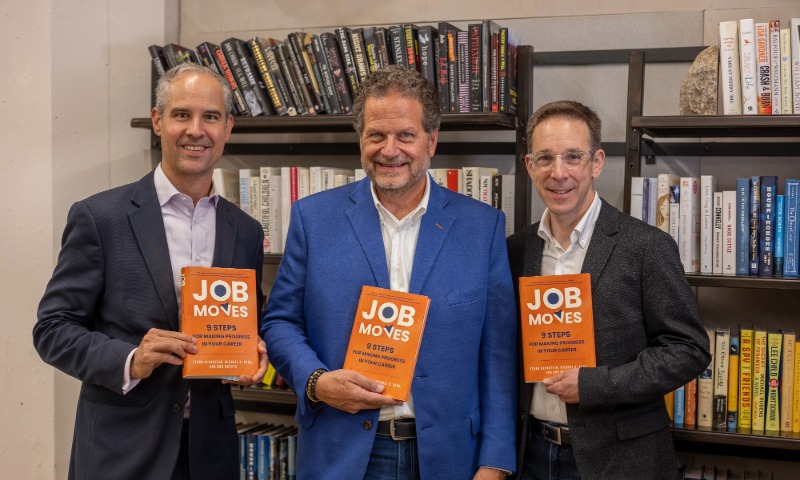
Michael Horn is the award-winning author of several books, including the national bestseller, Job Moves: 9 Steps for Making Progress in Your Career; teaches at the Harvard Graduate School of Education; and co-founded the Clayton Christensen Institute for Disruptive Innovation, a non-profit think tank. He strives to create a world in which all individuals can build their passions, fulfill their potential, and live a life of meaning through his writing, speaking, and work with a portfolio of education organizations.
Michael is also the author of From Reopen to Reinvent: (Re)creating School for Every Child; Disrupting Class: How Disruptive Innovation Will Change the Way the World Learns; Blended: Using Disruptive Innovation to Improve Schools; Choosing College; and Goodnight Box, a children’s story. He cohosts the top education podcasts Future U and Class Disrupted and writes the Substack newsletter The Future of Education.
Recently, in an exclusive interview with K12 Digest, Michael shared insights into his journey from a Yale history graduate unsure of his path after 9/11 to becoming a leading voice in education innovation. He cautioned that layering AI onto today’s K–12 model risks amplifying what’s already broken — whole-class instruction paced to an imaginary “average,” delivery over learning, assessments that sort rather than support, and an impossible job description for teachers — because technology that threatens the dominant process either gets ignored or forced to conform. For principals, he advises against leading with tech and instead starting backward from purpose: choose one part of the school, define what children should learn and why they’re there, design the experiences that deliver that purpose, decide how to know every child reached it, and only then select curriculum, teaching models, and technology. The following excerpts are taken from the interview.
Hi Michael. Your career spans Harvard, Yale, the Clayton Christensen Institute, and multiple bestselling books. Looking back at your BA in history at Yale, what first sparked your interest in how people learn and how systems change?
My interest in this topic didn’t start at Yale. 9/11 occurred at the beginning of my senior year at Yale. I graduated only knowing that I wanted to make a positive impact in the world—but I didn’t know what that would look like for me.
My passion for how people learn and how to change systems didn’t take off until after I was a student at the Harvard Business School, and Clay Christensen tapped me to write the book that became Disrupting Class with him. His theories around innovation had changed my understanding of so much, and the opportunity to write a book with him applying those ideas to help public schools innovate was exciting to me. A clear place for impact. As I got into the work, the broader questions became more exciting to me as well.
In a recent article, you highlighted that layering technology onto the existing classroom model rarely transforms anything and often amplifies what’s broken. What specific “broken” practices in K–12 do you see AI most at risk of amplifying if schools don’t rethink their model first?
Most conventional classrooms deliver whole-class learning in the same way at the same pace. They naturally must teach to the “average” child in the class—even though teachers know that each student isn’t at the same place in their understanding, background knowledge, mastery and the like. There’s typically a pacing guide that dictates what must be covered when. The focus is on delivery, not learning. The purpose of assessment isn’t to help learning, but to sort and label. And classrooms with one teacher and many students ask teachers to do heroic jobs and be all things to all people—an impossible job description. So you have a system that is focused on time being the constant, not learning, and an impossible job for teachers. When you implement technology into that system, if it helps a teacher be more efficient in their work, it gets implemented. But those technologies that interrupt the classroom model—personalize parts of learning, for example, or drive toward mastery, fly in the face of the processes. And the processes win, so the tech either doesn’t get used or conforms to the dominant processes.
Your advice is “don’t lead with the technology” and to design backward from student outcomes. For a principal starting this work tomorrow, what does that first backward-design conversation with staff actually sound like?
It starts with focusing on one part of the school—not trying to turn over the entire model tomorrow. Start a school within a school, or focus on one grade level or class. And then start with purpose—what do we want children to learn. Why are they here? What do we do and not do in this school? What are the experiences we would need to offer to help every single child accomplish that purpose? How would we know if every child had reached those goals? And then we can ask what do we put in place to provide those experiences to deliver on that purpose. That’s where the curriculum, teaching model, technology and the like factor in.
From Reopen to Reinvent came out of the pandemic moment. What conversation with a school leader or parent during COVID most shaped that book’s thesis?
Diane Tavenner, who was leading Summit Public Schools at the time, and I started a podcast together during the pandemic called Class Disrupted. It was those conversations that shaped the book’s thesis. We were answering real questions that parents and educators were asking us at the time—and hoping we could really move education at last and not go back to the traditional model.
You also wrote a children’s book, Goodnight Box. What story from your own family life inspired it, and what do you want kids to feel when they hear it?
Wellness and health and exercise became a huge part of my life with my wife starting in 2011. It transformed our lives—and it’s something we’ve passed down to our kids as well. That was a story that my wife and I wrote to help introduce these movements to kids much earlier just to be fun—and hopefully inspire more people to live lives that make them feel better.
History was your major at Yale. Which historical figure do you find yourself quoting or channeling when you talk about innovation and resistance to change?
Oh boy, that’s a great question! I think it depends. I actually like taking quotes from historical figures that they didn’t actually say—misattributed quotes to Henry Ford and Gandhi are two of my favorites. But I also think a lot about motivation in society—and how when extrinsic motivation to do hard work dissipates, you often need to make subjects or schooling more intrinsically motivating. Still hard, but something kids will dig into. For that, I think a lot of President John Adams’ writings to his wife about his hopes for his future generations.
Podcasts are part of your craft with Future U and Class Disrupted. What podcast episode changed your mind on an important issue?
The fun thing about those conversations is that my mind shifts quite a bit! Just the other day, Jeff Selingo changed my mind on what different funding formulae in higher education could do to tackle mission creep in higher education. I had never even considered that part of the equation before!
Where do you see yourself in the next 5 years?
I try not to imagine that actually—because I find it closes me off to exciting opportunities that may come unexpectedly. But I’m quite happy with the work right now—and clear in how I’m trying to make a difference.
If you could put one quote on the wall of every school board room, what would it say and whose words are they?
Live. Love. Learn. And leave a legacy. Ben Bergeron, a CrossFit coach, lives by that motto. I think it’s a great one. Encapsulates so much.