


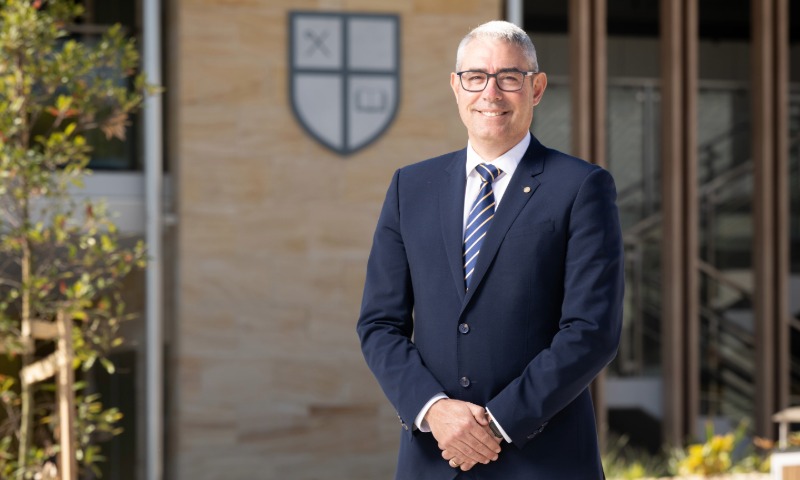
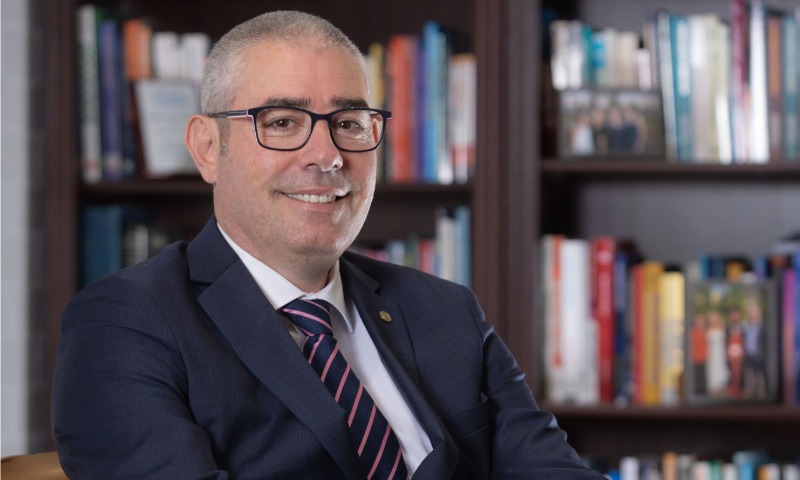
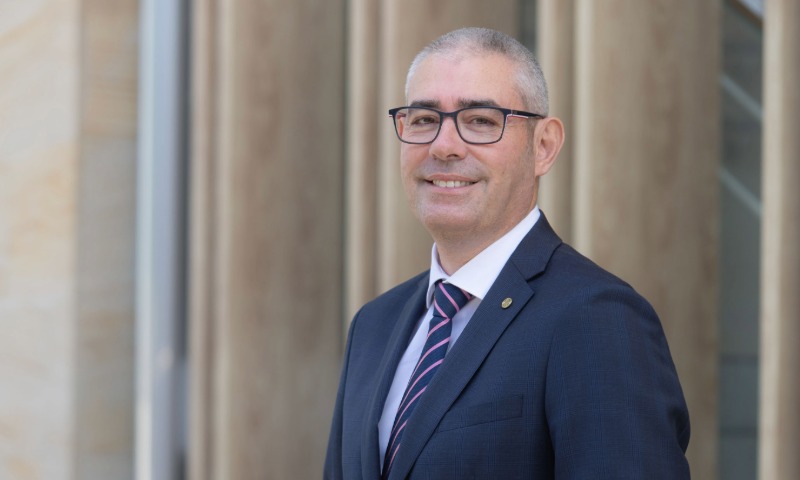
Nate Atkinson is Principal of Northholm Grammar School, Sydney, and a distinguished Australian educational leader passionate about cultivating excellence in teaching, learning and leadership. He was recognised on The Educator’s Hot List 2026 and recipient of the ACEL NSW Leadership Award for Educational Leadership Excellence. Formerly Principal and CEO of Summerland Christian College and Hinterland Christian College, Nate brings extensive experience in strategic leadership, governance and positive education. He holds a Master’s degree in Educational Leadership, qualifications in Teaching and Theology, and has undertaken executive education through Harvard. Currently pursuing doctoral research in K–12 educational leadership, Nate serves on the Independent Schools NSW Excellence in Leadership and Teaching Council.
Recently, in an exclusive interview with K12 Digest, Nate shared insights into how education is a calling to shape confidence, character and human potential. On AI and future trends, he urged schools to be pedagogically ambitious yet technologically discerning, using AI to strengthen teaching, personalise learning and free teachers for human connection, while fixing assessment, privacy, integrity and teacher judgement first. Looking ahead, he aims to grow the Northholm Institute for Cultivating Excellence, advance his doctoral research on sustainable principal leadership, mentor emerging leaders, and leave schools stronger, more capable and more hopeful. The following excerpts are taken from the interview.
Looking back at your very first role in education, what was the moment when you realised that teaching was not just a job for you, but a calling?
I have always believed that education is one of the most extraordinary professions in the world because, quite simply, we are entrusted with the privilege of shaping human potential. There is something profoundly significant about that responsibility. When I reflect on my earliest experiences in education, what stands out is not a particular lesson, achievement or milestone, but the gradual realisation that the influence of a teacher extends far beyond the classroom. We are not simply teaching subjects; we are shaping confidence, character, aspiration and, ultimately, the trajectory of young lives. What continues to inspire me is the transformational power of believing in those we serve. When an educator sees potential in a young person before that student can recognise it themselves, something remarkable becomes possible. Expectations rise, confidence develops and futures begin to change.
My Christian faith has also shaped my understanding of education as a vocation of service. I believe every young person possesses inherent dignity, unique gifts and extraordinary potential worthy of cultivation. Over time, that calling has expanded from influencing students directly to developing the teachers and leaders who influence them every day; that is the wonderful multiplier effect of educational leadership. For me, education has never simply been about what students achieve at school. It is about who they become because of their schooling. That remains my greatest motivation.
As an Executive Team member and educational leader, you lead governance, leadership and student growth. What does a typical day in your role actually look like, and how do you balance strategy with being present for staff and students?
One of the great privileges of principalship is that no two days are ever quite the same. My responsibilities span educational leadership, governance, strategic planning, financial stewardship, organisational development and, most importantly, the growth and wellbeing of our people. I often describe effective principalship as requiring one eye firmly focused on today and the other on tomorrow. We must attend to the immediate needs of our communities while simultaneously creating the conditions for sustained excellence into the future. The challenge is ensuring that the urgent never consistently displaces the important.
For me, leadership is fundamentally relational, so I literally place time in my diary each day to visit classrooms and walk the school grounds. Strategy matters enormously, but its effectiveness is ultimately determined by what happens in classrooms, corridors and conversations. I want to understand what our teachers are experiencing, what our students are learning and how our leaders are growing. I make a point of teaching, coaching and learning myself, so I stay connected.
In a very practical way, at Northholm Grammar, we are intentionally developing a culture where excellence is cultivated rather than merely expected. Being present through initiatives such as the Northholm Institute for Cultivating Excellence and Livewell@Northholm, we are connecting professional growth, instructional leadership and staff wellbeing with whole-school improvement. I am increasingly convinced that exceptional leaders do not simply manage their time; they protect their capacity to think, listen and lead wisely. Ultimately, leadership is not measured by how busy we appear, but by the quality of the conditions we create for others to flourish.
Schools are being asked to prepare students for jobs and a world that does not exist yet. How do you see the purpose of school changing by 2031, and what should schools focus on to prepare students for an ever-changing world?
I believe we are entering one of the most exciting and consequential periods in the history of education. And this is exciting! By 2031, the most successful schools will not necessarily be those that have adopted the greatest number of innovations, but those that have developed the strongest learners and the finest young people. I was sharing with staff a few months ago that we must move beyond the narrow question of what students need to know and ask a far more powerful question: what kind of thinkers, learners and human beings do they need to become? Rich and deep knowledge remains absolutely essential. Indeed, in an increasingly complex world, deep disciplinary knowledge becomes more valuable, not less. However, knowledge must be complemented by intellectual curiosity, critical and creative thinking, collaboration, adaptability and the capacity to learn continuously.
My educational philosophy centres on developing resourceful, resilient and reflective learners who possess both the competence and character to navigate uncertainty with confidence. I also believe schools must resist the temptation to define educational success exclusively through employability. Our responsibility is far greater. We are preparing young people for meaningful lives, responsible citizenship, strong relationships and purposeful contribution. The future belongs to young people who can think deeply, act ethically, embrace challenge and remain hopeful. Our responsibility as educational leaders is to create schools worthy of that future.
AI, data and digital tools are entering classrooms. How do you see AI changing teaching, assessment and personalised learning, and what must schools fix first to use it wisely and safely?
Artificial intelligence represents an extraordinary opportunity to rethink aspects of teaching and learning, but I would offer one important caution: technological sophistication should never be confused with educational excellence. The most powerful influence on student achievement remains the quality of teaching. AI must strengthen that relationship, not diminish it. Used thoughtfully, AI has enormous potential to support differentiated instruction, provide timely formative feedback, identify learning gaps and reduce administrative demands on teachers. Imagine the possibilities when educators have greater capacity to concentrate on the deeply human dimensions of teaching: inspiring curiosity, developing character, providing expert feedback and building meaningful relationships.
However, we must first address some fundamental questions about pedagogy, assessment and professional capability. Schools need clarity about what constitutes authentic learning in an AI-enabled world. Assessment must increasingly reveal how students’ reason, apply knowledge, demonstrate understanding and exercise intellectual independence, rather than simply what they can produce. We also need robust safeguards around privacy, accuracy, bias, academic integrity and student agency. These are leadership responsibilities, not merely technical considerations. My conviction is that schools should be pedagogically ambitious and technologically discerning. We must invest in developing teachers’ professional judgement before expecting technology to transform learning. The future of education should not be less human because of artificial intelligence. If we lead wisely, it can become even more profoundly human.
Equity, inclusion and honouring God-given individuality are central to your vision. How should schools ensure that every child, regardless of background or learning style, feels valued, seen and given the chance to flourish?
I believe one of the most important measures of a school’s excellence is not simply how its highest-achieving students perform, but how effectively it enables every young person to discover and develop their potential. Every child deserves to be known, valued, challenged and supported. That conviction sits at the heart of my Christian understanding of education and my commitment to human flourishing. However, genuine inclusion requires more than warm intentions. It demands deliberate leadership, high-quality teaching, thoughtful systems and a culture of unwavering belief in the capacity of young people to grow.
In the schools that I lead I seek to uphold the value of belonging, positive teacher-student relationships, high expectations and appropriately responsive instruction. Students thrive when they experience both psychological safety and meaningful academic challenge. Importantly, equity does not mean lowering expectations. It means providing the appropriate pathways, adjustments and support that enable students to meet ambitious expectations. Nor should we confuse individualisation with placing children into fixed categories of learning styles. Effective educators understand individual differences while drawing on evidence-informed approaches to teaching and learning. I want every student to experience the powerful message: you belong here, your growth matters and your future is filled with possibility. That is education at its very best.
Leaders who carry a school community often have a small ritual that grounds them. What is your favourite way to start your morning, and how does that ritual help you lead with clarity, calm and faith?
I have become increasingly fascinated by the relationship between personal habits, cognitive performance and sustainable leadership. We rightly expect educational leaders to demonstrate wisdom, composure and strategic clarity, yet we sometimes underestimate the intentional practices required to sustain these qualities. For me, the principle of beginning the day with purpose rather than immediately surrendering to urgency is particularly important.
I value the opportunity for quiet reflection, prayer and thinking deliberately about the people and priorities that matter most. For me, that means arising early before the day gets busy. My Christian faith reminds me that leadership is ultimately an act of stewardship and service, not simply an exercise in organisational authority. One of the most significant lessons emerging from my recent reading and professional reflection is that sustainable leadership requires us to manage energy and cognitive capacity, not merely our calendars. Elite performers understand the importance of preparation, focused performance and deliberate recovery; educational leaders should be no different. We cannot consistently make wise decisions, build strong relationships or inspire others if we are permanently operating from a position of exhaustion. I am passionate about modelling this understanding through our work on staff wellbeing and sustainable school improvement. Leadership longevity should never be confused with simply enduring pressure. It is about cultivating the habits that allow us to remain thoughtful, courageous, hopeful and fully present. After all, our communities deserve leaders who are not merely available, but genuinely attentive.
A good book can change how a leader sees learning and life. What is one book that has stayed with you for years, and what is the one idea from it that has quietly shaped the way you lead?
One book that has profoundly influenced my leadership journey is The Leadership Challenge by James Kouzes and Barry Posner. It is a book I have returned to repeatedly throughout my career and, without question, the leadership text I have recommended most frequently to aspiring and experienced leaders alike. What makes this book so extraordinary is its wonderfully comprehensive understanding of leadership. Its five practices of exemplary leadership provide an enduring framework for understanding how leaders inspire, challenge, enable and encourage others while remaining anchored in shared values and purpose.
For me, it has truly been the book that keeps on giving. Each leadership principle has opened the door to further reading, deeper reflection and more specialised insights into organisational culture, relationships, strategic thinking, personal effectiveness and human flourishing. Perhaps its greatest contribution is the recognition that leadership cannot be understood through isolated competencies. Every dimension of leadership is interconnected. Our character influences our relationships, our relationships shape our culture, and our culture ultimately determines our capacity to achieve sustainable excellence. This holistic perspective continues to shape how I approach educational leadership and develop emerging leaders. Exceptional leadership is not about mastering a collection of techniques. It is about continually integrating who we are, what we believe and how we inspire others to achieve extraordinary things. That is why this remarkable book remains so relevant.
Where do you see yourself in the next five years?
What an exciting question! My aspiration is not principally defined by a particular position or title, but by the impact I can continue to have on the lives of young people, the development of educators and the advancement of educational leadership. I am deeply energised by the opportunities before us at Northholm Grammar School. We are building on an exceptional foundation, with a clear commitment to academic excellence, character development, professional growth and the cultivation of a genuinely outstanding school culture. Over the next five years, I would love to see the Northholm Institute for Cultivating Excellence become an increasingly influential centre for developing excellent teaching, instructional leadership and evidence-informed school improvement.
I am equally passionate about contributing to the broader profession through research, mentoring, collaboration and the development of emerging school leaders. My doctoral studies reflect a particular interest in how highly effective principals sustain and renew their leadership over time. I believe this is one of the most important questions facing contemporary educational leadership. We need leaders who can achieve excellence, certainly, but also sustain it without sacrificing their wellbeing, relationships or sense of purpose.
Ultimately, my ambition is simple: to keep growing, keep learning and keep making a meaningful difference. If, five years from now, the people and institutions I have been privileged to serve are stronger, more capable and more hopeful, I will consider that a remarkable success.
If you could give one powerful message to every young person who dreams of leading schools and shaping young lives, what would you tell them about courage, calling and staying true to their purpose?
My message to aspiring educational leaders is this: never underestimate the extraordinary influence you can have on another person’s life, and never allow the pursuit of a leadership position to become more important than the purpose of leadership itself. Leadership is not fundamentally about authority, recognition or status. It is about responsibility, service and the courageous pursuit of something greater than yourself.
If you aspire to lead a school, begin by becoming an exceptional educator. Develop a deep understanding of learning, invest in relationships, seek feedback and cultivate the intellectual humility to recognise that you will never finish learning. Be ambitious, absolutely; our profession needs courageous, visionary and highly capable leaders. But ensure your ambition is directed towards the growth and success of others. Do not wait for a title to begin leading. Leadership begins wherever you choose to take responsibility, demonstrate integrity, encourage a colleague or improve the learning experience of a student. You will encounter setbacks, complexity and moments of uncertainty. Welcome them as opportunities to develop wisdom, resilience and character. Surround yourself with people who challenge your thinking, protect your sense of purpose and remain grounded in the values that first drew you to education.
Above all, remember that educational leadership is an extraordinary privilege. We are not simply managing schools. We are cultivating human potential, shaping communities and influencing generations yet to come. What a magnificent calling. Pursue it with courage, humility and wholehearted enthusiasm.