



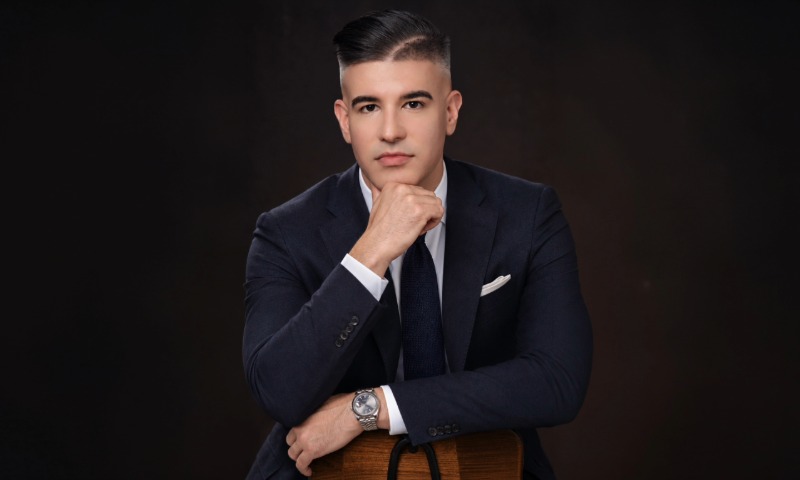
Joseph M. Cirelli is Principal and a Governing Board Member at Shenzhen American International School, with more than a decade across schools in Beijing, Wuhan, and Shenzhen. He leads K–12 institutional strategy, from academics to admissions and community engagement, and believes lasting leadership is measured by what continues after a leader steps away, reflected in his work leading IB PYP, OxfordAQA, and Cognia accreditation processes. He serves on Cognia’s accreditation review teams and holds credentials from IB and Harvard University. SAIS was recognized by Forbes China as Shenzhen’s leading primary school during his tenure. Joseph writes and speaks internationally on durable leadership, institutional culture, and student agency.
Recently, in an exclusive interview with K12 Digest, Joseph shared insights into how his professional journey was shaped by personal experience with special education and a commitment to building schools where every child’s potential is recognized early. On the future of education, Joseph sees the biggest shift as moving from teaching students to follow a pathway to teaching them how to navigate when that pathway changes, emphasizing judgment, adaptability, and independent learning over rote content. His advice to future leaders is to lead with enough clarity to establish the standard, enough humility to share ownership, and enough courage to step back before you leave. The following excerpts are taken from the interview.
Hi Joseph. Every leader’s journey begins with a first step. What early experience or role first made you realize that education and school leadership was your calling?
My path into education began at home. When I was young, my brother was diagnosed with ADHD and autism, and I watched my mother fight for years to get him the support he needed. I remember watching her in tears, trying to get people to recognize his potential. I did not understand the procedures, but I understood her pain, and the cost of a system that made families beg for understanding. That powerlessness slowly became responsibility.
In special education in New York, I saw the same problem professionally: students made progress when adults adjusted the environment around them, not when we asked them to adapt. Inclusion was less a program than a measure of how thoughtfully a school had been designed, and I saw the limits of isolated effort. A teacher can change a life, but leadership builds the conditions for that change across a whole school.
That purpose eventually took me to China, where my commitment to education met my curiosity about the world. The setting changed, but the question stayed the same: how do we build schools that recognize a child’s potential before it’s overlooked?
As a school leader today, what part of your role brings you the most energy and why?
What gives me the most energy is helping people grow and seeing good ideas create impact beyond one institution. Within a school, I remain accountable for direction, standards, and difficult decisions while giving teachers and emerging leaders room to develop judgment. When a colleague strengthens an idea or a team works through a complex problem, I see capacity growing.
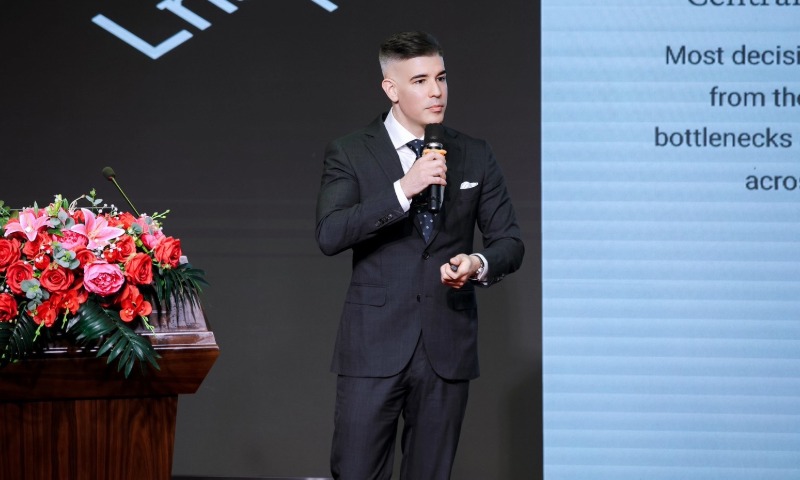
That same energy led me to give my keynote, What Remains When You Leave?, which extended the conversation beyond my immediate setting. It allowed me to share what I had learned, test those ideas in different contexts, and learn from leaders facing similar challenges.
These exchanges are becoming an increasingly important part of my work. International educators often confront similar problems in very different settings, and we gain more when experience travels. Building relationships across schools and organizations can turn individual lessons into shared progress. That combination—developing people locally while contributing to a wider international community—is what energizes me most.
Education is evolving faster than ever. What do you see as the single biggest shift in K–12 education that will define the next 5 years?
The biggest shift will be from teaching students to follow a pathway to teaching them how to navigate when that pathway changes.
Schools were built around a stable promise: master content, earn qualifications, and enter a profession. Young people are now likely to change roles, work across cultures, and face decisions for which no textbook contains the answer. The central question for schools will expand from “What should students know?” to “What can they do when their knowledge is no longer enough?”
Strong subject knowledge remains essential. It must be joined with judgment, adaptability, and the ability to learn independently. Students need opportunities to make meaningful choices, test ideas, recover from setbacks, and reflect on how they learn.
The schools that define the next five years will resist trying to map every career awaiting their students. They will help young people understand themselves, respond intelligently to change, and continue learning long after formal schooling ends.
Curriculum design is moving beyond textbooks. What trends in teaching and learning do you believe will have the most lasting impact?
The most lasting change will be the shift from curriculum as a map of content to curriculum as a sequence of experiences through which students use knowledge.
Textbooks remain useful for building common foundations, but learning deepens when students must do something with what they know: investigate a question, weigh evidence, test a solution, and explain their reasoning to an audience beyond the teacher. Inquiry- and project-based learning will have staying power when they are deliberately designed rather than adopted as labels.
Assessment must follow. If a curriculum values reasoning and application but measures mainly recall, students receive a conflicting message. Portfolios, exhibitions, performances, and sustained tasks allow students to make their thinking visible, respond to feedback, and improve.
The teacher remains central. Strong curriculum uses professional expertise to identify essential knowledge, design purposeful experiences, and recognize when students need direct instruction. The lasting impact will come from making the textbook a starting point while ensuring that students can carry what they learn into unfamiliar situations.
Teacher recruitment and retention are global challenges. What changes do schools need to make to support and keep great educators?
Teacher retention begins long before a contract renewal. It is shaped by the daily experience of working in a school.
I am proud of the teacher-retention record in teams I have led because it reflects a culture built deliberately over time. I began my career as a teacher, so I still test leadership decisions against classroom reality: Is an expectation clear? Is the workload reasonable? Will a new requirement improve learning or simply add another task? Teachers notice when leaders understand that difference.
Compensation and resources matter, but great educators also need professional trust. They should be able to question an idea, offer a solution, experiment thoughtfully, and receive useful feedback. When challenges arise, support has to be practical: remove unnecessary barriers, protect time, communicate honestly, and follow through.
People stay where they are respected, able to grow, and connected to meaningful work. Retention is ultimately the accumulated result of daily leadership decisions. The strongest recruitment message any school can offer is a community of excellent teachers who choose to remain.
Leaders are also learners outside of work. What book, podcast, or idea has influenced you most recently and why?
The idea influencing me most recently grew out of attending the World Leaders Summit on Sustainable Development in Foshan, a gathering focused on the United Nations Sustainable Development Goals. I met leaders from government and international organizations, including Kolinda Grabar-Kitarović, Croatia’s first woman president. Yet the scale of the discussion led me to a smaller, more practical question: What responsibility are we giving students now?
We often call young people “future leaders,” which can imply that their contribution must wait. Schools can change that by giving students real work: investigating a local challenge, listening to the community, designing a response, measuring the result, and connecting the experience to global goals. In that process, sustainability becomes concrete and leadership begins before a title.
The summit sharpened my belief that education should prepare young people to participate in the world before graduation. Knowledge matters, but it gains purpose when students are trusted to use it. Global change begins to feel possible when young people see that their actions can improve the communities around them.
Mentorship matters at every stage. If you could have dinner with any educator, thinker, or leader from history, who would it be and what would you ask?
I would choose Marcus Aurelius. I am drawn to the honesty of the private reflections he recorded in Meditations. Here was a person with immense authority repeatedly reminding himself to remain disciplined, useful, and alert to his own ego.
I would ask him one question: How can a leader tell when conviction is serving responsibility and when it has become ego? The longer I lead, the more I see how authority can narrow the information reaching a leader. I would want to know how he protected his judgment when people around him had reasons to agree, and how he accepted what he could not control without allowing acceptance to become passivity.
His answer would matter to me because school leadership often requires decisions amid emotion, competing expectations, and incomplete information. Systems and policies matter, but sound leadership also begins privately: examining your motives, listening for the criticism you would rather avoid, and acting in service of the people and institution you lead.
Music, art, or hobbies can reveal a lot about a person. What is one personal passion outside of education that energizes you?
One of my favorite family traditions is visiting the Metropolitan Museum of Art whenever I return to New York. We can spend hours there, moving between periods and cultures and stopping whenever something catches our attention. My sister and I have visited many times, yet the museum never feels quite the same. I notice something new because the collection is vast, but also because I have changed since the previous visit.
What energizes me is the chance to enter another person’s way of seeing the world. A painting or artifact can reveal what people valued, feared, celebrated, and believed was worth preserving. Art makes history feel human rather than distant.
That curiosity also shapes the way I travel. Museums teach me to slow down and observe carefully; travel reminds me that assumptions that feel natural in one place can look entirely different in another. I usually leave the Met with more questions than I brought—and that is one of the reasons I keep returning.
Where do you see yourself in the next 5 years?
In five years, I want to be leading at a broader strategic level across education while building a practical development program for young people approaching important transitions. The program would help them identify their strengths, values, interests, and patterns of behavior before making major choices about study, work, or service.
Through guided reflection, mentorship, and real-world challenges, participants would test what they are learning about themselves. They would practice setting goals, adjusting plans, working with others, and applying their abilities to a community need. The purpose would reach beyond career guidance: helping young people become self-aware, adaptable, and capable of contributing locally while understanding how their actions connect to global challenges.
By year five, I would want to see a model being used across different schools and communities, with educators and mentors equipped to adapt it to their own contexts. I also hope to use writing and speaking to share what the work teaches us. Success would mean young people making more purposeful decisions and taking meaningful action because they understand who they are and what they can contribute.
If you could leave one sentence of advice on the desk of every future school leader, what would it say?
Lead with enough clarity to establish the standard, enough humility to share ownership, and enough courage to step back before you leave.